Factories have been churning out 2-aminophenol for over a century, tracing back to early synthetic dye work in the late 1800s. Back then, chemists searched for compounds that could push textile colors past the basics. 2-Aminophenol showed its value early as an intermediate for azo dyes, which revolutionized fabric coloration. Through the decades, its uses expanded, with our process lines often reflecting the steady march of technical improvements. The heart of these developments stays grounded in repeatable, scalable upgrades on the shop floor, from improved reaction control in iron reduction of nitrophenols to cleaner crystallizations that cut unwanted side products.
2-Aminophenol stands out as a core intermediate for dye and pharmaceutical families. Our team handles tons of it every month—mostly for coloration chemistry, certain drugs like paracetamol, and photochemicals. This compound bridges basic commodity chemicals and high-value end products. Handling it in bulk, we see demand swings tied to downstream sectors, such as textile and imaging, but also cyclical surges when a pharmaceutical intermediate comes into focus.
This white-to-light brown solid brings a faint, sweet smell noticeable on the plant floor, especially after an accidental spill. Its melting point usually stays just over 170°C, and 2-aminophenol dissolves well in alcohols and hot water. Colleagues in quality control check every release for low iron content, since it picks up trace metals with ease and those traces alter later dye colors. In storage, air and light can darken it, especially if left exposed. Packing it in lined drums and keeping stockroom climate steady keeps its shelf life reliable.
We run our lines to make sure finished batches come with high purity, often at least 99 percent, since dye and pharma users balk at dark spots and inconsistent product. On drums, labels show not just the chemical name and purity but key safety icons and a lot number that helps us trace anything returned from a customer. Each specification change means an update on both paper and computer records, tracked through ISO audit procedures.
Modern synthesis approaches in big plants rely mostly on reducing o-nitrophenol with iron filings in water and acid. Our setup keeps these batch reactors running at the right temperature and agitation to avoid charring or incomplete reduction. Filters pull out the spent iron, and controlled basification leaves the aminophenol ready to crystallize. Continuous improvement teams have spent years trimming down heavy metal residue and squeezing more product from the same raw materials.
Once aminophenol leaves our facility, chemists use it for condensation with aldehydes or coupling with diazonium salts, both key steps in dye molecule construction. It reacts at both the amino and hydroxyl groups, letting finished products branch off into aniline dyes, color formers for photos, or even ligands for metal complexes. Other industries tweak the molecule, methylating it for stronger ultraviolet dyes, or acylating it for specialty pharmaceuticals. Our R&D crew has worked with specialty makers to help navigate these modifications by providing variants with controlled particle size or adjusted moisture.
Depending on the customer or country, people have asked for ortho-aminophenol, o-aminophenol, or 2-hydroxyaniline. These are all names for the same substance, so proper labeling matters. Old trade names sometimes appear in older documents or legacy contracts. Consensus in international trade now leans toward the IUPAC naming convention, but industry habits don’t always die off quickly, so both must appear side by side on orders and shipments.
On the production side, aminophenol dust brings real risks since inhalation or skin contact can cause burning or even systemic symptoms for sensitive workers. After some early incidents, our shop runs strict local exhaust at each dumping station. Antistatic grounds and periodic wet down protocols reduce the flammability hazard. Regularly updated MSDS sheets guide our team, but the best safety improvements come from internal feedback. Nobody knows handling protocols better than the workers who do it daily.
Sales reports show that dye makers still make up most demand. 2-Aminophenol sits at the core of deep blue and red dyes. Specialty pharma outfits draw off smaller but crucial quantities, needed for stepwise synthesis of painkillers and imaging drugs. Old-school photographic paper and film, though down since the digital swing, still buy from us, mostly in Asia-Pacific regions. Our notes with long-term customers reflect that new product formats or environmental regulations can drive shifts in how aminophenol gets blended or disposed of.
Each year, our R&D staff looks at new catalysts that further reduce trace metal residue, which sometimes impacts downstream product color or stability. Recently, solvent recycling methods gained attention, as large-scale makers strive to hit cleaner production standards. Internally, we test alternative reduction agents to move away from traditional heavy metal waste, including catalytic hydrogenation, even though infrastructure upgrades make these solutions slow to roll out. Customer-specific grades, like higher purity or certain particle size cuts, usually begin with laboratory trials, then run up to pilot batches ordered by contract.
Toxicology data from past decades demonstrates real health risks at higher exposure. Chronic skin contact brings dermatitis and, though rarely, more serious systemic effects at high concentrations. Recent literature points to intermediate risk, so we keep our exposure controls tight and train workers annually on decontamination procedures. Downstream users in regulated markets demand up-to-date Roche and OECD study citations, so we maintain close records and review any changes in worker health feedback.
Interest in greener dye production and lower residual pharmaceutical impurities grows each year on our calls with customers. Hydrogenation technologies offer up a potential path away from iron waste, but retrofitting an existing facility demands investment that smaller plants struggle to afford. As the old black-and-white photo market shrinks, its demand for aminophenol slows; meanwhile, resurgence in specialty medical imaging creates a smaller but steadier base. In the years to come, big plants with flexible capacity and the ability to prove clean handling will likely weather market swings best. Internal improvement never rests, as audit, customer inquiry, and regulation always push us forward.
As a company that produces 2-Aminophenol at scale, we see its impact stretching far beyond the typical laboratory. This chemical holds a special place on the production line since it serves as the building block for a surprising range of products. Whether it’s about creating color, driving industrial processes, or shaping new molecules in the pharmaceutical world, this compound does more than many realize.
The demand for brilliant, lasting dyes brought 2-Aminophenol onto the industrial stage. Its molecular structure allows it to act as a key intermediate in synthesizing azo and sulfur dyes. Years of experience have taught us that consistency is the hard-won trait here. Textile and leather finishers require dyes that won’t fade or bleed after repeated washing or exposure to sunlight. High-quality 2-Aminophenol gives dye manufacturers reliability in their formulations, and that reliability carries all the way to the end consumer—a simple shirt or jacket that holds its color year after year.
In the hair coloring industry, manufacturers turn to this compound for similar reasons. Its role in permanent hair dyes is based on predictable reactivity with other color precursors. Inaccurate purity or changes in manufacturing conditions easily throw off shade, coverage, or even product safety. Decades of careful attention to process control and raw material selection have shown that quality production standards pay off in the consistency end users expect and regulatory authorities demand.
Not everyone realizes how central 2-Aminophenol was to classic black-and-white film developer solutions. Its reducing properties help reveal images with crisp contrast, making it an essential part of photographic chemistry for much of the twentieth century. Even as film photography has shifted from mainstream to specialty, requests from archival labs and niche film producers continue. Clean reactions and low contamination remain priorities, since impurities in developer chemistry create costly problems such as unwanted fog or image degradation.
We supply several pharmaceutical plants that rely on 2-Aminophenol for making active pharmaceutical ingredients. Here, tight control over trace impurities and moisture content takes on a higher significance. Regulatory frameworks require careful documentation and repeated testing. Nothing underlines the value of thorough batch tracking and systematic analytical controls like the prospect of supplying starting materials for medicines. The trust our partners place in our process highlights the role of reliable upstream manufacturing during drug development.
Experience in this field teaches that responsibly sourced 2-Aminophenol keeps downstream problems in check. Impure or contaminated shipments risk entire production runs and create waste that’s difficult to manage. Modern facilities aim to capture and treat off-gasses from synthesis and ensure that by-products do not leave the facility untreated. We work to minimize water and energy use without compromising on analysis, as sustainability is becoming more aligned with long-run profitability.
Research never sits still. Researchers sometimes come to us for custom blends or unusual reaction pathways that explore the next niche for 2-Aminophenol. Specialty chemicals for high-performance resins, electronic materials, and small-scale industrial specialties depend on timely tweaks to production conditions, not just large-volume output.
Reliable manufacturing of 2-Aminophenol brings value to each of these fields. Delivering quality, minimizing risks, and improving efficiency drive better outcomes for end-users—often in ways the public rarely sees. By focusing on the fundamentals, we play a steady role in shaping products people use and trust.
Working in a chemical manufacturing plant, I've handled thousands of tons of raw materials and intermediates, but 2-Aminophenol always draws special attention on the production floor. The chemical formula, C6H7NO, may look simple at first glance, but this structure defines how it interacts with other compounds, and ultimately, how useful it becomes in different chemical industries.
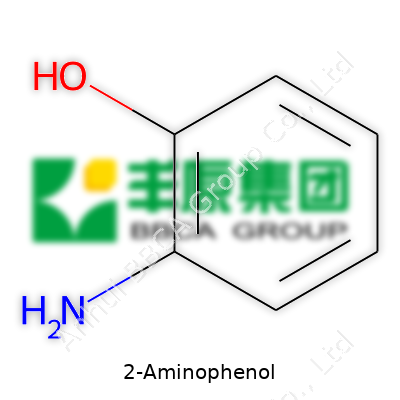
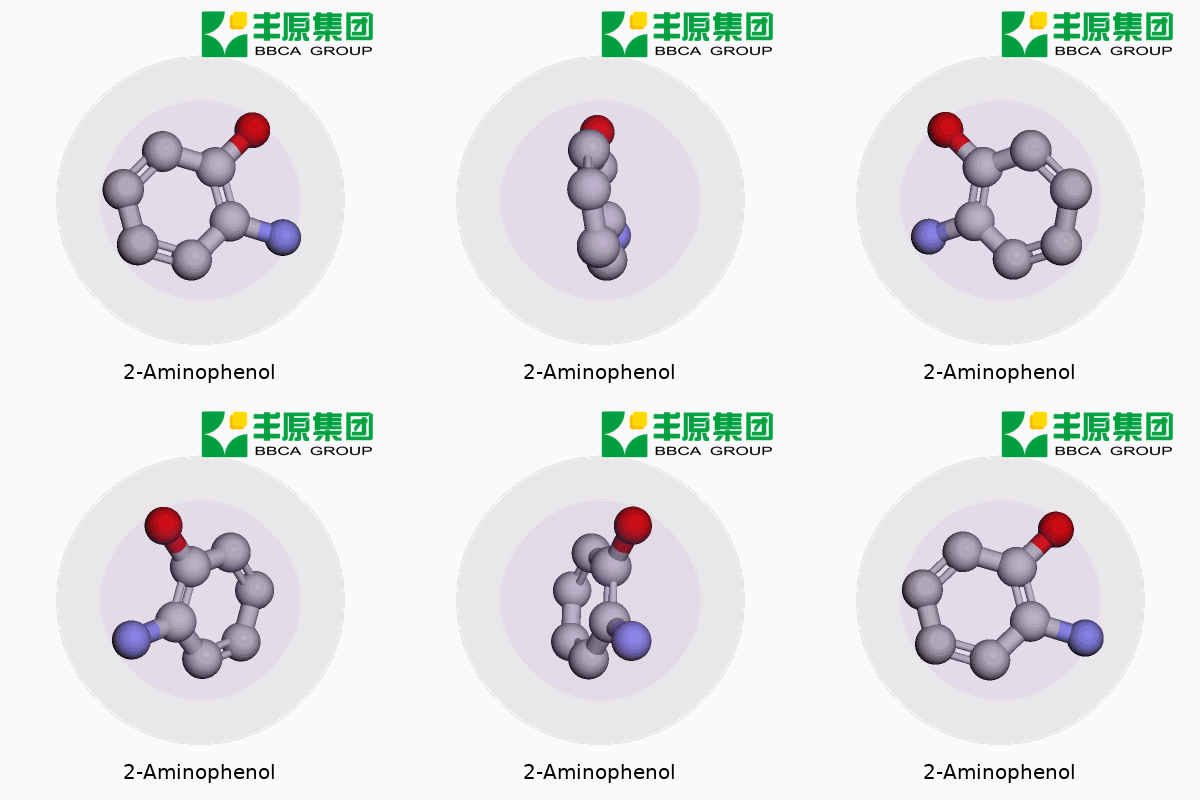
C6H7NO describes a benzene ring featuring both an amino group and a hydroxyl group as substituents – specifically, with the amino group in the ortho position relative to the hydroxyl. This arrangement impacts everything from solubility to reactivity. In daily operations, seeing a drum labeled 2-Aminophenol means anticipating a compound ready to play several roles, such as a key intermediate for dyes, pharmaceuticals, rubber chemicals, and photo-developers.
Our process controls often hinge on exact formulas like these. The correct formula ensures batch reactions run smoothly. For instance, if a customer in the dye industry requests a shipment and the identification slips even slightly, the resulting product could ruin hundreds of meters of fabric. The same goes for pharmaceutical clients, where regulatory bodies demand strict compositional accuracy. There's no room for vague formula descriptions when regulatory audits occur.
Experience has taught me formula knowledge affects not just production quality, but also safety. The presence of both amino and hydroxyl groups means 2-Aminophenol can form hydrogen bonds, which affects how it behaves in storage tanks and reactors. Ignoring or misidentifying these characteristics can lead to unexpected reactions. For example, I've seen operators overlook solubility parameters, leading to blockages in transfer lines. Strict formula adherence keeps both our equipment and personnel protected.
The market rarely talks about chemical formulas, but they influence supply chain conversations as much as anything. A chemically identical product from two vendors could have impurities that change how it performs in a process. We use C6H7NO as a starting point but follow up with purity testing and impurity profiling to guarantee our finished product behaves as expected. Price pressures sometimes tempt manufacturers to cut corners by blending in lower-grade material, which inevitably leads to customer complaints, rework, and wasted resources. Maintaining fidelity to the core chemical structure reduces these risks.
Product development always circles back to basic chemistry. Whether our teams are brainstorming new dye molecules or tweaking formulations for better environmental performance, we use the formula as an anchor. Small changes, such as moving the amino group to a different position on the ring, might create a new product with unique properties. But without a solid understanding of C6H7NO and its behaviors, those innovations would never leave the lab.
Manufacturing chemicals like 2-Aminophenol gives direct insight into how useful a straightforward formula can be. In production and quality assurance discussions, in conversations about product quality with end users, and in safety huddles, the direct knowledge of what C6H7NO means allows us to deliver reliable, high-quality product every single time. Even a small molecule like this leaves a big mark across many industries, and that mark always starts with knowing and respecting its formula.
Working in chemical manufacturing, we handle 2-aminophenol frequently because of its role in dyes, pharmaceuticals, and other syntheses. People ask if this compound counts as toxic or hazardous. Based on decades in the plant, the hazards are real, but often misunderstood outside the factory.
This chemical comes as a grayish solid, and the odor can catch the unprepared. Dust can irritate eyes, nose, and throat. If workers open a fresh drum without respiratory protection, coughing and watery eyes start quickly. Getting it on skin can result in redness or even blistering, depending on how sensitive the person is or how long it sits on their skin. Left unchecked, inhalation and skin exposure add up over time.
Some overlook that 2-aminophenol can enter through inhalation, skin contact, or even accidental ingestion. It’s not acutely toxic in the sense of instantly causing severe health effects with minor exposure, but repeated or high doses carry risk. Studies show that large doses trigger kidney and liver effects in test animals. A few reports link allergic reactions to long-term work exposure—itchy hands, mild dermatitis, or sometimes a worsening skin rash if someone’s sensitive.
It’s not classified as a known carcinogen by major international agencies, but its risk profile lands it solidly in the range where precautions need to stay in place. Dust accumulates in manufacturing spaces without proper extraction, so regular cleaning, enclosed conveyors, and effective fume hoods keep levels low.
People unfamiliar with chemical production sometimes worry that exposure means workers are in danger. The reality is this: any compound, even sodium chloride, causes trouble if misused. Our team wears gloves, goggles, and proper overalls. We keep soap and emergency showers nearby because, despite best methods, spills happen. Large processing halls use negative-pressure systems so stray dust doesn’t linger where workers breathe.
Training does more than ticking a compliance box. New hires practice donning gear and responding to simulated spills. We explain symptoms of overexposure—nausea, headaches, skin tingling—so workers report them early. Daily logs keep track of near-misses to catch poor practices before a real problem develops.
Safe chemical use doesn’t stop at the plant door. We treat effluent and record air releases. Discharges head to a neutralizer, overseen by a dedicated crew. We check the waste streams for byproducts that might stem from 2-aminophenol and ensure none escapes into neighboring land or water.
We also work with regulators to keep exposure limits up to date. If staff reports increase in work-related symptoms, we adjust controls. Experience tells us open communication helps keep the plant safer than any poster or memo.
People need to respect 2-aminophenol’s hazards, but fear ceases to help once clear procedures and solid handling steps set the standard. Simple steps like regular training, decent ventilation, and tracking symptoms in the workforce make the difference between risk and safety every day. We stand by these precautions, shaped over years of manufacturing, and welcome tighter standards or better research that guide improvements.
In our plant, 2-aminophenol is something our teams work with regularly. Its molecular formula—C6H7NO—gives a molecular weight of 109.13 g/mol. This number might look like a piece of trivia, yet, day in and day out, this figure guides real decisions. Calculating yield, dosing in reactions, or setting up purification steps all rely on that precise weight. It anchors lab work and production runs.
Weighing out raw material for any batch demands trust in numbers. Misjudging the smallest detail in dosage—notably the molecular weight—can turn a reaction on its head, risking safety, wasting time, or hurting product quality. Our chemists make calculations based on stoichiometry as a first step before opening a drum of any starting material. Take 2-aminophenol: if a customer asks for a tailored intermediate, everything from reactor charging to analytical verification starts from that 109.13 g/mol figure.
Production scale-up requires the same degree of attention. Even a slight error introduced in weighing can ripple through the process, especially with chemicals like 2-aminophenol that find their way into dyes, pharmaceuticals, and specialty polymers. Knowing the exact mass supports consistent batches and aligns with regulatory audits that scrutinize traceability.
Process safety owes much to molecular details. 2-Aminophenol carries hazards: it needs careful handling, reliable labeling, and strict transport documentation. Mistakes in calculations driven by wrong molecular weights mean unwanted residues, dangerous off-spec by-products, and sometimes accidents. Adhering to the correct figure supports incident-free shifts and helps us meet the rules set by agencies like EPA, REACH, or local authorities.
There’s also a constant push toward greener practices. Accurate mass tracking helps us monitor losses and off-gassing in real time, aiming to minimize waste. Everything from solvent recovery to emissions reporting circles back to the math that starts on the whiteboard. Good environmental stewardship is not just about recycling or treatment; it starts at the molecule.
Developers at customer companies count on precise ingredients. Collaborative R&D often involves detailed discussions based on calculations stemming from the 109.13 g/mol figure. Whether it’s the next diagnostic dye or a new anti-corrosive, poor foundational knowledge wastes hours and money.
Once a project moves from the lab into commercial production, everyone—engineers, technicians, QA—needs the same reliable number. Errors at this level lead to delays, recalls, and lost trust, not only internally but also with partners who expect diligence.
Over the years, vigilance around details like molecular weight becomes the norm. New hires learn the importance of these numbers early. They see how those values shape workflows, from calculating reagent needs to explaining variances in batch results. This culture of accuracy trickles into every facet of operation, fostering pride and a sense of shared responsibility.
The day-to-day grind of chemical manufacturing turns on the reliability of data. Few numbers are referenced as often as the molecular weight of core ingredients. For 2-aminophenol, 109.13 g/mol isn’t hidden away in some spec sheet—it’s the keystone for all we do, from innovation to the final packed drum.
On our production lines, we move thousands of kilos of 2-aminophenol every year. Watching this bright or tan crystalline powder transition from synthesis to drumming means we’ve learned about its quirks up close. This isn’t some passive intermediate that sits quietly in a warehouse corner. Left unchecked, it will darken, lump, or—worse—create unnecessary safety headaches. Practical storage determines whether we see usable product in three months or just another disposal problem down the line.
2-Aminophenol hates moisture. Even minor humidity causes it to cake and degrade. Our operators keep it in tightly sealed drums, and we specify polyethylene-bag liners for added security, not because it sounds nice on a spec sheet, but because we’ve lost too much raw material to atmospheric exposure in the past. A clean and dry warehouse only gets you halfway. If you open a drum and don’t close it fast—expect color changes or powder that clumps. We push for RH under 60% in storehouses housing sensitive intermediates, and it’s part of daily routine to spot-check for leaks or condensation on drum rims.
Light brings its own disappointment. Direct sunlight, or even certain warehouse lamps, can push 2-aminophenol from beige to rust-brown—compromising downstream value for dye, pharmaceutical, or agrochemical production. Shaded shelving and opaque containers cut down on this. Our experience shows simple steps like storing in covered storage rooms or stacking away from windows provide all the difference in long-term stability.
Factory chemists argue a lot about perfect storage temperature. There’s consensus—moderate is better. Above 40°C, 2-aminophenol loses freshness faster. We cycle ventilators in hot seasons and rejet drums to cooler warehouse bays during heat waves. No one wants an air conditioner that’s rarely maintained. Regular temperature monitoring, with logs checked by warehouse supervisors, catches most developing issues before the drums suffer.
In a multipurpose storage yard, stray dust, spilled solvent, or leaking acids can all play havoc with 2-aminophenol. One incident, with spilled formic acid leaking a few aisles over, resulted in stench and dashed one batch’s hopes for export. We fence off aminophenols from strong oxidizers and acids—such controls are non-negotiable. Cleaning up minor spills at once and rotating stock avoids long-forgotten bags turning into sourcing complaints down the supply chain. Cross-training staff across both the production and warehouse lines means trouble gets reported early, not pushed aside until audit season comes.
Storing 2-aminophenol safely keeps insurance premiums and incident rates down, but it’s really about keeping employee trust and production schedules predictable. Factories that treat every bag as just another SKU tend to see headaches multiply. We hold regular workshops between packaging and logistics teams to share practical working knowledge. Storage gets better as staff internalize why corners cannot be cut. Each warehouse layout review brings up new tales of what worked and what failed. By learning from actual incidents—moisture infiltration, heat spikes, accidental mixing—facility heads adjust the fine details to real-world risks.
This kind of care isn’t about paper compliance or ticking regulatory boxes. From a manufacturer’s standpoint, the value of consistent, product-protective storage greatly outweighs the modest upfront investment in better drums, humidity controls, and cross-team communication. Over the years, this attention has kept production downtime short, customer complaints rare, and raw material yield high.