Years of watching the 3-aminophenol market has shown its transformation from a little-known intermediate to a critical raw material across multiple sectors. Early methods for producing 3-aminophenol relied on reduction of nitrophenol derivatives, often with little regard for selectivity or waste management. Synthetic chemists kept searching for ways to better control positional isomerism and avoid the persistent byproducts. Demand for dye precursors and pharmaceutical intermediates propelled investment into new reduction technologies and water treatment. Direct nitration posed safety risks due to exothermic reactions, so improvements centered on milder reduction agents and acid scavengers, especially once environmental restrictions started tightening worldwide. From the mid-20th century onward, large-scale plants adapted to tighter emissions standards, often upgrading reactors for batch consistency and vent scrubbers for atmospheric safety. As a manufacturer entrenched in these process improvements, we have seen how efficiency and resource management became just as important as chemistry.
3-Aminophenol works as a backbone substance behind countless dye molecules, pharmaceutical compounds, and photographic developers. It carries both an amine and a hydroxyl group meta-oriented to each other, which gives it exceptional versatility for further functionalization. In practical terms, this means innovative companies can use it to build up molecular complexity for products ranging from anti-oxidants to hair coloring agents. Countless shipments have left our gates bound for dye houses, research laboratories, or manufacturers of paracetamol derivatives. Direct supply from an actual manufacturer reduces the risk of batch-to-batch variation, which means less downtime for our customers, fewer headaches in documentation, and reliable cost planning. In R&D contexts, analytical reproducibility rests on the purity and consistency of the starting material. Our repeated feedback from innovation labs proves that verified synthetic routes remain crucial for exploratory work with amine-phenol derivatives.
3-Aminophenol appears as an off-white to light brown crystalline powder, sometimes with hints of pink, based on the trace air oxidation that can occur during handling. Its molecular formula, C6H7NO, and molecular weight, 109.13, have remained constant talking points when discussing storage and shipping regulations. The melting range sits around 120–123°C, providing a practical window for purification and recrystallization processes. It dissolves in hot water, ethanol, and various polar organic solvents, but offers limited solubility in non-polar media, which shapes how one formulates process solvents and cleans reactors. Compared to other aminophenols, the meta position confers lower reactivity in certain processes, which is a blessing in controlling side reactions but a challenge when pursuing specific substitutions. This delicate balance keeps manufacturers on their toes, ensuring each process run meets the tightest quality specs.
Meeting customer and regulatory expectations calls for clear technical labeling: purity often exceeds 99% by HPLC, moisture under 0.5%, and low residual solvents. Lead, arsenic, and other heavy metals must remain at trace or undetectable levels, not only for downstream safety but also for regulatory audits. Our experience tells us there is no replacement for well-documented specification sheets, especially when certain markets, such as pharmaceutical or food-related, demand even tighter scrutiny. Chemical labeling must comply with latest GHS standards — pictograms, hazard, and precautionary statements — so our logistics and warehouse teams receive frequent training. Any error or omission on labelling brings delays, regulatory inquiries, and even product recalls, all of which we work hard to avoid through comprehensive batch traceability.
Long gone are the days of imprecise reduction; today, hydrogenation of m-nitrophenol under controlled conditions dominates modern production. Catalysts such as palladium on carbon ensure high yield with minimal waste, providing environmental and cost benefits. Recovery and reuse of water and solvents significantly reduce effluent, earning appreciation from local and international regulators. Our operators monitor reaction temperature and pressure with automated sensors that trigger shutdown protocols long before dangerous levels approach. After reduction, purification follows through neutralization and crystallization, where solvent selection can spell the difference between high and low yield. Never underestimate the value of efficient mother liquor handling — recycling remaining material has repeatedly proven more cost-effective than disposal. The final drying step preserves chemical stability and packaging integrity, ensuring each drum arrives just as ordered.
3-Aminophenol opens doors to fascinating derivatizations. N-acylation gives amides, while O-alkylation through Williamson synthesis introduces ether linkages of all chain lengths. Diazo coupling forms the foundation of azo dyes, with the amine group acting as a site for diazotization in mild acidic medium before coupling to phenols or aromatic amines. Oxidation can produce quinone imines, which turn up in pharmaceutical development efforts or rare pigment classes. Sulfonation, useful for increasing water solubility, proceeds without significant byproduct issues — provided temperature and acid strength remain closely monitored. Continual monitoring of side reactions remains necessary since over-oxidation or polymerization yields tarry residues that complicate both product isolation and plant cleaning. Our chemists frequently explore new ring substitutions or protective group strategies for specialty clients in drug discovery or advanced materials research.
In the chemical trade, 3-aminophenol travels under several labels: Meta aminophenol, 3-hydroxyaniline, and m-aminophenol appear depending on supplier region or paperwork. CAS number 591-27-5 provides the only unambiguous identifier, appearing across customs and shipping documents. The pharmaceutical sector sometimes refers to it as NSC 4079, while the pigment and dye industry defaults to the older term “m-aminophenol.” Awareness of these synonyms helps avoid confusion during cross-border shipments, especially as naming conventions may drift from IUPAC standards in legacy markets. Training new staff about these naming conventions directly cuts down on costly shipping missteps or miscommunications with clients.
Industry safety expectations never slacken for chemicals in the aminophenol family. Process engineers and line staff alike undergo recurrent training for personal protective equipment, spill containment, ventilation limits, and first-aid procedures. Spontaneous heating or dust explosions rarely occur in modern, well-controlled facilities — sealed systems and nitrogen blanketing keep the powder stable and safe. Air quality monitors check for low-level amine odors and particulate matter, ensuring compliance with occupational exposure limits that routinely get updated in response to new research. Cleanroom garments and gloves protect both product and operator, particularly during packaging or sample collection. We audit internal safety processes every quarter to catch gaps in procedures and equipment readiness. Every near-miss teaches valuable lessons that translate into safer, more reliable operations.
3-Aminophenol finds broad application as a precursor in dye manufacturing, where its performance in oxidative dye formulations has set the benchmark for colorfastness and tone range. Most well-known as an intermediate in hair dye synthesis, it delivers robust color intensity alongside adjustable shade profiles when combined with other diazotized agents. Pharmaceutical synthesis values it in routes to acetaminophen derivatives and certain antihistamines, where meta orientation provides optimal selectivity for downstream substitution. Photography labs once relied on it for developer formulations before digital technologies became mainstream, though some specialty restoration work still uses aminophenol-based developers due to their predictable reduction potentials. Advances in polymer and advanced coatings research have attracted attention to its use as a cross-linker or building block for functional monomers, especially in waterborne formulations. Speaking to agricultural customers, we have seen requests for stabilized forms used in certain controlled-release fertilizers. The diversity of customers coming to us — from global conglomerates to local specialty shops — underscores the flexibility and necessity of this compound.
Our own R&D teams continue to test new derivatives, exploring greener reaction pathways and safer catalyst options. Laboratories worldwide probe further into fine control of aminophenol reactivity, aiming for products with better shelf life, reactivity, or environmental footprint. Solvation dynamics, crystal packing, and polymorphism all turn up as recurring themes in development meetings, particularly as clients in pharmaceuticals demand more predictive behavior during formulation scale-up. Recent pilot plant trials tested continuous flow hydrogenation and enzymatic reduction as a route to lower energy consumption. We welcome regular collaboration with university partners to validate process changes, measure trace byproducts, and identify purification strategies that avoid resource-intensive rework. These partnerships have made real contributions to process optimization and product stewardship.
Workplace safety groups and regulatory agencies have scrutinized 3-aminophenol’s toxicological data extensively. Acute exposure triggers irritation to skin and respiratory pathways, so we reinforce best practices in handling and storage. Chronic toxicity remains lower than closely related ortho-isomers, but we do not take the lower risk as permission to relax controls or personal protection standards. Water discharges containing aminophenols face tight limits in most jurisdictions, requiring effective wastewater management and routine monitoring of effluent streams for accidental releases. Ongoing studies investigate breakdown products, with emphasis on mutagenicity, eco-toxic load, and persistence in aquatic environments. Safety data gets reviewed annually, and we invest in the most current waste-minimization and incineration options to ensure our site imposes minimal environmental burden. Transparency with clients about our toxicity controls has maintained customer trust and reduced contractual disputes about product stewardship.
Demand for 3-aminophenol will tighten as new applications in specialty polymers, textile innovation, and green chemistry accelerate. Environmental regulations urge us to redesign not only processes but also supply chain and final application profiles. Incoming queries now place more weight on sustainability data, cradle-to-gate emissions, and circularity in product life cycle. Increased focus on traceability and digital batch monitoring means new investments in automation and data management technology. Looking ahead, breakthroughs in catalyst recovery and solvent recycling offer the best lever for lowering production costs and bolstering environmental credentials. Our experience shows that smart, steady investment in process improvements enhances reliability for every customer, whether the product goes to a multinational dye plant or a bespoke pharmaceutical facility. The compound remains a lynchpin in chemistry both old and new, but it is our dedication to continual improvement and honest customer dialogue that will keep our doors open for decades yet.
Few people outside our industry know what goes into the everyday items they rely on. We work with 3-aminophenol in our manufacturing plant every week, handling it from the raw material stage right through to quality assurance. Ask anyone across the line, and they’ll tell you this intermediate has a reputation for reliability and flexibility—not only in the plant but also in the places it ends up.
Take a look at the global textiles sector. Dyes start with good intermediates, and 3-aminophenol stands as a building block for many of the hair and textile dyes found on the shelves of salons and fabric mills. Chemists select it because of its dual functional groups, which allow it to help form vibrant, stable colors. Our technical teams have worked with dye makers to troubleshoot color consistency and shelf-life. Tightly controlled batches have cut down customer complaints about fading, making the final product more appealing—especially in warmer, humid markets where color can degrade quickly.
The pharmaceutical industry values 3-aminophenol as an intermediate in synthesizing drug molecules. Teams on our supply chain have collaborated on custom specifications, ensuring lots arrive pure and on time for use in analgesics and antipyretics. Any inconsistency in raw material quality slows production or triggers revalidation, risking shortages. Our process specialists monitor the analytics tightly, using HPLC and GC-MS confirmation to prevent contamination. We have found that keeping equipment meticulously clean and stable at every shift start cuts cross-contamination risks and keeps pharma customers confident in each shipment.
Film photography might look like a niche today, but industrial labs and imaging suppliers still request high volumes of 3-aminophenol to produce developers. The compound delivers the controlled reduction needed in both color and black-and-white formulations. Our experience shows that even a small impurity can throw off a developer’s balance, affecting image clarity. By tracking each batch from storage to reactor and enforcing strict moisture controls, we meet the narrow tolerances hobbyists and professionals alike expect.
We're seeing more requests from university labs and specialty research firms exploring new uses of 3-aminophenol in organic synthesis. Some are experimenting with innovative catalysts or ligand design. The versatility of this intermediate allows chemists to modify it and create building blocks for more complex molecules. Our technical support team answers plenty of questions about scale-up and regulatory requirements for these studies. As regulations keep evolving, we stay in close touch with compliance experts and chemical safety advisors to anticipate any changes that could affect production, handling, or transport.
Having produced metric tons of 3-aminophenol for decades, we’ve learned that attention to detail—sampling, testing, documentation—matters as much as batch size or yield. Whether it goes into a medicine, a roll of film, or a vivid new dye, this intermediate carries the reputation of our plant along with it. Every bottle or drum we ship writes another chapter in the story of how chemical manufacturing shapes countless products most people never think about.
Our work revolves around knowing exactly what goes into each reaction vessel, so every functional group and atom in a molecule matters. 3-Aminophenol often comes up in conversations about dye intermediates, pharmaceutical building blocks, and photographic chemicals. To us, this compound is more than a name—its formula, C6H7NO, guides everything from raw material intake to wastewater handling.
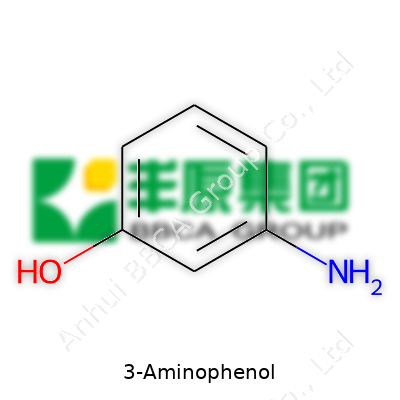
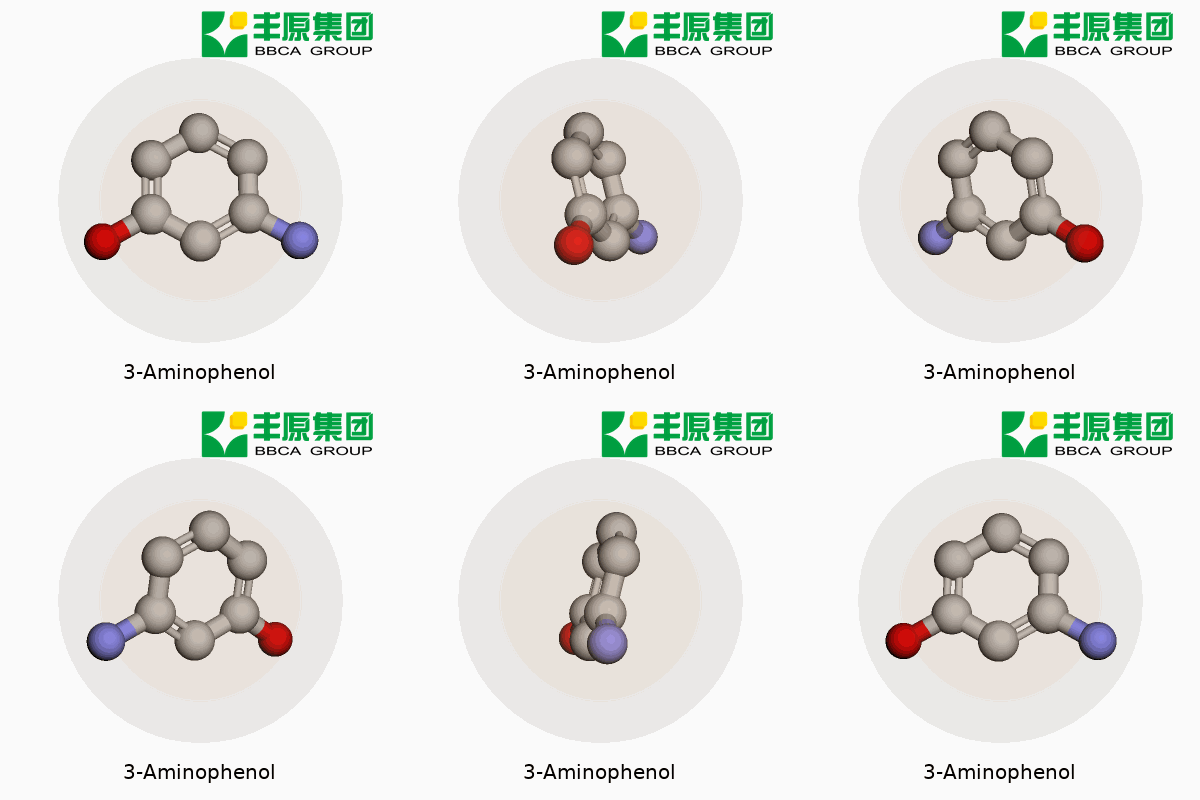
Years on the production floor teach a person not to take formulas at face value. 3-Aminophenol has six carbon atoms forming a benzene ring, one amino group attached to the third carbon, and a hydroxyl group on the first. The arrangement tells us how the molecule will behave in a reaction, what sorts of byproducts we might see, and how much energy it takes to complete a high-yield synthesis.
Plenty of research underlines the importance of these positions. Move the amino group to the wrong spot and you’re making a different isomer—same formula, but the plant’s entire downstream processes change. We have seen suppliers mix up ortho and para isomers before, which can create confusion in a batch, not to mention wasted time and money. No one wants to troubleshoot a fouled-up purification because of a mix-up in structural understanding.
Some of the most costly mistakes in chemical manufacturing track back to a misunderstanding of structure, not just formula weight. The C6H7NO arrangement means our upstream synthesis—from nitrobenzene reduction or phenol amination—relies on strict pH, solvent, and temperature control, or yields plummet and side products elevate plant emissions.
Over the years, we’ve learned that regulatory authorities care as much about what comes out the stack as what gets shipped in drums. The hydroxyl group makes 3-Aminophenol more water-soluble than many related compounds, so our wastewater treatment operators must monitor for residuals in the effluent. Skipping this step can lead to environmental fines or worse, shutdowns.
The formula also gives clues about handling hazards. Both the amino and phenol groups can be reactive. Skin exposure can cause irritation and inhalation of dust creates safety risks. Our procedures—from operator training to drum labeling—stem directly from intimate knowledge of the molecule’s makeup.
Production rarely goes perfectly. Batch variability often traces back to a supplier’s starting material not matching the required position of substituents. We use spectroscopic methods to fingerprint each lot, looking for exact matches to C6H7NO’s expected signals. It’s tempting to trust a vendor’s word, but analytical verification prevents costly surprises.
Our experience suggests better communication up and down the supply chain helps manage these issues. Sharing data about intermediates and impurities allows us to adjust purification steps without scrambling for last-minute fixes. We invest in operator training, regular audits of receiving dock procedures, and industry monitoring to keep abreast of best practices.
Real understanding of chemical formulas shapes safer, cleaner, and more profitable operations. Every atom counted in C6H7NO affects synthesis, safety, and compliance. Our team never loses sight of this—even when things get hectic on the production line.
Working with 3-aminophenol every day means seeing its benefits and recognizing the respect it deserves. It plays a key role in manufacturing dyes, pharmaceuticals, and specialty chemicals. Those of us producing this compound can’t afford to take its hazards lightly, because safety isn’t just a compliance checkbox — it keeps the doors open and protects the people who rely on us.
3-Aminophenol falls under aromatic amines, a group known for certain risks. It releases a sharp odor and presents as a colorless to slightly brownish solid. People sometimes ask if it's hazardous or toxic. Having handled it across multiple batches and projects, the answer is clear: 3-aminophenol can harm you if you underestimate it.
Direct contact with the skin or eyes causes irritation. Even small splashes remind trained operators why proper handling matters. Breathing in dust is a more silent threat — it can irritate airways, provoke coughing or discomfort, and repeated exposure increases the health risk. For people who work with chemicals, symptoms like headaches or dizziness are signs to step back, assess ventilation, and control exposure.
Chemists know that many aromatic amines show a connection with blood changes or, in rare circumstances, cause longer-lasting effects with chronic contact. This has prompted global health agencies to caution against careless use. Safety Data Sheets (SDS) warn against swallowing 3-aminophenol, which can cause nausea or worse. Long-term studies have not confirmed it as a suspect carcinogen like some relatives, but leaving exposure guidelines up to chance serves nobody.
Decades in chemical synthesis have shown us the limits of theoretical safety. Every batch run is an opportunity to reinforce protocols that work. Full coverage gloves, goggles, and protective clothing stop most accidents before they start. Consistent dust control and local exhaust keep airborne concentrations far below regulatory thresholds. We trust our air monitoring equipment, running periodic checks against regulatory standards, and invest in up-to-date engineering controls. Training sessions focus on practical drills, making sure each team member recognizes early symptoms and knows the emergency procedure by heart.
Waste management counts as much as worker safety. Waste containing 3-aminophenol must go to proper chemical treatment facilities, never municipal lines. That protects both the public and the wider environment from contamination. Across the sector, we share findings on safer substitutes or engineered process improvements, but for now, 3-aminophenol remains integral to crucial supply chains.
The solution starts with company culture. A chemical like 3-aminophenol is best managed by teams who approach it with respect. This means not just following rules but understanding why those rules exist. Senior operators keep lines of communication open and foster an environment where anyone can flag an unsafe step.
Investment in ventilation and personal protective gear should not lag behind market fluctuations or profit margins. The cost of a single exposure incident ripples throughout a team and company reputation. Working together across departments, we constantly review handling practices — not just for regulatory compliance but because skilled, healthy workers drive every success story tied to this compound.
Working on the plant floor, calculating formula weights isn’t a one-time school exercise—it’s a daily step that keeps production running right. 3-Aminophenol, a compound we’ve synthesized for years, always brings the conversation back to the core: getting the numbers right. Its molecular weight is 109.13 g/mol. This number goes beyond paperwork. It sets the pace for batch calculations, keeps quality on track, and supports the production of dyes, pharmaceuticals, and resin modifiers that rely on 3-Aminophenol’s unique chemistry.
3-Aminophenol features a benzene ring, an amine group, and a hydroxyl group, combining to create its full chemical formula: C6H7NO. Those elements break down to six carbons, seven hydrogens, one nitrogen, and one oxygen. Carbon clocks in at 12.01, hydrogen at 1.01, nitrogen at 14.01, oxygen at 16.00—adding all those numbers totals 109.13 grams per mole. We never round this number on batch sheets, since any error could spiral into off-target concentrations, which cause lost time and costly troubleshooting.
Imagine scaling up a process that started with imprecise weight calculations. A small decimal error, multiplied over tons of material, leads to wasted raw ingredients and failed product specs. That comes back to haunt teams running reactors or preparing finished goods, causing real headaches. The only way to avoid this? Stick to reliable reference data and meticulous calculation.
Nobody on our team wants to rework a shipment or hear from an R&D chemist that their test batch flopped. Precise molecular weight shapes final concentrations and purity in downstream reactions—a priority every time. Pharmacological research depends on precisely formulated intermediates. Dyes for textiles demand the right color strength. Analytical labs run QC checks that live or die by the original molar calculations. With 3-Aminophenol, the margin for error stays razor-thin.
Solid manufacturing practice means confirming every input value. We check CAS numbers, review supplier documentation, and cross-check internal databases. The number 109.13 stays the same every time because we follow protocols based on industry references and validated lot certificates. No shortcut makes up for careful weighing, calibrated balances, and accurate labeling on every drum or tote.
Some outside sources can list slightly different values due to rounding, but we train new team members to always calculate based on atomic masses from the periodic table and check their work before scaling up. Diligent raw material verification and periodic internal audits have saved us from many headaches.
Clear information empowers our staff to maintain high standards. Molecular weights guide everything: dosing, solution preparation, and even the amount of cooling water needed on a hot day. Real-world experience pairs well with reference data to keep quality high and waste low. We encourage chemists, operators, and QC staff to ask questions, review standards, and double-check every calculation.
From raw material receiving to the final signoff on a certificate of analysis, the molecular weight of 3-Aminophenol—109.13 g/mol—remains the reference that keeps manufacturing grounded in reproducible science.
Over the years, our team has seen the full spectrum of chemical storage practices – from setups so meticulous they’d pass for pharmaceutical vaults to makeshift shelves that guarantee heartburn come inspection day. 3-Aminophenol, a key ingredient across dyes and pharma synthesis, won’t demand gold-plated tanks, but it rewards care and punishes shortcuts.
Any manufacturer who has spent a morning chipping caked solids from bags will understand the headache that comes from letting moisture in. 3-Aminophenol loves to draw water from the air. The result: clumps in your unit, unpredictable feed rates, and a loss of purity that can sink a batch. We’ve had to discard entire drums in summers where the warehouse roof leaked. The lesson: sealed containers, preferably lined, properly closed every time. Desiccant packs inside bulk containers save product and money.
It doesn’t take many months of storage near windows before noticing color shifts in 3-Aminophenol. It can go from white to yellowish as it starts to oxidize. If you want predictable chemistry, dark, opaque containers or storage in an area with no direct sunlight stop gradual breakdown. We have relied on windowless storage rooms since the early 2000s for this reason.
Heat won’t set 3-Aminophenol on fire, but fluctuations create condensation, which circles back to the moisture problem. Any spec sheet can list an ideal storage temperature, but from years of warehouse work, we see the best stability in steady, cool rooms. Not every facility has climate control, so minimizing exposure to heat sources and protecting from frost during winter goes a long way.
We train our crew religiously in basic clean-handling. Even trace residues from other chemicals nearby will taint a small batch of 3-Aminophenol. Cross-contamination isn’t just about safety—small amounts of metal dust can derail a day in dye production. We set aside stainless scoopers only for this compound and keep the workspace swept and wiped.
Nobody on the factory floor likes scrambling after a spill. Drums and bags left on walkways or stacked unsafely create those moments. We always keep them on durable pallets at a human-safe height, never higher than chest level. Clear labeling—date of arrival, lot number, basic PPE reminders—makes sure new hires and veterans alike don’t make preventable errors.
Long-term storage brings its own risks. Over time, even well-preserved 3-Aminophenol can degrade. We rotate stock using a straightforward first-in, first-used rule. As a matter of pride, we keep less product on hand rather than risking decline in quality or surprise wastage costs. This keeps inventory simpler to manage and prevents ‘surprise’ barrels lurking on the bottom rack.
In the end, good storage comes from habit and pride. Every year, we audit our practices and adjust for lessons learned—because fewer losses, better batches, and smoother audits all start with attention to detail on the ground. It’s the kind of discipline that keeps plants efficient and customers confident in what comes off our line.