Looking back over the years, the story of alanyl glutamine represents the spirit of industrial progress in the chemical industry. Years ago, L-alanyl-L-glutamine emerged from research labs in response to demands in clinical nutrition and biochemistry. The quest began as clinicians and scientists realized the limitations of glutamine—an amino acid known for gut and immune health—given its low solubility and rapid breakdown in solution. This motivated researchers in the 1980s to synthesize a more stable dipeptide form, giving rise to alanyl glutamine. Our earliest batches took shape in custom reactors, based on peptide synthesis pioneered in the 1960s and ’70s. Over several decades, refinements in synthesis and purification enabled higher yields and purities. Each step forward has been marked by persistent lab work and repeated troubleshooting—sometimes scaling up would reveal unexpected texture changes or side reactions unique to large vessels. But with determination, process improvements, and much hands-on trial, production reached an industrial scale.
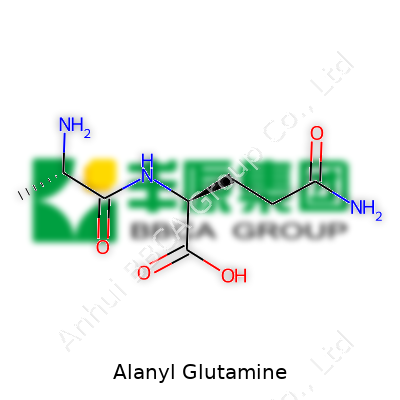
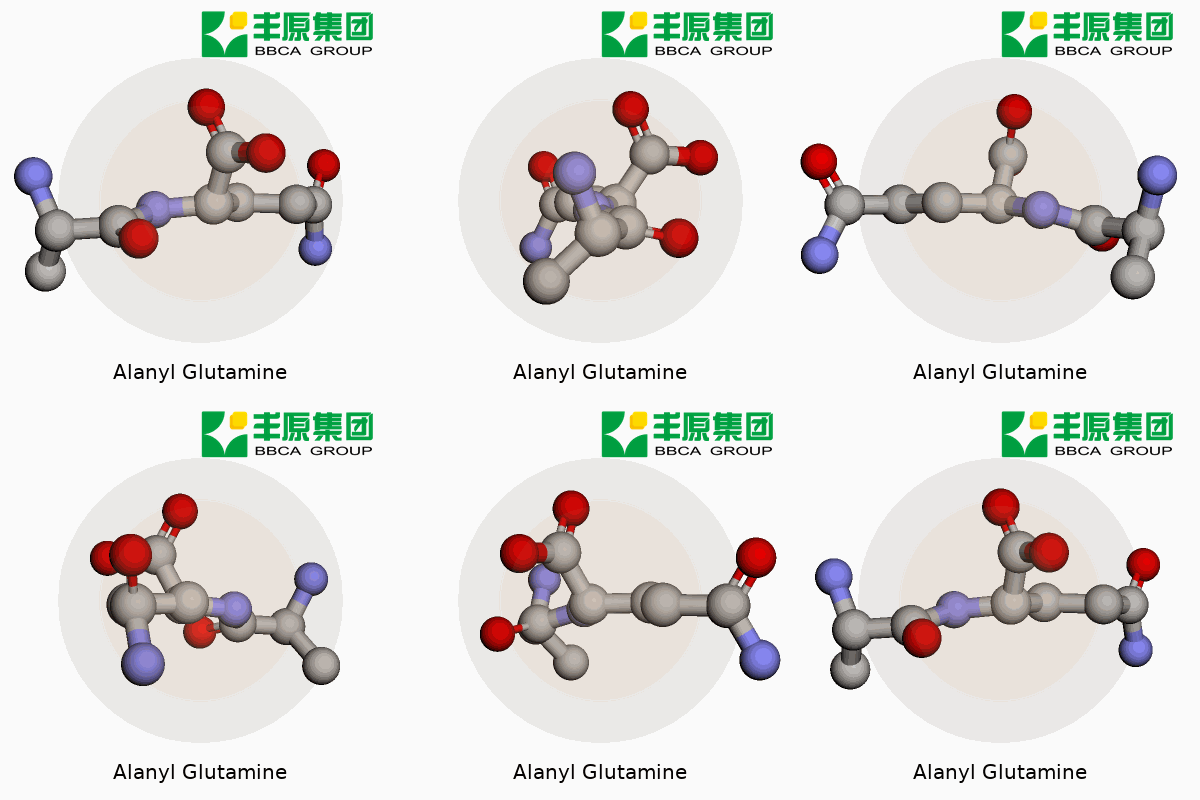
Alanyl glutamine now turns up in hospital feeds, sports drinks, and cell culture media across the globe. The dipeptide consists of the amino acids alanine and glutamine, connected by a peptide bond. In scientific literature and on shipment documents, it goes by L-alanyl-L-glutamine, Ala-Gln, glutenylalanine, or its registry numbers. Compared to plain glutamine, this compound brings improved solubility, stability, and a resistance to heat and pH swings—crucial when producing large solution batches for intravenous nutrition. We have watched nomenclature shift from “dissolving glutamine” to a preference for Ala-Gln as research and product development spread. Occasionally, procurement teams request it by European pharmacopeia designations or under proprietary blend codes from supplement companies. Seeing our compound move from labs into clinics, and being called by so many names, reveals how its versatility and acceptance have grown over time.
The physical appearance of alanyl glutamine, as we produce it, shows a fine white crystalline or powder form, reflecting high purity and successful removal of unreacted starting materials, catalysts, and residual solvents. When handled in bulk, it compacts modestly in drum storage, with a neutral odor and no significant clumping under controlled humidity. Chemically, the peptide bond between L-alanine and L-glutamine enables much greater water solubility—about 50g/100ml at room temperature compared to plain glutamine’s mere 2.5g/100ml. Its stability against hydrolysis and racemization springs from careful control of moisture, pH, and temperature in both manufacturing and storage. The molecular formula is C8H15N3O4, with a molecular weight of 217.22 g/mol. On the production line, key quality markers include optical rotation, peptide purity by HPLC, chloride content, and residual solvent checks. Material leaving our facility has tight particle size distribution, minimizing flow issues in downstream dosing or tableting.
Our technical team works closely with analytic chemists to set and meet tight standards. Specifications often reflect the intended use—clinical nutrition typically expects over 98.5% peptide content, low moisture, and trace levels of insoluble matter. We routinely carry out amino acid analysis, peptide mapping, and microbial contamination testing, often using stricter thresholds than regulatory requirements call for. Labels on our shipments declare batch number, production date, peptide content, and allergen-free statements when required. End-users in the medical sector request detailed Certificates of Analysis showing compliance to pharmacopeial monographs. Traceability supports audits and product recalls if issues appear further down the chain. In the manufacturing process, everything hinges on accurate labeling, sealed double-bag liners, and formal checks before shipping. Downstream processors and clinics rely on clear identification to blend the right grade into intravenous bags or nutritional formulas.
Producing alanyl glutamine at scale challenges both chemical synthesis and purification capacity. In the early years, solution-phase peptide synthesis in batch reactors served as the standard, using protected amino acid derivatives activated by carbodiimide or similar agents. Once research moved to production, batch sizes grew from a few liters to hundreds, bringing greater risks of incomplete reaction or by-product build-up. Today, most industrial processes rely on solid-phase peptide methods or optimized batch techniques. After condensation of L-alanine and L-glutamine under controlled pH, thorough extraction, crystallization, and multi-step filtration follow. Each step demands constant fine-tuning. Too aggressive washing can hydrolyze the peptide; insufficient filtering leaves particulate matter that clogs further purification. Far from being routine, the preparation depends on the operator reading subtle signs—clumping in a filter cake, cloudy filtrate, or slow drying that signals moisture retention. Consistently hitting target specifications requires a keen eye developed through experience, not just automated systems or formula sheets.
The essential chemical reaction forms the peptide bond by dehydrating the carboxyl group of alanine and the amino group of glutamine under catalysis, with protecting groups often shielding side reactions. Controlling these conditions avoids unwanted derivatives that might reduce biological effect or stability. The process sometimes allows for modifications to side chains, such as using derivative groups to improve solubility or optimize pharmacokinetics in specialized batches. Researchers continually look for improved coupling agents or greener solvents, seeking to reduce byproducts and minimize environmental impact. Many off-the-shelf improvements come from ongoing lab-scale trials, where reaction conditions are pushed—temperature, solvent, coupling time—until a better yield or purity is obtained. Each change ripples through downstream purification, so every manager keeps a watchful eye on any step that could alter the status quo of the established process. While theoretical chemistry offers insight, results on the plant floor often defy textbook predictions and require real troubleshooting in real time.
Worker safety drives every batch we produce. Alanyl glutamine, as a non-toxic, non-irritant amino acid derivative, presents few health risks compared to many chemicals. Still, dust control remains central; fine powders require contained handling and local exhaust ventilation. Splashes get removed quickly, and operators wear gloves and particulate masks. Allergenic risks stay low at the site, but cross-contamination with other peptides or raw amino acids can complicate operations and customer assurance, especially in shared facilities. Each reactor, dryer, and filter gets dedicated cleaning between runs. Standard operating procedures draw on international guidelines, blending cGMP protocols with the additional caution our experience recommends. Our technical staff updates them continuously, reflecting lessons learned from audit findings, staff feedback, or process changes. Environmental permits and waste stream audits have increased in frequency, pushing for lower solvent use and closed-loop recovery wherever possible. Regular safety drills and open lines for staff issues foster a safer, more reliable facility.
Production of alanyl glutamine has shifted dramatically with the expansion of its application base. The earliest shipments supplied hospitals for parenteral nutrition, especially in clinical cases involving trauma, sepsis, or burns. Glutamine demand in the body rises in these states, yet pure glutamine solutions degrade too quickly, making the stable dipeptide crucial. Now, sports nutrition manufactures incorporate it for muscle recovery formulations, while biopharmaceutical plants rely on it to support robust cell growth in bioreactor media, fueling everything from monoclonal antibody production to individualized regenerative medicine. Some food technologists experiment with it for new nutritionally enhanced beverages. Material from our plant ends up across continents, serving academic labs, pharmaceutical companies, and contract manufacturers blending bespoke formulas. The range of applications keeps expanding as clinicians and food scientists document new benefits and release guidelines encouraging wider use.
Our R&D division remains in constant motion, fueled by feedback from the field and growing regulatory sophistication worldwide. Teams scour recent literature, attend conferences, and build partnerships with academic groups probing new applications. Work now focuses on enhancing production efficiency, cutting environmental impact, and tweaking technical parameters to match the shifting demands of global customers. Projects often involve process analytical technology—deploying inline sensors and AI analytics to make the plant floor smarter and safer. Stability studies run year-round in real-world conditions, with particular attention to how moisture and handling impact the product in faraway distribution hubs. Pilot batches test new excipients, lower-energy mixing, or solvent-free crystallization. A major thread ties industry-wide—whatever improvements science achieves in purity or safety, the next question always centers on scalability and reliability for factory-scale runs. Research does not end with the publication of a promising pathway; it ends only when robust, repeatable batches ship to real customers.
Alanyl glutamine benefited early from thorough toxicity studies as it walked the regulatory approval path. Toxicologists scrutinized its hydrolysis rate, metabolic fate, and possible accumulation in compromised organs. Compared to other peptides, it proved remarkably well tolerated—even in multi-day infusions at high doses. Reports show few adverse effects, and the WHO classifies it as safe under standard conditions. Of course, manufacturing must continually address potential impurities—residual solvents, unintended isomers, or microbial contamination—especially as toxicological standards stretch lower every year. Each production campaign brings fresh testing against quality criteria, and new toxicology endpoints emerge based on evolving clinical practice and ongoing nutritional studies. Vigilance never lapses, even with a safe product; only relentless staff training and systematic checking ensure the finished compound reaching the patient or reactor matches specifications on every badge and label.
Tomorrow’s reality for alanyl glutamine will look quite different from yesterday’s. Manufacturers face rising demand from sports nutrition and pharmaceutical fermentation, with stricter standards on sustainability and traceability. Customers regularly ask about renewable raw materials, carbon footprint reductions, and post-consumer recycling of packaging. Researchers look for modified versions with longer blood half-lives, better cell uptake, or adjunct activities like anti-inflammation. That means process changes—new solvent systems, even continuous flow peptide synthesis—will shape the next generation of plants. Global supply chains remain vulnerable to disruptions, so vertical integration and multiple sourcing of raw amino acids have moved up the agenda. R&D will drive advances in greener production, waste minimization, and even circular resource use—remediating wash-water, capturing fugitive dust, reducing energy during drying, and converting plant by-products into saleable co-products. The future belongs to nimble manufacturers willing to adopt new technologies, maintain deep technical teams, and welcome regulatory audits as opportunities to set higher benchmarks. Those who persist in improving every stage—chemistry, analytics, packaging, logistics—will remain the most trusted partners for customers who depend on reliable access to advanced amino acid derivatives.
Decades in the chemical industry have shown that not every compound changes healthcare as impressively as alanyl glutamine. This dipeptide—created from the amino acids alanine and glutamine—doesn’t just fill a spot on a product list. Its journey from lab bench to healthcare settings involves a focused push to answer medical challenges that pure glutamine could never fully solve.
Many years back, clinicians struggled with glutamine. Glutamine is critical for gut health and immune strength but loses stability quickly in solutions, leading to inconsistent patient results and higher waste for hospitals. Alanyl glutamine offers a molecular improvement: it keeps glutamine stable in liquid form and releases it reliably after administration. Hospitals around the world have adopted it to support patients under stress, especially those in intensive care units or recovering after surgery. This compound survives sterilization and storage, making it valuable for intravenous nutrition (parenteral feeding). Unlike raw glutamine, the dipeptide version resists breakdown and gets absorbed properly, ensuring fragile patients receive what their bodies need to heal.
Outside hospitals, athletes and trainers have taken note too. Muscle stress, long training hours, and repeated competitions all ramp up glutamine demand in the body. Free glutamine taken by mouth loses some of its content before it reaches muscle tissue. Alanyl glutamine, on the other hand, crosses the gut wall efficiently and delivers both alanine and glutamine together, which proves useful for refueling and muscle recovery. This isn’t hearsay; numerous sports nutrition studies validate the improvement in post-exercise recovery, hydration status, and immune stability when using this dipeptide.
Scaling up alanyl glutamine synthesis relies on decades of experience with fermentation and peptide bonding. Tight process controls, right from filtration to final dry-powder formulation, allow us to offer consistent material for medical factories and sports industries alike. We keep a close watch on residual solvents and impurities—regulators demand it, and we take pride in batch-to-batch quality. Hospitals and supplement makers report far fewer complaints of spoilage or loss of glutamine activity compared to earlier formulas. Logistics teams no longer worry about breakdown during shipment, so life-saving nutrition gets where it’s needed without interruption.
Positive changes show up most strongly among malnourished or trauma patients. Clinical data reports better intestinal healing, lower rates of infection, and smoother recovery after surgery. Alanyl glutamine is now listed in several clinical nutrition guidelines. Every dose used in an intensive care unit carries our quality guarantee, and we see the long-term effects in published studies—lower hospital stays and faster recovery add up to healthier people and more manageable hospital costs.
Progress in chemistry needs purpose—alanyl glutamine shows real results by stabilizing a molecule critical to life itself. Whether supporting a patient learning to eat again after surgery, helping an athlete push through fatigue, or defending gut health during severe illness, each batch delivered makes the science meaningful. We believe those raw production realities—purity, stability, reliability—matter most for every patient and every industry partner counting on us.
Working each day with Alanyl Glutamine gives us perspective most people do not see. This compound shows up in hospitals, research labs, and nutritional products. Many ask about the correct way to take it and how to dose it safely and efficiently. The answer depends on why it is being used and who is using it.
Alanyl Glutamine is a dipeptide that solves some headaches linked with regular L-glutamine supplementation. In our experience, regular L-glutamine can degrade in water or at high temperature, limiting its value in parenteral nutrition and demanding clinical applications. Alanyl Glutamine passes stability tests that plain glutamine can’t touch. Hospitals and clinics push for this compound in IV and enteral feeds because it handles sterilization and storage without losing strength, which can have direct effects on patient outcomes.
Many clinicians reach for this dipeptide in situations that need sustained glutamine support—major surgery recovery, trauma, burns, gut injury, and certain gastrointestinal disorders. Alanyl Glutamine’s stability allows it to be mixed into enteral or parenteral solutions for extended periods, giving flexibility to pharmacy and nursing staff. Typical dosages fall between 0.3 to 0.5 grams per kilogram of body weight per day, reflecting practices across Europe and Asia in clinical nutrition. Oral supplement blends sometimes lower this to about 1–5 grams per serving, particularly in sports or wellness products.
Through frequent communication with hospital supply teams and researchers, we hear few complaints about adverse reactions when Alanyl Glutamine is used at recommended levels. The compound does not trigger the solubility or taste issues that plain glutamine causes in some feed solutions. Real feedback points to high gastrointestinal tolerance both when delivered through a feeding tube and when taken orally. Medical teams appreciate how it helps maintain protein intake for patients who can’t eat enough or absorb nutrients normally.
Quality control takes priority at every stage of production, and we test each batch to tight specifications. This protects against contamination or breakdown during shipping and storage. Pharmacists often ask about compatibility with other nutrients or medications in a feeding solution. We run studies to verify that Alanyl Glutamine remains stable with glucose, electrolytes, and most standard vitamins and minerals under real storage and use conditions. This data helps inform hospital formularies and direct staff choices.
Demand for this ingredient keeps rising as more evidence suggests benefits for gut barrier, immune function, and muscle preservation. Still, each user brings unique concerns. A pediatric ICU may ask for different concentrations and monitoring than an adult cancer ward or a sports nutrition brand. For this reason, we press for more direct dialogue with clients so they can use our technical team as a resource. Where science or practice raises new questions, we set up collaborative tests in-house and with trusted partners.
Direct manufacturer engagement removes guesswork for users worried about safe and practical use of Alanyl Glutamine. Whether advice is for a nurse preparing IV bags or a product developer seeking consistent performance, our role is to share real-world manufacturing perspective that supports safe, reliable outcomes for end users.
Our team has spent years in facilities where Alanyl Glutamine is produced, refined, and quality-checked from raw materials to finished powders. Seeing this process so closely means we've gotten used to questions about health effects and safety. The topic doesn’t stay theoretical when you handle bags of the stuff, watch it blended into nutritional formulas, and assess every batch for purity. You learn not to take any detail for granted. If we spot an issue or get wind of a consumer concern, we review production logs and safety reports straight away.
No matter how many clinical trials are published, nobody wants to hear a chemical manufacturer dodge tough questions about possible side effects. Alanyl Glutamine, a dipeptide of alanine and glutamine, mostly targets the medical and nutritional sectors. Hospitals use it for patients who have difficulty absorbing nutrients, athletes include it for recovery, and it pops up in tube feeding formulas for critically ill patients.
Batch after batch, our production records haven’t shown frequent reported issues during normal handling or blending. Direct contact in powdered form doesn’t lead to skin or eye problems unless dust standards get ignored—something not tolerated on our floor. Workplace monitoring and engineering controls prevent long-term exposure among our crew, and blood work from annual health checkups confirms this. The sizeable volume we manufacture means our health officers watch for even single-case trends; none have raised red flags so far.
The real concern centers on the end-users: the patients, the clinical teams, and sometimes fitness communities. Alanyl Glutamine often gets added directly to IV feeds in hospitals, where materials face far stricter regulation. Clinical literature rarely points to serious side effects when dosage stays within recommended levels. The most common reports focus on occasional mild gastrointestinal upset—nothing more than what any amino acid supplement might trigger if the body receives more than it can absorb at once. If the kidneys already struggle, some practitioners prefer to monitor more closely, as with any nitrogen-rich nutrient.
We keep every batch certificate available for audits, trace raw materials, and engage with researchers who notify us of large-scale studies or unexpected effects. Sometimes doctors spot rare allergies or sensitivities, but those events show up with almost any naturally occurring peptide on the market. It becomes a matter of responding quickly and thoroughly, not pretending those cases can’t happen. In practice, our own staff sees none of them, though we’re always ready to modify procedures if any data suggest we should.
Manufacturers get to see how raw chemistry interacts with the real world, not just the controlled lab setting. Our advice to partners remains consistent: use Alanyl Glutamine in the way that clinical studies and experienced practitioners intend, stick to clearly recommended dosing, and make sure that anybody with kidney or liver concerns gets extra consultation from their healthcare provider. The science and safety profiles haven’t changed in a decade, but the watchfulness behind every batch makes more difference than any label fine print.
Years spent in chemical manufacturing deliver lessons you don’t always find in the literature or at trade shows. Alanyl glutamine has moved from a research interest to a regular part of clinical nutrition and sports recovery products. Whether working with nurse researchers or quality managers at production plants, the main question incoming clients ask revolves around long-term safety.
Every batch of alanyl glutamine needs its full set of quality checks: purity, stability, and consistency. Efficient facilities run assays for residual solvents, heavy metals, and microbial contaminants. Any flaws get caught early because long-term trust rides on every capsule or package. Alanyl glutamine itself is stable because the peptide bond between alanine and glutamine shields glutamine from the rapid breakdown that plagues free glutamine supplements. That stability during storage translates into reliability for long-term users.
Medical teams and regulatory agencies have looked closely at the peptide. Publications from Asia and Europe document its use in clinical nutrition, especially in patients requiring parenteral nutrition over weeks or months. Doses used by medical professionals generally match the upper end of what you find in commercial products. No significant concerns have surfaced related to organ function or toxicity from sustained intake when quality is controlled. Reports sometimes mention minor digestive discomfort if used far beyond suggested levels, but this resolves with dose adjustments.
Manufacturers track production performance, customer feedback, and regulatory compliance requirements all year. There have been years where several metric tons of alanyl glutamine left production lines for markets ranging from hospitals to sports clinics. Returns or product complaints linked to chronic use remain extremely rare. In post-marketing surveillance required by regulators, safety signals do not come up with meaningful frequency. Our own collaborations with hospital procurement teams and nutritionists have reinforced the pattern seen in published data: when made to high purity, alanyl glutamine performs as designed without raising new safety flags over time.
No matter how much laboratory or clinical data appears, skepticism keeps the safety bar high. That motivates continual investment in traceability, batch-level transparency, and third-party audits of our plant processes. We publish product certificates and offer site visits to qualifying partners who want to see exactly how their raw materials get processed. Auditable records are available for each batch of raw materials, processing aids, and final products. These systems support safer long-term use because any deviation is easy to pinpoint and address quickly.
The future of alanyl glutamine rests on objective science and responsible operations, not just tradition or marketing claims. Open communication with end users pushes us to update process controls and monitor the latest research. Most people using alanyl glutamine daily or long term report expected benefits without hidden risks, provided quality controls stay tight and doses reflect the guidance of healthcare professionals. If new evidence eventually indicates new risks, an agile manufacturing system adapts procedures fast, because safety has to come first in practical terms, not just in policy.
At our plant, we work with alanyl glutamine every day. This stable dipeptide combines the amino acids L-alanine and L-glutamine. End users often ask about its compatibility with various supplements and pharmaceuticals, so we follow research in real-world use, not just theories. Our process and feedback highlight a few important insights on this topic.
Clients come to us for alanyl glutamine to help with gut health, muscle recovery, rehydration, and nutrient stability. They often use it in mixes with electrolytes, typical amino acids like BCAAs, whey proteins, and carbohydrate drinks. We analyze blend behavior—alanyl glutamine stands up well under different storage and mixing conditions. It maintains stability in combined formulations, especially as it resists hydrolysis and degradation better than free glutamine. This benefits not just shelf life but also the reliability of dosing when people stack supplements or take blends.
Athletes and patients blending alanyl glutamine with creatine, beta-alanine, or multivitamins rarely notice intolerance or breakdown in everyday settings. Stomach comfort tends to remain solid, and products perform as expected. In high-temperature or acidic formulations, elemental amino acids break down quickly. Alanyl glutamine resists that, letting formulators create more versatile products for sports, medical care, and even tube feeding admixtures. Feedback suggests most people do not experience unwanted GI upset or drug-like interactions when taking it with other classic exercise, recovery, or electrolyte blends.
Pharmacists and healthcare teams sometimes include alanyl glutamine in enteral or parenteral nutrition. In our own work with medical bulk blends, few antagonistic reactions appear with standard electrolytes or carbohydrates. That said, anyone who takes narrow-therapeutic index drugs (like anti-epileptics or immunosuppressants) should proceed with caution. Amino acid load may, in rare cases, impact metabolism or renal clearance of sensitive drugs. We always urge clinicians and end-users to review current medications with their providers. Stability and compatibility do not guarantee that absorption or metabolism will never be influenced, especially for vulnerable patients.
Problems often come from contamination or adulteration, not the dipeptide itself. We keep strict batch separation to avoid cross-contact with allergens or unexpected excipients, as some customers stack their supplements with herbal products, probiotics, or pharmaceutical agents. Our quality checks reduce the risk of unintentional interaction arising from manufacturing rather than chemistry.
Alanyl glutamine stands up well in complex blends. It mixes predictably with most mainstream nutritional ingredients, improves overall product stability, and is unlikely to spark new chemical reactions on the shelf. Current science and feedback support its use as part of supplement programs. That said, individual medical factors always govern best practice. We always welcome direct questions about blend compatibility and encourage clear communication with healthcare teams for anyone managing medications and supplements together.