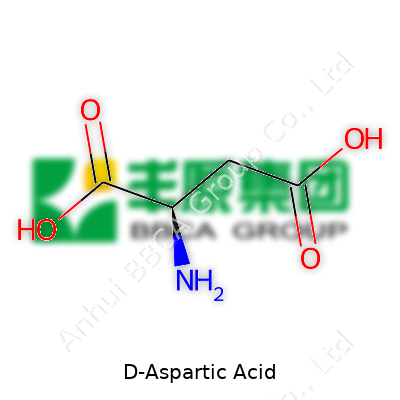
D-Aspartic acid first appeared in scientific literature in the early part of the twentieth century, long before anyone pictured it on sports nutrition labels. Its identification as one of the two optically active forms of aspartic acid marked an important moment in protein chemistry. My own years in chemical synthesis taught me that back then, isolating enantiomers demanded a blend of patience and ingenuity. Early researchers leaned on protein hydrolysis and crystallization techniques, gradually teasing apart its physiological significance. By the late 1900s, physiologists and chemists realized that D-aspartic acid, once dismissed as an insignificant stereoisomer, played specialized roles in animal tissues, particularly in the endocrine and nervous systems. This changing perspective shifted it from a laboratory curiosity to a target for industrial synthesis and deeper biological studies.
Decades of refining our procedures have shaped the D-aspartic acid used today across a range of industries. The white crystalline powder has attracted attention far beyond its origins, not just in labs, but in food, feed, sports supplements, and pharmaceutical formulations. Most commercial D-aspartic acid hits a purity above 98%, and the focus always remains on securing optical purity—meaning no more than trace L-isomer presence. D-Aspartic acid is sometimes labeled as D-2-aminobutanedioic acid, or by its registry with various chemical and pharmacological agencies. Within our teams, adherence to clear technical standards reflects regulatory shifts, customer expectations, updated pharmacopeial references, and advances in purity analysis, especially chiral testing.
D-Aspartic acid is a strongly hydrophilic amino acid with a distinctive acidic taste. It dissolves easily in water, modestly in alcohol, and proves almost insoluble in ether or chloroform, which steers the choices during purification and blending in manufacturing. In the lab, the melting point close to 270°C (with decomposition) stands as one of several benchmarks to confirm its identity. Structurally, it forms zwitterions—internal acid-base pairs—at neutral pH, so its behavior in mixtures often requires close pH monitoring. Its ability to chelate certain metals or ions features in some of our downstream applications. No one around here takes moisture absorption lightly either; storage and transport always factor in the material’s tendency to clump or degrade if left unprotected in humid environments.
Our standards for D-aspartic acid rest on validated chromatographic assays, not just appearance or aroma. Purity runs above 98%, moisture below 0.5%, and trace metals—especially heavy metals—meet international food and pharmaceutical limits. Chiral HPLC backs up claims of optical purity, since trace contamination with L-aspartic acid can compromise end applications. Labels state CAS numbers, batch identifications, expiry dates, and safety symbols reflecting GHS guidance. Over the years, clearer labeling has helped customers manage traceability and regulatory compliance. We keep batch records for years, since a few grams fed into a clinical trial or final supplement batch deserve proper accountability if authorities come knocking.
Historically, extracting D-aspartic acid meant fractional crystallization from hydrolyzed animal proteins, but modern industry views chemical synthesis as a more scalable solution. Processes often begin with maleic anhydride and nitrogen sources, using stereoselective catalysts and solvents—though some routes favor fermentation with specific microbial strains. Biotechnological techniques continue to advance, especially enzyme catalysis, reducing the cost and environmental footprint compared to classic petrochemical sources. The work in process development has focused on boosting yields, trimming waste, and cleaning up the product profile. Washing and drying steps get vigilant oversight, as minor residues or by-products can trip up high-purity targets. These advances mean less solvent loss, more reliable particle sizes, and more predictable re-crystallization habits, aiding our downstream customers.
Amino and carboxyl functional groups make D-aspartic acid receptive to a range of derivatization reactions. Coupling with protective groups under mild conditions enables synthesis of peptides and stable intermediates. Oxidation, carbodiimide-mediated condensation, and reactions with activated esters have become part of the developer’s toolkit. Over the years, we've seen growing work using D-aspartic acid to build chiral drugs, and topical pharmaceutical preparations. Its ability to cross-link or chelate plays a role in mineral fortification products and advanced biomaterials. Purification after reactions brings its own trials: standard crystallization doesn’t always clear chiral mismatches or low-level contaminants, so we rely on ion-exchange columns and preparative HPLC.
The chemical community recognizes D-aspartic acid by a few names. Registries list D-2-aminosuccinic acid, D-amino-succinate, or even (R)-aspartic acid, referencing its right-handed rotation of plane-polarized light. In nutrition science and some regulatory submissions, it appears as DAA. Labels sometimes also reference its EINECS number for European markets or the standard amino acid numbering system. Accurate naming prevents mix-ups with L-aspartic acid, which remains far more abundant in natural proteins and behaves differently in the body and in chemical syntheses.
Protecting people and processes always eclipses convenience in our facilities. Operators wear gloves, goggles, and lab coats as a baseline, and ventilation keeps dust exposures in check. Though D-aspartic acid has a relatively low acute toxicity in lab animals, chronic exposure at high concentrations raises irritation risks to eyes or respiratory tracts. Production lines rely on local exhaust, frequent clean-downs, and dust containment. Every incoming batch undergoes metal screening—high lead or arsenic readings prompt immediate investigation. Material Safety Data Sheets inform everything from storage to waste disposal, teaching each new generation about spills, fire hazards, and incompatible chemicals. Worker health tracks alongside environmental reporting, which covers not just emissions but also wastewater compliance and solid residue classification.
Developments over the past decade expanded D-aspartic acid’s reach. Peer-reviewed studies found its presence in animal neuroendocrine tissues, which drew attention from sports and reproductive health researchers. Supplement manufacturers turned to it for testosterone-boosting products, supported by mixed but intriguing data from small clinical trials. The food and feed industries apply it as a specialty amino acid to support animal growth or fortify human dietary supplements. Pharmaceutical teams sometimes use D-aspartic acid as a building block for chiral drug synthesis or for experimental neuroactive compounds. Its metal ion chelating properties draw industrial applications too—a small but vital set of niche products for metal recovery or trace mineral delivery.
Ongoing work in our R&D labs addresses stereochemical purity, scalable green chemistry approaches, and new modifications. Analytical staff use NMR, mass spec, and chiral HPLC to fine-tune identification protocols, picking up low-level contaminants with increasing sensitivity. Efforts to integrate enzyme-driven routes point toward lower-temperature, lower-waste production schemes. Our researchers collaborate with universities on novel derivatives—especially for slow-release or targeted drug delivery systems. On the bioactivity front, teams dig into the pathways where D-aspartic acid influences neurotransmission or hormone regulation. Every year, growing literature clarifies mechanisms and safety limits, allowing us to advise clients from a foundation of facts, not just regulatory minimums.
Careful toxicity research has shown that D-aspartic acid possesses low acute toxicity in rodents, though long-term and high-dose studies remain sparse. Some early in vitro data suggested potential excitotoxic effects at high concentrations in neural cells, but doses used in dietary products stay well below these experimental levels. As a manufacturer, we monitor new findings closely and accurately communicate them upstream. Accurate dosing recommendations help customers avoid above-threshold exposures. Cleaning protocols and worker training focus on preventing dust inhalation, mitigating the effects of accidental splashes, and rapid containment in the event of material release.
Interest in D-aspartic acid continues to rise, especially as research links it with hormonal modulation, neuroprotection, and even novel materials science. The rising demand from fitness and nutrition markets creates opportunity, but also draws regulatory scrutiny, so manufacturers like us invest in traceability, batch authentication, and partnerships with reputable supplement formulators. Biotechnologists push for more sustainable and selective synthetic routes, aiming to cut solvents, minimize side-products, and boost process efficiency. Looking ahead, integration into medical research, animal health, and high-value specialty chemicals remains likely, shaped by advances in analytical quality control and end-user demands for transparency. The progress prompts us daily to rethink not just what D-aspartic acid can do, but how responsibly we can produce and support its next chapter.
In the lab, D-Aspartic Acid is anything but an ordinary material. As manufacturers, we see its journey start with careful fermentation and purification. The interest in this non-essential amino acid exploded in the last decade, mostly among researchers and sports nutrition brands. People read about its ties to hormone function and athletic performance. Every so often, a new study sets off fresh demand—then the questions start coming our way. What does it actually do? What drives the interest?
D-Aspartic Acid is one of two mirror-image aspartic acid forms. Our work focuses on the D- form, because it takes part in key pathways, particularly those linked to hormone production. Researchers found that D-Aspartic Acid plays a role in stimulating the release of key messengers in the brain, like luteinizing hormone, which helps regulate testosterone in the body. High-interest groups include aging men, athletes, and some fertility clinics, all looking for a natural way to influence hormone levels. We keep up with new data coming from universities around the world. Animal and human trials paint a mixed picture. Some show a measurable impact on testosterone and sperm production. Others see barely any effect. But it’s clear that, biologically, D-Aspartic Acid is involved in more than once thought possible—a fascinating lesson in the complexity of natural compounds.
We see cases of adulteration with cheap fillers or poorly synthesized product. These shortcuts compromise both safety and trust. In the production line, vigilance isn't optional. Any deviation in synthesis or purification can introduce unwanted contaminants or incorrect isomer ratios. That’s a headache for everyone in the supply chain, especially end-users interested in health implications. By investing in robust quality systems, we keep each batch consistent, pure, and traceable. With demand for D-Aspartic Acid riding high, shortcuts tempt those new to the industry.
Some users believe “more is better," especially after catching wind of supplement trends. Experienced manufacturers stress moderation and science literacy. Excessive intake—sometimes promoted online—leads to digestive distress or a cascade of uncertain effects. Since market hype often runs ahead of published research, we hope researchers keep examining both the benefits and limits. As a supplier, our job is to provide accurate information and pure material, not promises of miracle results. We urge customers to consult healthcare professionals before seeking hormonal interventions via amino acids, and to stay informed as the field develops.
D-Aspartic Acid’s path shows both the promise and pitfalls of natural products research. We believe both regulators and industry leaders should call for greater transparency along every link of the chain. Authenticity testing, open data on sourcing, and more independent safety studies—these steps won’t just build trust; they also support better business. For manufacturers, choosing steady improvement over short-run profit pays off. The science around D-Aspartic Acid keeps evolving, and so does our responsibility as manufacturers.
The discussion around D-Aspartic Acid keeps growing, especially among those focused on physical performance, hormone support, and overall wellness. From our perspective on the plant floor, where we make each batch to strict consistency standards, this amino acid has earned its popularity for several science-backed reasons. D-Aspartic Acid stands out among its sibling compounds for the specific way it interacts with the human endocrine system, especially in relation to testosterone synthesis.
Testosterone regulation remains the most talked-about benefit in scientific literature. Multiple controlled studies have pointed out that D-Aspartic Acid can stimulate the release of luteinizing hormone, which then signals the testes to increase testosterone output. Just a few days of supplementation can lead to marked hormonal changes in healthy men, though effects vary with age, existing testosterone levels, and individual metabolism.
On the production side, we meet tight purity requirements for pharmaceutical and food use, because these applications depend on predictable, repeatable results. End-users who train regularly or feel the effects of aging report sharper gains in energy, motivation, muscle strength, and even recovery time. These observations mirror the conclusions found in several peer-reviewed studies that report elevated testosterone and improved sperm quality in men taking modest daily doses.
Beyond the sports nutrition world, fertility clinics and urologists have paid attention to D-Aspartic Acid’s role in stimulating sperm count and health. Research in this area started with animal trials, where D-Aspartic Acid led to substantial increases in sperm motility and concentration. In humans, clinical trials showed encouraging improvements for those with fertility concerns. This interest goes beyond the realm of athletes and reaches couples seeking natural approaches to family planning.
Recent studies also highlight how D-Aspartic Acid modulates neurotransmitter release, with potential cognitive effects. While this branch of research still requires careful review and larger-scale studies, some preliminary results show improved spatial learning and memory retention in animal models.
Over the years, we have had countless conversations with formulators, trainers, and consumers who believe more is always better. The research simply does not support megadosing. Most benefits show in moderate, carefully monitored intakes. Anecdotal reports of mood swings or hormonal imbalances tend to follow excessive or prolonged use, particularly when D-Aspartic Acid is stacked with other compounds. We encourage a pragmatic approach built on published science. Consistent batch purity, third-party lab verification, and traceable raw material sourcing all play key roles in supporting safe, reliable supplementation.
As producers, we have found that open dialogue with nutrition scientists, doctors, and everyday users sharpens our manufacturing process. We share batch analyses and field results, allowing us to tweak parameters for optimal solubility, shelf life, and bioavailability. Ongoing partnerships help us address misconceptions and ensure D-Aspartic Acid remains a trusted option in health and performance formulas.
D-Aspartic acid, or DAA, grabs plenty of attention across sports nutrition and life sciences sectors. Many turn to it for its role in supporting athletic recovery and muscle growth, thanks to claims about boosting testosterone levels. Stepping into the shoes of a manufacturer, we don’t just look at what DAA does at the bench—we look at how it behaves in real-world applications and, equally important, what the compound might do inside the body beyond desired effects.
Most scientific studies exploring DAA focus on its short- and medium-term use. Common feedback from users and clinical reviews leans toward mild side effects, with stomach discomfort, bloating, nausea, and headaches showing up most often. In our process development and technical support, we’ve heard from downstream users that these complaints typically relate to higher doses, especially those exceeding the 3-gram daily mark. Lower dosages, in line with published research, seem less likely to trigger such issues. This pattern matches what researchers have observed. In both fitness and research settings, the body usually processes moderate amounts of DAA without trouble.
Hormonal balance stirs up more concern with DAA products than anything else. Anything that nudges hormone production deserves serious oversight, both for safety and for ethical reasons. Some athletes experimenting with large DAA doses over extended periods have reported swings in mood, irritability, or feelings of anxiety. Occasionally, reports pop up of changes in libido and sleep patterns too. Human trials rarely point to dangerous spikes in testosterone from standard DAA supplementation, though. Actual increases land at the lower end—often less than some online stories might suggest.
Long-term data still needs to catch up. Few studies go beyond three months, which leaves questions open. For a manufacturer, this gap means we follow the literature and listen to practitioners, researchers, and large-scale users to spot any new patterns or serious adverse effects. Changes in hormone-sensitive conditions, like those affecting reproductive health or prostate growth, call for careful monitoring and, in certain populations, avoiding DAA altogether. Our guidance to commercial partners always encourages medical oversight for anyone with underlying hormonal, cardiac, or reproductive health issues.
On the manufacturing floor, purity checks and batch consistency play a lead role in preventing unexpected side effects. Poorly controlled manufacturing or failure to remove contaminants could introduce new risks. That’s why accredited facilities stick to tight quality control, robust traceability, and independent third-party testing. We keep communication lines open with our direct customers and provide technical documentation about possible side effects, recommended use levels, and latest regulatory views stemming from markets around the globe.
Addressing side effects starts with education and collaboration. Users should stick to proven dosages and remain alert to body signals. Manufacturers can support this ecosystem through transparent information, constant quality checks, and rapid updates if any new safety findings emerge. Further studies will fill the gaps around long-term exposure and risk to special populations. For now, most evidence points toward tolerability when DAA is sourced and used responsibly. As manufacturers, we keep pushing for safety, clarity, and open dialogue with anyone who trusts us to supply the highest standard of D-Aspartic acid.
Our work with D-Aspartic Acid often starts at the raw material stage. Down on the production floor, the story of any ingredient centers on quality. D-Aspartic Acid lives under the microscope, with every batch analyzed, not just for compliance but for purity and consistency. The end goal has always been the same: reliable, safe, and predictable performance for our customers—usually sports nutrition brands and supplement formulators.
Inside manufacturing, we see that not all ingredients remain stable under heat or during processing. D-Aspartic Acid has held up well in tablet and capsule lines. Oxidation is low, and the material blends cleanly, so dosing accuracy matches what the packaging promises. This matters because many users have expectations for results, especially regarding testosterone or athletic recovery. Customers trust products only if every serving hits the same target.
From our end, most clients request guidance on optimal dosing and timing. Scientific studies tend to focus on daily intakes from 2,000 to 3,000 mg. More doesn’t always mean better; blood levels hit a plateau, and safety studies urge moderation. Manufacturers, including us, encourage clients to stick to what’s been documented in published research. Consistency in daily consumption—not loading or cycling—increases the odds of seeing the documented benefits, such as any bumps in testosterone.
Taking D-Aspartic Acid with water, in a fasted state, seems the practical route. We hear the same thing from formulators and nutritionists who design their products based on absorption. Taking it before breakfast can sidestep both food-drug interaction and degradation in the gut. On our bulk shipments, we typically print usage advice that mirrors industry consensus—never stretch dosages just to chase faster results. If someone combines it with proteins or multi-ingredient pre-workouts, the effect tends to dilute, making it harder to trace its role in bigger stacks.
The language around supplements and safety evolves quickly. We routinely see the need for education about safe use. Every time trends push toward “max strength” formulas, the risk grows that end users will overdo it, especially with stacking from different supplement brands. Cases of side effects usually tie back to ignoring daily guidelines. In response, our industry now favors third-party testing and QR-code traceability on packaging, so consumers can crosscheck batch numbers against manufacturing data.
We advise retail formulators to offer clear, non-hyped communication on dosing schedules and purpose. Many who buy bulk ingredients for custom blends seek supporting studies. Transparency earns trust, and it steers new customers away from blind experimentation. To us, this means labeling must highlight single-ingredient purity, the manufacturing date, and storage tips to slow degradation.
The feedback loop between manufacturer and end user shapes every run. Rigorous internal checks on D-Aspartic Acid’s source material can head off issues downstream. Quality certification—ISO or GMP—can make all the difference for both product safety and market acceptance. While producing to tight tolerances ups the cost, feedback tells us that buyers who stick to tested doses and proven manufacturers see the best results. So in the end, the most important factor sits in the partnership: pure raw materials, sensible dosing, and honest information passed directly from the production line to the end consumer.
Years spent manufacturing D-Aspartic Acid have shown us that questions about its long-term safety crop up in every conversation with nutrition brands and research partners. D-Aspartic Acid, used widely in supplements for its role in testosterone production and athletic support, has caught public attention for both its potential benefits and possible risks. Scientists identified D-Aspartic Acid as a key player in hormone synthesis pathways, especially in men. Short studies, usually lasting less than three months, show minimal adverse effects in healthy adults. The gap in evidence comes when you stretch that window—six months, a year, or longer. Large-scale, multi-year clinical trials are scarce, and peer-reviewed long-term safety data remains limited.
Every batch we manufacture earns its purity and contaminant checks. Impurities concern us as much as end-users. Over 99% purity ensures that what lands in a bottle is what science intends, not a byproduct or adulterant. High purity cannot offset gaps in long-term human studies. The lack of substantial long-term human data drives uncertainty about lasting effects, and we can’t sidestep this by ramping up quality controls alone. Anecdotal cases of consumers facing mood swings, gut upset, or acne have popped up in user reports, though they don’t yet form a reliable evidence base. They hint at variability in response—as is often the case with dietary amino acids interacting with complex human biochemistry.
Heavy users—involved in bodybuilding or performance sports—sometimes push daily intake beyond the amounts seen in short clinical trials. The principle remains simple: high dosage over extended periods raises the stakes for side effects. Lab animal studies point toward hormonal changes, but these do not map perfectly onto human physiology. People with pre-existing hormone sensitivities or chronic health conditions appear at more risk, a pattern visible across nutritional ingredients.
Inspection and regulation of finished supplement products often focus on label claims and contaminant screening. Actual ingredient quality and dosage consistency vary, especially in markets with weak oversight. As a manufacturer, we validate every shipment, but we know not every supply chain operates transparently from synthesis to packaging.
Waiting for more robust clinical research won’t help today’s customer who asks about taking D-Aspartic Acid for a year or more. Transparency stands as our commitment: we regularly share analysis certificates and answer questions about manufacturing methods with buyers and partners. We recommend people follow scientific consensus—not internet trends—by sticking to known safe usage periods. Healthcare professionals with experience in sports nutrition offer the best guidance for individuals considering longer use schedules, especially in high-risk groups.
We support calls across the industry for independent research on extended supplementation. Manufacturers who claim long-term safety without evidence put users at risk and damage the credibility of ingredient suppliers following good practices. Our business relies on sharing accurate information, not just chasing the latest performance trend. It helps customers make sound choices and protects the standing of responsible manufacturers in a crowded market.
The takeaway from inside the factory: high-quality production and rigorous testing put us halfway to responsible D-Aspartic Acid use. The rest comes from ongoing research and honest conversation about what is—and isn’t—known about long-term effects.