Decades ago, chemists searched for ways to expand the building blocks available for fine chemicals and pharmaceuticals. During that era, advances in synthetic chemistry and a growing need for non-proteinogenic amino acid derivatives prompted researchers to look beyond the common toolkits. DL-2-Aminobutyramide didn’t originate with a flash of inspiration. Its roots draw from incremental work on gamma-aminobutyric acid analogues in the early postwar years, reflecting trends toward broadening available scaffolds for both medicinal and agrochemical applications. In our industry, the ability to replicate and scale the early bench methods described in open literature allowed us to develop more robust, reproducible, and cost-efficient routes suited for kilogram and then ton scales. Over time, improved process control and raw material tracing have helped us push reliability and minimize both waste and unit cost.
DL-2-Aminobutyramide acts as both a specialty intermediate and a tool compound for a range of researchers and finished product manufacturers. This compound attracts attention because of its straightforward structure linked to bioactivity—dietary supplement producers once explored its utility as a GABA analogue, and it often sees use in research studying metabolic and neural pathways. In pharmaceutical development, it offers value as a flexible intermediate or side-chain for peptidomimetic synthesis. Fine tuning supply chain management for niche intermediates like DL-2-Aminobutyramide enables manufacturers to meet both academic demand and emergent industrial requirements. We’ve learned that transparency in handling, clear documentation of trace impurities, and lot-to-lot consistency often matter more than headline purity.
This compound typically presents as a crystalline solid that shows good solubility in water, thanks to its amide and amine groups. The melting range falls between 170°C and 180°C, a value we’ve validated with each production batch. DL-2-Aminobutyramide shows chemical stability under standard laboratory storage conditions, though prolonged exposure to moisture or strong acids leads to hydrolysis of the amide function. From hands-on batchwork, I’ve noticed efforts to dry product under vacuum will avoid clumping and degradation during long-term storage. Chemists should respect the compound's reactivity spectrum; amides resist mild oxidants but will react with activated carboxyls, diimides, and strong bases.
Maintaining clarity with specifications offers real value to downstream users. We list content by chromatographic area percentage, tracking both the racemic (DL-) nature and absence of specific optical isomers, since some applications need chiral purity. Moisture must be monitored, since even small upticks above 0.5% impact physical handling and downstream coupling reactions. We standardize particle size for bulk orders and highlight trace byproducts, such as related amino acid derivatives or unreacted butyramide. Each drum or bottle carries date, batch number, and quality certification, all cross-referenced to retained samples. Users expect—rightly—no off-odors or coloration, as these signal breakdown and contamination.
Traditional synthesis aligns with stepwise amination of butyric acid derivatives. On our production floor, we adapt classical amidation, activating butyric acid to an acyl chloride or anhydride before introducing aqueous ammonia or ammonium carbonate under controlled conditions. Racemization occurs during amidation, consistent with the DL-product. Every change — temperature, solvent system, agitation speed — carries real impact on yield and impurity profile. Modern refinements focus on greener reagents and recycling of process water, cutting both environmental burden and cost-to-customer. We enforce process analytics at each stage, with HPLC and NMR checks before progressing.
Once in hand, DL-2-Aminobutyramide becomes a platform for functional extensions. Chemists derivatize the amide position via acylation, while the terminal amine reacts readily with electrophilic reagents. For academic and industrial research, direct transformation to cyclic derivatives or insertion into peptide backbones opens many possibilities. We avoid scaling up any pathway producing hazardous byproducts or persistent residues. Clients exploring new analogs often send requests for customized functionalizations, and we share our protocols to guide safe and effective modifications.
This chemical appears in literature under names such as alpha-aminobutyramide, butyramide-2-amine, and 2-aminobutyramide. Some suppliers use less systematic variants, but we’ve found that clear reference to the DL-form settles ambiguity. Internally, each synonym routes to a unified control system, avoiding confusion with related butyramides or gamma-series analogues.
Safety demands more than just hazard classification. Our teams use gloves, eye protection, and standard dust control on handling lines for all solid-state amino derivatives. Large spills require immediate cleanup to prevent slip hazard and accidental ingestion, although the compound lacks acute oral toxicity in typical laboratory amounts. We train staff on regular review of updated material safety literature, and our protocols restrict any use of equipment carrying allergens or strong oxidizers during production runs. Packaging for shipment meets international transit standards, with secondary containment for liquid derivatives and full lot traceability. Decades in this field reinforce the necessity of respecting air quality, personal protective equipment, clean storage, and clear communications, not only regulatory fine print.
DL-2-Aminobutyramide supports innovation in both research and specialty manufacturing. Pharmaceutical labs often approach us looking for straightforward amino acid analogues to expand library synthesis. Agrochemical developers run screening on such molecules for crop stress or pest modulation. Some research into neurological models takes advantage of the GABA-like backbone, evaluating DL-2-Aminobutyramide as a probe. We’ve also seen use in polymer chemistry, where the amide moiety confers specific adhesion or reactivity to specialty materials. Clients spanning chemical biology, fine chemical synthesis, and even food research have shown interest, with each requiring reliability in delivery and documentation more than novel attributes.
Sustained improvement starts with feedback from bench scientists and process engineers. We prioritize investment in new process technologies that minimize side product generation and simplify post-synthetic purification. Collaborations with university researchers often highlight the importance of chiral purity, leading us to explore asymmetric synthesis routes, though scale-up remains tricky. Development teams periodically re-examine upstream supply security to hedge against price shocks in bulk reagents. Through continuous review, chemists in our team optimize cost, yield, and safety profiles, building incremental improvements rather than banking on one-off breakthroughs.
Though DL-2-Aminobutyramide does not show strong toxicity in rodent models, the lack of widespread clinical use means regulators treat it with caution. We follow all published toxicological assessments, even for structurally close analogues, to identify any latent risks. Our safety team maintains dialogue with client toxicologists and regulatory scientists, updating internal guidance when new data emerges. Recent studies explored chronic exposure in cell models and ingestion in laboratory animals, reporting low acute toxicity but prompting further work on metabolic breakdown products. We always recommend users review the latest literature; as a manufacturer, our role extends to clear disclosure of all known hazards and real-life “worst-case” scenarios encountered in production and handling.
Looking ahead, DL-2-Aminobutyramide could attract renewed attention as demand for unconventional amino acid building blocks grows in peptide and small molecule research. Use in chiral synthesis pathways may expand as process intensification progresses and as automated research platforms accelerate the search for new therapeutics and agrochemicals. Interest may also rise from material science sectors, where functionalized amides can drive next-generation adhesive and coating technologies. Competitive markets reward manufacturers who engage in continuous quality upgrades, direct collaboration, and hassle-free delivery logistics. Sustainability will likely shape the conversation—raw material sourcing, waste management, and energy efficiency already drive purchasing decisions here. Remaining attentive to end-user feedback will steer us toward both more responsible manufacturing and higher scientific utility.
Years making fine chemicals have taught us to recognize value in those compounds that rarely get headlines but quietly shape productive industries. DL-2-Aminobutyramide anchors one such group. Chemists know it for its role as an intermediary, stepping into reaction sequences that build up to medicines, specialty chemicals, and research tools.
One of the main uses for DL-2-Aminobutyramide is its role as a synthetic building block. You’ll find it used in routes toward various active pharmaceutical ingredients and research analogs. Its structure lets it participate in reactions useful for assembling drug candidates, especially in early discovery and small-molecule prototype development. For every finished molecule reaching a market shelf, hundreds started their journey with simple building blocks like this one. The presence of the amino group and amide functionality makes it adaptable, giving chemists reliable options for chemical modifications.
In our production experience, DL-2-Aminobutyramide gets requested by research labs designing new anticonvulsants and central nervous system agents. Chemists have evidence that its backbone fits structural motifs tied to biological activity. Its flexibility allows the rapid assembly and modification of larger, bio-relevant molecules. In medicinal chemistry campaigns, this kind of versatility saves valuable time. While that might not seem dramatic, process scientists know the headaches saved with a well-behaved intermediate.
Because of its molecular properties, DL-2-Aminobutyramide can also serve as a starting material for chiral amine derivatives. In some cases, chiral versions play a significant role in stereoselective syntheses, granting tighter control over the pharmacological properties of end products. The racemic, or DL-form, offers a direct and cost-effective path for early-stage research, where speed and affordability help define success.
Lab-scale synthesis often looks simple on paper. Scaling up presents real challenges. Customers expect reliable quality and consistent availability, so controlling purity and physical characteristics requires more than textbook chemistry. Low impurities, batch reproducibility, and clear documentation underpin the confidence customers place in direct manufacturers.
We deal with regulatory changes and shifting requirements all the time. Some regions want even higher proof of traceability, so we invest in batch-level analytics and transparent chain of custody. Process optimization routes not only lower waste and cost, they lessen the risk of bottlenecks or out-of-spec material disrupting delivery schedules.
DL-2-Aminobutyramide tells a story of incremental innovation—never the sought-after star, but consistently in demand among research and development groups. Progress in drug design, or even in production optimization, often depends on steady supply of these workhorse intermediates. By supporting reliable synthesis and maintaining open lines with researchers, we help keep programs on track and innovation moving.
Over the years, feedback from customers leads us to refine specifications, improve packaging, or redesign SOPs. After all, a compound’s usefulness doesn’t end at one industry. We’ve learned to listen to university labs, specialty pharma companies, and startup innovators, each seeing fresh possibilities from the same humble compound.
Providing DL-2-Aminobutyramide might look routine, but in the context of today’s research and pharmaceutical landscapes, consistency and reliability define its importance. Real innovation draws strength from a dependable supply of fundamental compounds—ones that enable projects to move from idea to reality, and from lab bench to broader impact.
In the world of fine chemical manufacturing, details matter. Customers, researchers, and fellow chemists often want clarity about the building blocks they’re using. DL-2-Aminobutyramide stands as a small but important molecule, often popping up on development benches and production order sheets. Out here in a plant, our relationship with it is direct, built on hands-on synthesis runs and analytical verifications—not just literature or reference books.
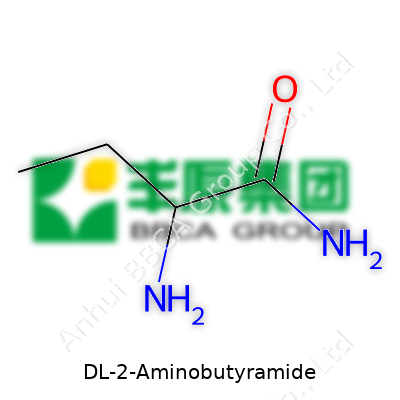
Every chemist who works in synthesis or formulation needs to know what they’re handling down to the molecule. For DL-2-Aminobutyramide, the story starts with the carbon backbone. The correct molecular formula is C4H10N2O. This isn’t just a theoretical number. Workers see it take final shape at the reactor’s end, and every part of the plant, from warehouse to QA lab, knows those numbers inform everything from weighing the input materials to labeling the final drum.
Getting the molecular weight right matters too. Calculations in production planning and scale-up don’t allow for rounding errors. The exact molecular weight for DL-2-Aminobutyramide is 102.14 g/mol. Our quality control technicians rely on this value when checking analyses and batch records. Shipments move with that molecular weight printed right on the paperwork, ensuring that each lot matches specifications and minimizes confusion all through the supply chain.
Companies use DL-2-Aminobutyramide in various sectors—most commonly in biochemistry, pharmaceuticals, and research. Misstatements about its formula or weight ripple out, leading to mistakes that can cost days or weeks to untangle. Someone somewhere will try a reaction and, if they calculate wrong because of an error on our end, the result might be a failed synthesis or a lost batch. Years back, I saw a rushed spec sheet list a wrong molecular weight, leaving a customer with an off-kilter formulation. Their teams scrambled; ours worked overtime resetting production schedules and recalculating safety reserves. Getting these basics right is a responsibility that manufacturers own, upstream of the value chain.
Companies like ours owe their clients transparency and accountability. One way to do that is to hold the molecular facts to scrutiny, not just in the paperwork but through in-house tests—using NMR, mass spectrometry, or elemental analysis, and matching every new lot’s data with the textbook formula. Over time, reliability earns trust. Academic research projects stand on the accuracy of these values: papers demand exact structures and weights, grad students plan experiments keyed to these specifications, and funding boards check project proposals against them.
Production lines never run smoothly forever. Contamination, raw material inconsistencies, or a missed calibration can throw off a batch. The moment any parameter of DL-2-Aminobutyramide falls out of spec, the implications trace back to how seriously a company pursues molecular fidelity. Our site keeps reference standards on hand and certifies each drum by matching it to those standards. If there’s deviation, we quarantine the material before it ever leaves our gates.
Basic chemical properties are not just academic trivia—they shape the reliability, reproducibility, and trust that everyone down the line expects. As a manufacturer, staking a claim on accuracy means fewer headaches, smoother projects, and partnerships built for the long haul.
We have watched chemists and R&D professionals approach DL-2-aminobutyramide with understandable caution. The world of specialty chemicals draws concern around hazardous materials, and questions about safety are the first to arrive from new customers or compliance teams. Our work as a direct producer puts us in the position to know the real risks, and the practical measures required for safe and ethical handling of advanced intermediates. DL-2-aminobutyramide, a member of the aminobutyrate family, comes up often in custom synthesis and fine chemical development projects.
Through years on the production floor and in the QC lab, we have learned that hazards depend not just on inherent toxicity but also exposure routes, quantities, and practical context. Putting this compound under scrutiny, it doesn’t raise the same red flags as highly toxic or flammable reagents. There is no long history of acute toxicity, strong odor, or evidence of environmental persistence under ordinary use. It is not an explosive nor a particularly volatile solid, and it doesn’t behave unpredictably with air or moisture. Sensible controls, including standard chemical hygiene, always remain necessary, since all fine chemicals ask for respect in handling. Skin and eye protection make sense, both for DL-2-aminobutyramide and hundreds of analogous amide intermediates we handle daily.
We’ve found that rare cases of dermal or respiratory irritation sometimes come up with amide compounds as a broad category, especially during grinding or weighing, which can cause minor particulates to become airborne. Ventilated spaces, appropriate dust masks, and industrial cleaning reduce the chance of irritation. We have not observed persistent, lingering odors or signs of bioaccumulation when reviewing our wastewater and solid waste streams. To date, published toxicological evidence stays limited and does not indicate carcinogenicity or reproductive harm. Direct consumption remains inadvisable, and we communicate that risk to all end users.
In our facility, practical safety comes down to habits and process design, not overengineering. Sealed systems, batch isolation, and routine monitoring compete with complex paperwork to provide real protection. Training workers to recognize basic chemical risks—eyes and skin as potential entry points, importance of containment, good housekeeping on benches—pays off far more than alarmist warnings. If a large clean-up became necessary, we would emphasize dry collection and minimal water contact to avoid unnecessary dissolution or spreading. Disposal follows standard non-hazardous organic protocols, with no need for special incineration or reactive-neutralization steps. Oversight stays constant, with annual reviews of Material Safety Data Sheets and input from local environmental authorities as practices change.
There’s no doubt responsible chemical manufacturing means never letting your guard down. We tell new team members that respect for intermediates—no matter their nominal hazard category—keeps the workplace safe. We treat DL-2-aminobutyramide like any other aminobutyrate: carefully, but without fear-mongering. As more users demand transparency and traceability in their procurement chains, conversations about process safety gain importance. We aim to share our own real-world experience to reassure clients, colleagues, and partners that DL-2-aminobutyramide, in practiced hands, does not pose remarkable hazards. Safety, in our practice, is more about vigilance and common sense than alarm.
Working day-to-day with DL-2-Aminobutyramide, practical experience shapes every decision we make about storage. This isn’t just about following protocols—it’s about protecting product integrity and the safety of our colleagues. Every batch on our premises gets careful attention, and proper storage stands as a critical part of our work.
We’ve seen poor storage conditions cause significant issues. Even stable chemical products, DL-2-Aminobutyramide included, face risks from temperature swings, humidity, or contamination. When a drum sits too close to a heat source or moisture seeps into a container, quality begins to slip. Over months, that’s how impurities creep in. In our experience, such problems rarely stay isolated—they can impact downstream processes or customer results.
This is not a hypothetical risk. Once, a part of a shipment spent a weekend in a storage area with fluctuating temperatures due to a faulty HVAC unit. By Monday, condensate rings signaled trouble. We ran tests, and found traces of hydrolysis byproducts in the affected samples. That one oversight led to downtime and financial loss—not to mention the impact on customer trust. We don’t take such lessons lightly.
From years handling this compound, the right environment means everything. DL-2-Aminobutyramide stays clean and reliable when stored inside sealed, airtight containers. We use packaging that resists air and moisture. The warehouse stays at room temperature, away from direct heat sources or sunlight. Staff check environmental controls daily, and alarms flag any deviation.
Humidity introduces another layer of risk. Even though the molecule itself lacks strong hygroscopic tendencies, long-term exposure to moisture introduces unnecessary variables. For us, desiccant packs in containers serve as simple insurance. Every drum, even those waiting for blending or quality checks, rests on pallets—not warehouse floors—avoiding accidental contact with water or dust.
Reliable storage depends on the people who manage it. We invest time into ongoing training, making sure every worker knows why these routines matter. If a container’s label shows any sign of tampering or damage, staff report it immediately. Warehouse teams perform visual inspections and run periodic inventories—oversight keeps corners from being cut.
Labels aren’t only for compliance—they help maintain traceability. Imagine someone mixes up similar-looking compounds—it can happen. Legible, accurate information on every package reduces the risk of handling mistakes, which is something we’ve learned to prioritize.
Storage goes hand-in-hand with prompt rotation. We avoid long-term stockpiling by fulfilling orders on a just-in-time basis. If product must stay longer, we move older lots forward so nothing sits beyond its intended period. Testing product quality before shipment is our last line of defense, catching any issues before they reach partners.
For shipments moving beyond our facility, we work with logistics providers who understand chemical cargo requirements. Vehicles are prepped to keep out the elements and to shield cargo from sudden heat changes. This kind of detail is essential for preserving product character all the way to its next destination.
Any manufacturer who’s handled DL-2-Aminobutyramide will tell you that purity is never just a checkbox. Even a minor slip in quality triggers batch inconsistencies, which can lead to losses in time and material. Our chemists inspect every lot with this in mind because one impurity can disrupt end uses across pharmaceuticals, biochemistry research, and specialty synthesis.
We offer DL-2-Aminobutyramide at a typical purity not less than 98 percent by HPLC. That figure isn’t plucked out of thin air. It reflects what tens of kilograms of product look like under routine analytics, where each decimal point gets checked against both customer feedback and internal quality benchmarks. HPLC remains the most direct approach, as it spotlights trace impurities that UV or colorimetric methods sometimes miss.
Every delivery leaves our facility with a certificate of analysis that doesn’t disguise the details. Detailed chromatograms show what’s in and what’s out, and include data on melting point, moisture by Karl Fischer, and heavy metals by ICP-OES. We test for chloride ions with titration, supplementing instrumental methods with old-fashioned chemical validation. Appearance also gets scored: we target a white to off-white crystalline powder, since subtle shifts here can hint at unwanted byproducts.
We control for loss on drying, as water content can skew reaction yields downstream. Usually, we keep this below 0.5 percent. Sometimes moisture climbs a bit higher in humid seasons, so desiccant boxes and double-layer packaging come into play. End users in peptide synthesis or life science research demand nothing less—if your amide holds onto water, your syntheses start misbehaving.
Some buyers ask about specifications like residue on ignition or heavy metal content. We set tight limits, knowing that metals like iron and copper catalyze unwanted side reactions. By keeping residual metals under 10 ppm, we avoid headaches in applications that count on clean backgrounds, such as analytical standards or API intermediates.
Stereochemistry crops up as well. For DL-2-Aminobutyramide, our process crops both D and L enantiomers. We provide ratio data on request. This feature is critical in segments that track chirality shifts, such as medicinal chemistry, and lets end users plan downstream separations if one isomer is needed in isolation.
Maintaining spec takes relentless monitoring of raw material sources. One year, a new batch of butyric acid from a supplier raised the baseline for trace organic residues beyond our historical norms. Our solution involved retraining staff on TLC spot-checks and adding a secondary HPLC stage before product packing. Only through this approach could we keep our purity level consistent, meet buyer expectations, and avoid regulatory trouble later.
Process feedback from clients sometimes triggers a tweak. A research group flagged an unexpected side product in their bioassay—something not previously seen in commercial lots. Our ability to pivot, re-examine drying steps, and communicate honestly built a better working relationship and improved the final product.
Real consistency in DL-2-Aminobutyramide supply comes from direct control, not from outsourcing critical steps. Investing in on-site QA labs, traceable documentation, and staff training pays back in fewer complaints and stronger partnerships with research and production partners alike. Delivering high-purity material isn’t guesswork. It’s daily, measurable action.