Tracing the roots of DL-Lysine Acetylsalicylate, we see a story shaped by the rapid growth of pharmaceutical intermediates during the twentieth century. Aspirin, or acetylsalicylic acid, revolutionized pain relief. Yet direct administration of aspirin presented challenges in terms of gastrointestinal tolerance, solubility, and patient compliance. Researchers sought salts with improved absorption, reduced irritancy, and better stability. The combination of lysine, a fundamental amino acid, with acetylsalicylic acid gave rise to lysine acetylsalicylate, delivering both pharmacological benefits and manufacturing gains. DL-Lysine Acetylsalicylate entered the market as a well-tolerated, rapidly dissolving form of acetylsalicylic acid, responding to real clinical needs while streamlining formulation processes. In our plant, we have watched the demand for this compound grow alongside a deeper understanding of its therapeutic and production advantages.
DL-Lysine Acetylsalicylate belongs to the group of amino acid salts of aspirin, specifically merging lysine with acetylsalicylic acid in an equimolar mixture. This approach solves several practical hurdles that pure acetylsalicylic acid presents. The compound stands out for its rapid dissolution in water, opening doors for injectable solution and oral powder formulations. Physicians frequently select it in acute pain, migraine, and anti-inflammatory applications where speed and tolerance carry weight. In the context of manufacturing, this salt provides far fewer technical headaches than aspirin alone, granting more flexibility during scale-up and offering a distinct purity profile compared to simple blends or unmodified aspirin.
Looking at DL-Lysine Acetylsalicylate’s material characteristics, producers recognize clear differences from its precursor chemicals. The salt appears as a white or nearly white powder, showing good flow properties and ease of handling. Its high solubility in water allows for straightforward incorporation into aqueous solutions, which significantly simplifies processing. The melting point lies below either constituent, a fact that demands attention during drying and storage. Chemically, the salt formation not only protects the carboxylic acid group of aspirin but also introduces lysine’s buffering capacity, mitigating acidity without sacrificing activity. From a manufacturer’s viewpoint, the stability profile of the salt supports extended shelf life under normal storage, assuming moisture and temperature control are maintained.
As the manufacturer, we invest heavily in verifying batch consistency, targeting precise assays for content and purity. Stringent limits are set for heavy metals, residual solvents, and microbial load, in line with global pharmacopoeial standards. We provide clear labeling, detailing the ratio of lysine to acetylsalicylate, physical form, and recommended storage conditions. Analytical tools—HPLC, FTIR spectroscopy, titration—help us guarantee compliance and traceability. Our production lines alternate between dedicated runs for DL-Lysine Acetylsalicylate and other related intermediates, prompting robust validation protocols to eliminate contamination risk. The importance of reliability means taking extra time on blending steps, solution preparation, and final product packaging, resulting in a product we stand behind.
Producing DL-Lysine Acetylsalicylate in industrial quantities demands methodical groundwork. First, high-purity acetylsalicylic acid and DL-lysine undergo separate refining steps. We ensure water content remains within established limits, as excess humidity accelerates hydrolysis of acetylsalicylic acid and reduces yield. Once raw materials pass all checks, the salt formation begins through a controlled neutralization reaction in an aqueous medium. Careful monitoring of pH and temperature prevents impurity generation and supports crystallization of the target compound. After neutralization completes, filtration removes insoluble impurities, and crystallization yields the desired product. Drying must strike a balance between removing residual moisture and avoiding thermal degradation. A final grinding step achieves consistent particle size, followed by rigorous sampling for quality control. These steps, defined by decades of adjustments and continuous process improvement, result in a reproducible, high-purity product.
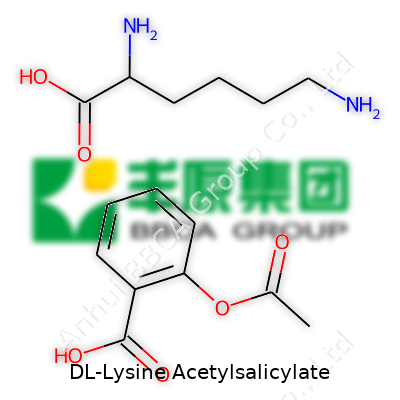
The reaction at the heart of DL-Lysine Acetylsalicylate manufacture relies on a straightforward acid-base interaction. Lysine, with its dual amino groups, interacts with the carboxylic acid of acetylsalicylic acid to form the salt. Modification work rarely stops at the basic salt, however, since customer needs bring requests for micronized forms, co-crystallized versions with other excipients, or tailored dissolution rates. Our chemists often explore approaches to stabilize the salt against hydrolysis, using mild antioxidants or inert atmosphere processing for larger production runs. Occasionally, requests arise from formulation teams for new crystalline habits, which might emerge after extended trials with solvent systems or seeding strategies. Process optimization efforts consistently focus on yield, purity, and minimizing waste, reducing the cost per kilogram while reinforcing the environmental sustainability of each production campaign.
Across various geographies and industries, this compound carries diverse synonyms—Lysine Aspirin, Acetylsalicylic Acid DL-Lysine Salt, ASA-Lys, and others—each rooted in regulatory histories or convention. Pharmaceutical compendia reference the material under its detailed chemical name, but formulators may also request “soluble aspirin lysinate” or injectables know it simply as lysine aspirin. Internally, we use a unique designation that tracks batch and synthesis origin, supporting international shipping documentation and end-user transparency. Clear synonym tracking prevents confusion and ensures customers acquire the material best suited to their intended applications.
Safety dominates every step in our plant, from raw material receipt to finished goods dispatch. Lysine acetylsalicylate does not pose the dust explosion risks of some highly powdered substances, though we maintain dust collection and ventilation per industry expectations. Our plant personnel use protective equipment—gloves, goggles, respirators—when handling active intermediates. We ensure that emergency eye-wash stations and spill cleanup materials reside close to reaction suites and filling lines. Repeated training reinforces both general and compound-specific handling protocols. Waste solutions, spent solvents, and off-spec materials receive prompt disposal or recovery. Regular audits examine our compliance with international safety norms and plant hygiene. Transparent reporting to environmental and occupational health agencies reflects our ongoing focus on risk minimization.
Market demand for DL-Lysine Acetylsalicylate spans several pharmaceutical indications—acute pain, migraine, post-surgical recovery, and inflammatory states, among others. Hospitals appreciate the rapid onset of action enabled by the salt’s solubility, delivering quicker relief than standard aspirin tablets. In our experience, injectable analgesic products frequently specify this ingredient due to its compatibility with parenteral routes and improved pH stability. In the veterinary segment, practitioners administer it to avoid gastric irritation in sensitive animal populations, particularly in equine and small animal pain management. Some clinical protocols specify lysine acetylsalicylate for patients at increased bleeding risk, owing to modified platelet interaction compared to traditional aspirin, though this area draws continued study. These diverse application cases encourage us to maintain multiple packaging options and to update customer education materials to match regulatory and medical advances.
Research efforts anchored in the manufacturer’s lab focus on incremental as well as step-change improvements. Our R&D team works to refine reaction parameters, shorten cycle times, and further purify starting reagents. Collaborative projects with academic groups have examined alternative amino acids for salt formation, looking beyond lysine for properties like enhanced metabolic stability or new therapeutic indications. We keep an eye on developing polymorphs, seeking variants with improved storage traits. Analytical chemists inside the plant pilot novel testing methodologies—better rapid detection of degradants at low concentrations, faster in-process chromatographic analysis, and real-time particle size tracking. The insights gained from scale-up inform everything from safety sheet recommendations to customer troubleshooting advice. Periodically, our regulatory affairs staff undertakes systematic reviews of new literature, updating product documentation to maintain alignment with evolving pharmacopeial standards.
Toxicology for DL-Lysine Acetylsalicylate stands distinct from that of base aspirin or lysine alone. In preclinical studies, gastric mucosal damage diminishes significantly, reflecting the salt’s buffered nature. Human dosing trials indicate good short-term safety at therapeutic levels, though, like all aspirin derivatives, risk remains for bleeding or hypersensitivity in susceptible individuals. Animal studies back up safety claims, but comprehensive post-market surveillance detects rare adverse events, reinforcing the need for ongoing vigilance. In our facility, the toxicological data directly shapes our worker safety guidelines, waste management practices, and training modules. Internally, we store detailed summaries of published toxicology and adverse event findings, referencing them in both process hazard analyses and in customer technical workshops. Maintaining transparency about rare side effects while continuing to improve on technical and clinical safety underpins our long-term strategy.
Looking forward, DL-Lysine Acetylsalicylate will likely see further development in personalized medicine and advanced formulation science. Large-scale clinical studies may delineate new indications, particularly for rapid-onset pain management in both human and animal medicine. As solubility and tolerability remain prominent product advantages, demand looks set to persist among hospital and emergency care settings. Advances in analytical characterization could uncover new structural forms which deliver higher potency, lower toxicity, or improved shelf stability. On the manufacturing side, greener synthesis routes, solvent recycling, and closed-loop operations promise to lower the environmental impact of large production lots. Collaborative research on combinatory therapies opens new doors for fixed-dose combinations or multi-target pain treatments leveraging DL-Lysine Acetylsalicylate as an anchor component. As regulation tightens and healthcare systems demand more efficient remedies, manufacturers like us bear responsibility not just for making the compound, but for driving the field toward safer, faster, and more sustainable solutions.
Our work in bringing DL-Lysine Acetylsalicylate to the market sits squarely at the intersection of chemistry and patient care. This ingredient isn’t just an extension of aspirin. It stands out in the pain and inflammation treatment landscape, and there’s a practical reason it’s been adopted by pharmaceutical companies for decades.
A large segment of the population deals with difficulties in taking standard acetylsalicylic acid — either because of taste, solubility, or stomach irritation. Regular aspirin, in its simplest form, doesn’t dissolve well in water; it often leaves patients with a gritty texture in solution. DL-Lysine Acetylsalicylate solves this issue, dissolving rapidly and completely. Hospitals depend on this property for emergency and post-operative settings where administration must be intravenous or in solution, not a slow-dissolving tablet.
When a hospital requests a bulk batch for compounding painkillers, we know they’re relying on DL-Lysine Acetylsalicylate for a rapid onset of action. Intravenous preparations give clinicians a tool that brings pain relief or fever reduction much faster than waiting for a tablet to be digested. In acute migraine attacks, emergency heart conditions, and during major surgeries, minutes count. Every delivery from our plant arrives with quality documentation, fulfilling the regulatory certainty that medical staff have come to expect.
Manufacturing this compound places a real burden of quality assurance on our team. Each batch demands scrupulous tests on purity, correct isomer ratios, and consistent granule size. Impurities or incorrect ratios can compromise patient safety. By the time our product reaches hospitals, we have already traced its origin back to raw inputs, tracked cleanroom controls, and run countless spectrometric analyses. We put real time and resources into validating each step, precisely because patient outcomes start here in our facility.
DL-Lysine Acetylsalicylate allows for higher doses of acetylsalicylic acid to be administered in a soluble and less irritating way, which is essential for people with gastric sensitivity. Oral administration becomes feasible for those unable to tolerate tablets, or during pre-surgical preparations where rapid action is essential but invasive administration is not desirable.
Shifting away from theory, our team has interacted with physicians requesting solutions that keep patients safe in the operating room, or that treat severe flare-ups in arthritis or fever. The real-world demand for injectable or drinkable formulations explains why our facility runs at full capacity. We’ve had to adapt our equipment to scale-up expectations as demographic changes — aging populations and growing chronic disease rates — increase the need for better, safer analgesics and anti-inflammatory drugs. Consistency, sterility, and predictable response in the body guide every production run.
Research continues on new uses for this compound. Though best known for its analgesic and anti-inflammatory properties, scientists have explored new indications, propelled in many cases by how well the compound can be absorbed and tolerated. No matter what the next phase of medical science reveals, every person taking a medicine that traces back to DL-Lysine Acetylsalicylate expects safety, purity, and reliability — expectations we work to exceed each day.
Producing DL-Lysine Acetylsalicylate in-house requires paying close attention to how this compound interacts both in-process and in final use. From crushing raw materials to shipping finished powder, we come face-to-face with its properties every day. This experience helps us anticipate not just how the compound performs in lab settings, but also what end users experience in daily applications.
Stomach irritation surfaces as the most common complaint. DL-Lysine Acetylsalicylate acts as a prodrug of acetylsalicylic acid (the active ingredient in aspirin). It does reduce some gastric side effects seen with plain aspirin, but it never erases them altogether. We repeatedly see reports of mild dyspepsia, nausea, and even vomiting if large doses reach consumers, especially on an empty stomach. As a producer, this pattern matches what the medical literature reflects. Buffering with lysine does help, but anyone with a sensitive gut should take caution.
We've encountered cases where individuals show hypersensitivity. Urticaria and bronchospasm come up more commonly in people with a history of asthma or chronic rhinitis. The risk rises if users have previously reacted to aspirin or other non-steroidal anti-inflammatory drugs. While working with clinicians, we've learned these reactions often appear suddenly, underscoring the importance of screening for allergies before recommending the compound, whether in injectable or oral preparations.
Most pharmacists and healthcare professionals know acetylsalicylate can impair platelet aggregation. That effect, beneficial in some cardiovascular uses, turns risky for those facing surgery, dental work, or underlying bleeding disorders. We see regular reminders of this in safety reviews from our pharmaceutical partners. Even the best handling at the manufacturing stage won’t eliminate the core mechanism: a lengthened bleeding time after intake. Taking DL-Lysine Acetylsalicylate along with other anticoagulant drugs only magnifies the concern. In rare situations, we still see gastrointestinal bleeding, especially with intensive or long-term use outside recommended protocols.
Our records highlight infrequent but grave outcomes, especially in higher doses or in vulnerable patients. Reye’s syndrome stands out as an extreme but possible risk in children, particularly those recovering from viral illness. We never recommend pediatric use without medical oversight for this reason. Sometimes, people experience ear ringing or hearing changes — these symptoms often warn of toxicity, and the pattern is well established in aspirin’s history. High doses over extended periods can also trigger renal problems, though these cases usually arise with excessive, unsupervised intake.
As a chemical manufacturer, we focus on purity, tight batch control, and traceability from raw material sourcing all the way through packaging. Beyond our doors, minimizing risk depends on clear instructions and partnership with healthcare teams. We have supported efforts to add better warning language, provide dose-adjusted products, and encourage user education. For those with a known aspirin allergy, proven bleeding disorders, or emerging side effects like hives or breathing trouble, prompt medical attention must override continued use.
Decades of manufacturing DL-Lysine Acetylsalicylate have shown us that the delivery and dosing of such active ingredients never comes down to guesswork. Behind every batch, our chemists account for the real-world circumstances in which end-users—patients, doctors, or formulation teams—face decisions and risks every day. This compound, known in the industry as a salt formed from lysine and acetylsalicylic acid, carries all the anti-inflammatory and analgesic functions of aspirin, but in a form tailored for scenarios where traditional aspirin can’t go. Experience teaches us that how and when a product gets taken matters as much as its purity.
Formulators and healthcare professionals often reach for this compound where fast onset needs meet patients who cannot tolerate gastrointestinal irritation from regular aspirin. Deciding on oral or injectable routes is less about preference and more about the realities of patient health and clinical urgency. Our observation, after years of collaborating with pharma partners, has been that oral administration provides a solid option for patients who have no immediate gastric restrictions. In practice, DL-Lysine Acetylsalicylate dissolves quickly in water, forming a clear solution with high bioavailability. This feature did not emerge by accident. During process development, focus stays sharply on achieving full solubility for reliable dosing—no one working with patients wants to gamble on partial absorption or residues sticking to glassware. The solution should go down smoothly, even for those who can’t manage tablets.
For patients facing acute pain, migraines, or certain cardiovascular events, injectables offer an alternative when swallowing is compromised or when speed is critical. Only rigorous quality protocols on our end ensure vials and ampoules reach practitioners shelf-stable; no tolerance exists for visible particulates or pH drift. Over years of customer feedback and pilot studies, we learned that regular communication with hospital pharmacists exposes small gaps—sometimes only a matter of seconds in reconstitution or clarity of the solution—that can influence both patient outcomes and comfort in clinical environments. These honest exchanges drive our investments into refining particle size, solvent systems, and filtration processes at every run.
Labeling and instructions that seem straightforward in a laboratory can become sources of confusion once translated to busy clinics. That connection between manufacturer and end-user turns critical. Our documentation pushes clarity by using graphics where possible and discouraging off-label improvisation. Missteps in volume calculations, improper mixing, or administration to those with severe allergy risks bear serious consequences. Here, our stance grows firmer: we lean on clinical data, reporting mechanisms, and ongoing post-market surveillance to catch unforeseen hazards. Close work with regulatory auditors leads us to update internal protocols, batch records, and recall policies promptly if any deviation threatens end-use safety.
No substitute exists for thorough training. Hospital partners request on-site demonstrations and continuing education when introducing new lots or formats. Our technical team welcomes these opportunities; nothing builds trust like walking the floor with pharmacy staff or answering questions that textbooks simply don’t cover. Questions arise about co-administration with other painkillers, incompatibility with certain IV fluids, or rare allergic reactions. Each scenario prompts an examination of formulation process and supply chain, bringing engineers and clinical teams together in ways that theoretical guidelines rarely encourage.
Each decision point in the process reflects a commitment to patient safety and product integrity. Allowing end users—whether a pharmacist in a rural hospital or an experienced clinician—clear, tested, and reliable administration protocols means fewer surprises at the bedside. As manufacturers, our daily attention rests not just on regulatory compliance or yield numbers, but on the downstream moments where proper dosing and safe handling of DL-Lysine Acetylsalicylate influence human health directly.
Working hands-on with DL-Lysine Acetylsalicylate for decades brings a certain perspective that's absent from market literature and textbook safety guidelines. We see this material, we blend it, we package it, and more importantly, we field questions from the actual people handling it and formulating with it. This salt, known for its use in pharmaceutical preparations, attracts interest because of its solubility and rapid action. Yet, robust knowledge about contraindications and user precautions comes from day-to-day reality, not from bullet points on a website.
Anyone who's spent a day at the reactor or held a production log understands why aspirin derivatives stir concern for those with established hypersensitivity to nonsteroidal anti-inflammatory drugs. We've witnessed the effect of even minor airborne contact on sensitive operators. Staff with a history of asthma, rhinitis, or urticaria related to NSAIDs avoid this line. Years of incident reporting support strict exclusion for those individuals. In the pharmaceutical setting, products containing this compound carry warnings for patients with active peptic ulcers, severe renal impairment, and a history of gastrointestinal bleeding. These connections aren't abstract—we've dealt with audits and regulatory queries focusing intently on these problem areas.
Consistently, eye and skin irritation stands out as a frontline concern in the handling environment. Direct contact with the powder provokes redness or rash for some, so gloves and masks are not decorations but daily necessities. We started campaigns years ago to minimize airborne dust at every packaging stage. Proper local exhaust and automation made a difference that shows up in annual occupational health reports.
On the downstream side, we warn formulation partners about the risks of inadvertent exposure for children and adolescents dealing with viral illnesses. It's well grounded—salicylate drugs used during episodes like flu or chickenpox align with higher risk for Reye's syndrome, which rarely receives enough attention until a high-profile case surfaces. Our technical outreach and compliance documents highlight this, but the real groundwork happens through ongoing education between our teams and downstream processors.
Conversations with clients confirm a persistent trend: DL-Lysine Acetylsalicylate, like any salicylate, amplifies the effects of oral anticoagulants or antiplatelet agents. It also blunts antihypertensive response in some classes of drugs. Logistics runs more smoothly when customers know this up front so their physicians are alerted. Most pharmaceutical companies catch this, but confusion persists among some smaller formulation houses. That’s why we push direct updates, not just blanket statements in technical data sheets.
We never lose sight of the unpredictability that comes with wide-scale distribution. A formulation pulled in one region for contraindicated use can crop up in another, due to regulatory lag or incomplete translation of safety protocols. As a manufacturer, it’s our responsibility to continue refining material data, collaborate with regulatory agencies, and share trends we see from exported shipments in less regulated markets.
Long-term stewardship of this material depends on dialogue rather than just documentation. The factory floor offers a vantage point that bridges strict regulatory language and human experience—the synergy where genuine safety practices take root.
Manufacturing DL-Lysine Acetylsalicylate involves not just technical chemistry but a sharp awareness of real-world medical practice. Every kilogram that leaves our facility carries potential for both relief and risk, especially once mixed with the complex routines of modern polypharmacy. These risks aren’t theoretical. Over years of batch production and collaboration with pharmaceutical clients, questions keep coming: can our active ingredient interfere with commonly prescribed drugs? How serious is the risk? Our own teams handle these questions with the same seriousness as a clinical researcher.
At its core, DL-Lysine Acetylsalicylate acts as an analgesic and anti-inflammatory, most often breaking down in the body into acetylsalicylic acid—a compound physicians have trusted for more than a century. Yet, every process alteration, such as forming a lysine salt, can change how a compound behaves in the bloodstream. Our process pays special attention to particle size, solubility, and purity, because small changes influence absorption and onset. Faster absorption in acute-care settings can make a big difference, but it also means faster and sometimes less predictable drug interactions.
Mixing aspirin derivatives with anticoagulants is a well-documented source of clinical challenges. We make every effort to educate our partners about the increased risk of bleeding when combining DL-Lysine Acetylsalicylate with warfarin or direct oral anticoagulants. The risk climbs even more when combined with antiplatelet drugs. We’ve seen formulators and clinicians both grapple with choosing the right pain management option for at-risk populations. Each time we receive an inquiry on this interaction from a hospital pharmacy, it reinforces how much our ingredient choice influences patient safety far from our facility.
Non-steroidal anti-inflammatory drugs (NSAIDs) frequently share prescription lists with our compound. Co-administration can lead to cumulative effects on the gastrointestinal tract, sometimes resulting in ulcers or bleeding. Over and over, we highlight to medical manufacturers and clinicians that even seemingly minor interactions can cause real patient harm at standard dosages. Stories filter back to us from partner hospitals—cases where patients experienced digestive bleeding after mixing multiple painkillers. This keeps us vigilant in our manufacturing controls, because a more predictable, cleaner product reduces variables in these complex clinical scenarios.
Many customers reach out for advice on use among patients with chronic kidney issues. It’s common for such individuals to manage multiple chronic conditions with several medications. Compounds like ACE inhibitors or diuretics might already be putting strain on kidney function. We see that DL-Lysine Acetylsalicylate, like other aspirin-based substances, can push fragile kidneys over the edge toward failure when combined poorly. We work with partners to ensure they understand cumulative load, especially in those patient cases.
We strengthen our technical bulletins with clear interaction warnings and maintain open dialogue with pharmaceutical partners. Many of our repeat customers rely on detailed stability and compatibility data to decide their own formulation strategies. We also engage in ongoing collaborations with academic research centers, learning from case studies and integrating the findings into our own protocols. Each round of feedback from the lab, the hospital, or the patient community helps us adjust not only production parameters but the basic advice we share with the marketplace.
Our primary mission remains building trust and transparency throughout the supply chain. From the production floor to the final medicine on a pharmacy shelf, clarity on drug interactions forms an essential barrier against errors. Every improvement in quality, process, or shared information means fewer negative surprises for physicians and safer outcomes for patients navigating complex medication regimens.