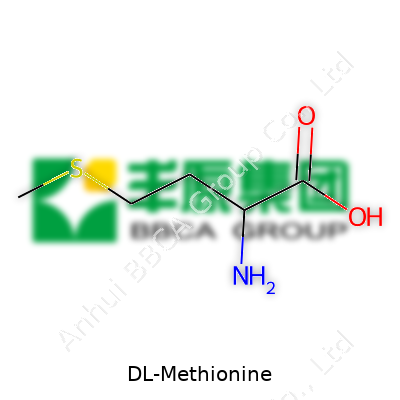
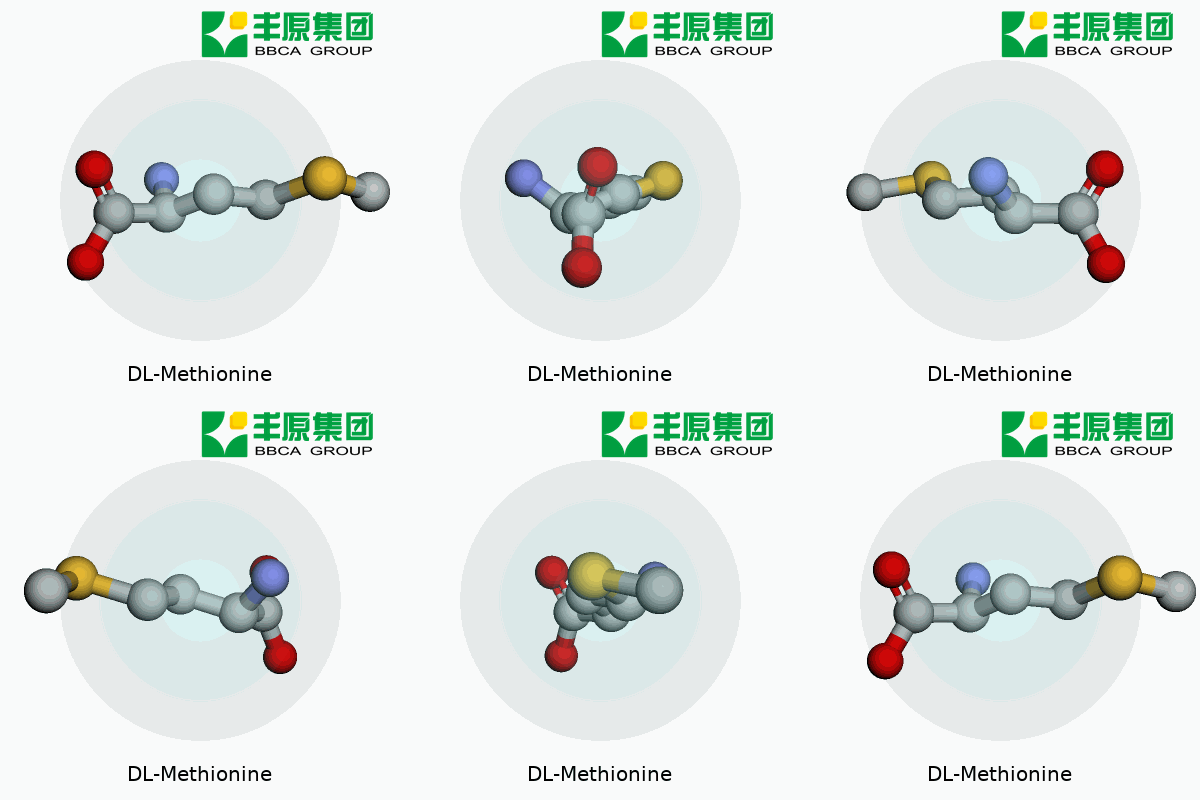
Methionine’s role with proteins and growth traces back more than a century, and its synthetic form, DL-Methionine, has shaped modern agricultural and animal nutrition life. Early on, chemists isolated methionine from casein and egg albumen. During the postwar industrial push, fermentation processes and chemical synthesis led to commercial production of what we use today: a racemic mixture providing livestock with one of their most limiting amino acids. Those first batches of crystalline DL-Methionine at scale demanded fine control of chemical reactions, lessons that set the groundwork for how we handle purity, yield, and safety. Plants have shifted from small glassware to multi-ton reactors, but the drive remains—produce a stable, feed-grade amino acid supporting efficiency on every farm.
Around the plant, DL-Methionine flows as a white, slightly bitter crystalline powder or granule. Our teams take pride in consistently hitting tight assay targets for methionine content, which brings reliability to feed mill operations and nutritionists balancing rations. We don’t add unidentified fillers or unapproved flow agents; the material represents real value, especially where cost pressures and animal health concerns focus everyone’s minds on the quality of inputs. For shelf life, the product holds well under dry, normal ambient conditions—an advantage for distributors and integrators handling thousands of tons each season.
The physical properties—free-flowing white crystals, density ranging around 1.34 g/cm³, and melting at about 280–282°C with decomposition—are not just textbook numbers. These impact what the mixing lines do, how silo unloading works, and whether feed forms correctly at the mill. The slightly sulfurous odor sometimes noticed in an open sack links back to the thioether group within the methionine structure. With a pKa near 2.28 (carboxyl) and 9.21 (amino), the molecule navigates acidic and alkaline environments, which shows in its durability through pelleting and handling. Water solubility lands around 3.8 g/100 mL at room temperature, which influences its behavior in liquid feeds and biotech fermenters.
Long ago, our quality team understood that upholding consistency across each lot reduces downstream risks for the industry. Methionine produced here gets assayed with HPLC and other validated methods before bagging. Heavy metals, residual solvents, and microbial counts must fall below established regulatory and global trade thresholds. Each vessel—big bag or bulk—carries batch identification, production date, and the methionine content by mass (usually at least 98.5% on a dry basis unless modified for specific customer processes). The plant records and tracks every shipment, as regulatory demands no longer permit shortcuts or unsourced stock moving around the world.
Synthetic DL-Methionine production at industrial scale centers on chemical transformation, rather than natural extraction. The core of the process hinges on the reaction of acrolein with methyl mercaptan, followed by addition of cyanide to create the methionine carbon backbone. Downstream steps involve careful neutralization, precipitation, purification, and crystallization—the details have grown more advanced with automation and process control, but operators understand one fact: Small errors in reaction conditions quickly become big swings in output, purity, and waste. Over the years, we’ve invested in fluid handling systems resistant to corrosion, improved closed transfers to limit emissions, and recovery units that catch waste sulfur so it doesn’t end up in the air or water. By-products challenge us with disposal costs and regulatory scrutiny, so each run includes tight monitoring on mass balances and release.
DL-Methionine carries a reactive thioether group, opening several possibilities for chemical conversion. The plant rarely touches further modifications on-site, but universities and pharma labs occasionally request methylated or oxidized derivatives. In the field, mixing with certain oxidizers or long-term storage with strong alkalis causes some decomposition—feed producers and formulators need to mind process compatibility. Methionine’s free amino and carboxyl groups find use in solid-phase synthesis and other chemical industries, branching out from the feed and food sector. The molecule can oxidize to methionine sulfoxide or methionine sulfone under harsh conditions, and food chemists sometimes use these reactions to trace stability and storage losses.
DL-Methionine appears in supply lists as 2-amino-4-(methylthio)butyric acid, but that hardly rolls off the tongue in shipping offices. Feed and nutrition specialists know it simply as methionine (DL-form to distinguish from the D- or L- isomers), and regulatory labels often require exact naming under CAS number 59-51-8. Codex, European, and North American markets all set product identity standards, so labeling sticks closely to the required chemical nomenclature, despite the everyday shorthand on a production floor.
From a manufacturer’s eye, keeping dust and release to a minimum protects both workers and the environment. Standard PPE—respirators, gloves, and closed handling systems—form the backbone of plant safety. Inhalation of fine dusts or accidental ingestion brings little risk at normal levels, but high airborne concentrations can irritate the respiratory tract, and sulfur-based odors occasionally highlight leaks or spills. Our storerooms carry spill containment, and teams routinely drill on clean-up of powders to avoid spreading dust during any disturbance. Wastewater streams leaving the site run through treatment systems, where we measure organosulfur load and comply with discharge permits. Each batch’s material safety data includes acute and chronic exposure risk, aligning with REACH, EPA, and the latest regional guidelines. Transport regulations call for proper labeling, but not for classified hazard as methionine itself doesn’t meet the bar for flammables or reactives.
Most DL-Methionine leaves the plant destined for animal nutrition. Monogastric animals—poultry, pigs, fish—cannot synthesize enough methionine themselves, so feed supplementation sharply improves growth and feed conversion ratios. Farmers rely on every fractional improvement; methionine delivers muscle growth and supports feathering, especially when soybean-based diets lack enough sulfur amino acids. Aqua feed increasingly demands consistent input as fish and shrimp farming surges. The food industry draws on methionine for specialized uses, such as food fortification or as an antioxidant stabilizer in some processed goods. Recent years have seen increased research into pharmaceutical intermediates and microbial production pathways, but feed compounding will likely remain the workhorse application for the foreseeable future.
Lab teams and pilot plants chase continuous improvement—yield, energy consumption, and environmental impact all drive R&D aims. Catalysts for existing synthetic routes receive close scrutiny, as tighter selectivity reduces waste and improves cost of goods. Biological fermentation processes, using modified microbes to produce L-methionine, could prove disruptive if the economics shift, and our plant has ongoing collaborations exploring hybrid production that leverages strengths from each method. Downstream, researchers evaluate product stability in new pelleting, extrusion, and liquid feed delivery systems. Meanwhile, ongoing technical efforts target tighter molecular assays, lower impurities, and better ways to handle dust during transport, keeping both the environment and worker exposure as priorities every step of the way.
Most existing data on DL-Methionine safety reflects its natural occurrence and vital role in metabolism, but dosing matters. Acute toxicity in laboratory animals appears low, but chronic over-supplementation brings metabolic burdens—especially hepatic or renal stress. Companies, including ours, must remain vigilant with new blends and custom formulations that combine methionine with other feed additives. Environmental toxicity, particularly for aquatic life, pushes our team to minimize emissions to water and monitor all effluents, as concentrated amino acid streams can lead to downstream oxygen demand and ecosystem changes. Staff monitor dust, and environmental engineers install scrubbers or biofilters as technologies evolve. We welcome work from independent research institutes pushing clarity on both chronic exposure and deeper metabolic questions, since both animal and worker health depend on openness to new findings.
DL-Methionine production faces pressures from both market volatility and regulatory change. Environmental permits grow stricter, and supply chains want traceability all the way to raw input sourcing. Biotechnology offers potential for greener, renewable methionine, provided process economics and downstream purification meet quality marks. Growing segments in precision livestock feeding and environmental sustainability could see smarter, tailored supplementation strategies. We adapt as new demands rise—low-dust grades, pharmaceutical specifications, and tighter tolerances push operational upgrades across our manufacturing footprint. Methionine’s crucial role in nutrition and chemical synthesis will remain, and it falls on us, the manufacturers, to set standards in safety, quality, and sustainability as global needs and science continue to evolve.
Every day in our factory, truckloads of DL-Methionine shipments roll out destined for feed mills. These deliveries seldom slow down—for good reason. Nutritionists rely on DL-Methionine to create balanced diets for poultry, swine, and aquaculture. Animals cannot produce enough methionine on their own, and grains fail to offer sufficient amounts. Lack of methionine in feed stunts growth, weakens immune response, and creates uneven performance among animals. We see that reflected in year-on-year orders—producers know a shortfall cuts into growth rates.
Our technical team receives countless questions about how methionine influences output. Decades in this field showed us: methionine is critical for protein formation, tissue repair, and feathering in birds. Broiler and layer operations notice sharper feed conversion and faster gains after fortifying feed with DL-Methionine. Livestock health improves; feed costs stretch further. This trend isn’t only anecdotal. Years of studies demonstrate that methionine-deficient feed increases mortality and lowers meat yields. In shrimp and fish farms, DL-Methionine buffers the gap that fishmeal alone cannot bridge.
Farm visits put theory into perspective. Feed formulators test blends with and without supplemental methionine. The differences become clear: insufficient methionine means animals pick at feed or develop uneven plumage. Results show as trimmed profits on the balance sheet—especially in high-volume operations. Many feed plants switched from fishmeal and soybean alone for precisely this reason: sustainability pressures force more efficient protein use, and DL-Methionine answers the challenge by producing leaner formulas with better net protein utilization. We work side-by-side with nutritionists to optimize inclusion rates, preventing both deficiency and waste. This support means greater animal welfare and better margins for producers, and orders often grow as customers see the impact firsthand.
Although animal nutrition leads demand, requests for DL-Methionine in human health and specialty applications come in. Certain medical foods and supplements rely on it for patients with metabolic disorders. The volume is a fraction of animal feed, but every batch requires exceptional consistency and purity. Food chemists and pharmaceutical firms count on producers like us to maintain supply chain reliability and transparency at every step. Each tonne leaving our plant undergoes multiple stages of assay to guarantee active content matches the declared value. The trust our partners place in us grows from this focus on robust production protocols.
As regulatory attention sharpens on nitrogen emissions from intensive livestock farms, producers increasingly depend on accurate dosing of DL-Methionine. Lowering excess protein doesn’t only cut ammonia—operational costs drop, too, because feed is targeted to meet animal needs more efficiently. Feed companies often share that methionine supplementation has become a key differentiator in sustainable production strategies.
On the manufacturing side, we constantly upgrade our process with improved fermentation pathways and waste valorization to keep pace with both demand and regulatory expectations. Investing in new production lines allows us to offer a secure supply, even during market turbulence or raw material price swings.
DL-Methionine stands as more than an ingredient—it’s a linchpin of modern agriculture, supporting reliable food production while aligning with evolving sustainability standards. Our production choices reflect decades of engagement with farmers, nutritionists, and global market shifts.
Producing DL-methionine for years gives a front-row seat to both scientific progress and practical challenges. This amino acid supports animal nutrition worldwide, from poultry and pigs to aquaculture. Anybody who works in feed mills recognizes its value in helping animals grow strong and healthy. Questions do come up about safety—especially as more consumers start reading labels, and as more information circulates online.
DL-methionine has gone through years of scientific review. It supplies methionine—an amino acid animals rely on for protein building and immune function. Many animals, like chickens, don't produce enough methionine on their own, so it gets added to feed. Without it, growth drops and feathering looks poor. Researchers have run studies across decades, analyzing every possible impact. Today, regulatory agencies in the US, Europe, and Asia keep tight oversight, and their approvals stick to strict science. Veterinary and nutrition experts look for any risks, not just benefits.
From the manufacturing side, strict quality controls prevent contamination or inconsistencies. Every shipment is checked for impurities, and facilities meet food and feed GMP requirements. Whenever there have been incidents in animal feed, they’ve been traced to unrelated contaminants—not DL-methionine itself.
The real challenge revolves around correct dosage. Studies highlight clear tolerances for methionine intake in feed. Animal health problems usually stem from either sharp deficiency or severe overdose and not from the normal use as a dietary supplement. Excessive intake can upset metabolism, but regular feed formulations never reach those levels. Nutritionists calculate margins for every life stage and species. Those calculations guide our sales teams and highlight the importance of training feed formulator customers.
Some people worry about whether synthetic amino acids act differently than natural protein sources. Scientific reviews have confirmed identical function—cells recognize methionine molecules the same way, regardless of whether they come from soybeans or from DL-methionine powder. In animals, there's no buildup of residue in edible tissues, so food safety stays intact.
Human consumption isn’t the intended application. DL-methionine does appear in some medical formulations, given under a doctor’s direction. Few manufacturers produce pharmaceutical-session DL-methionine, and those who do follow additional regulatory checks. For the general population, natural sources from food like meat, eggs, and dairy meet daily needs, without any call to add synthetic methionine in supplement form.
Concerns pop up about handling and dust exposure during manufacturing and delivery. Risk assessments focus on worker safety. Proper personal protective equipment stops dust inhalation, and our facility managers train staff on handling best practices.
Social media and news sometimes blur lines between additive safety and manufacturing errors. Anyone handling large-scale animal nutrition owes it to the public to keep the process transparent. Our teams participate in industry groups, and our technical leads join working groups that review data as it comes out. If new evidence ever emerges, the first step happens in the laboratory and not in the rumor mill. It all circles back to open communication, scientific review, and strict attention to process. That commitment builds trust—across the farm, through the supply chain, and with final consumers.
Every day in our facility, the story of methionine plays out across production lines and quality labs, but the real impact lands with the animals depending on a precise, thoughtfully measured dosage. Years of chemical manufacturing have taught us that DL-Methionine isn’t about bulk or marketing—it’s about amino acid chemistry at work on protein nutrition. Miscalculations don’t just undercut performance; they cost producers real money and can even put animal health at risk.
Methionine stands as a key limiting amino acid for poultry and swine. With feed raw materials, like corn or soybean meal, methionine gaps appear clearly: hens may lay fewer eggs, broilers grow slower, and pigs barely reach feed conversion targets. Over-fortification piles on extra costs, undershoots compromise growth and immunity. Manufacturing methionine brings an inside look—we see the protein challenges in common feeds, we study the absorption rates, and we respond to feedback from farms that measure weight gain and egg output right down to the gram.
Where research calls for precision, industry practice can still drift. For starter broilers, published studies and field data often point to DL-Methionine inclusion of 0.3% to 0.5% of total diet, varying with local feed materials and nutrition goals. Laying hens tend to receive between 0.25% and 0.35%. Piglets see recommendations from 0.2% up to over 0.3%. Each figure isn’t a guess—it’s the result of cumulative lab analysis, feed trials, and a close study of animal blood profiles.
Production lines don’t celebrate how much DL-Methionine leaves the factory; the focus always zooms in on the impact at the farm. We keep track of amino acid balance, check ratios with lysine and threonine, and monitor market developments—especially as genetics change and feed ingredients shift due to availability or pricing. Our team often visits customers, seeing first-hand how variation in feed blending, pelletizing, or dosing systems pushes results up or down.
DL-Methionine works best when in the sweet spot: not so low that animals dip below their protein needs; not so high that inefficiency drains resources. Success, in our experience, comes from running trials, testing blood urea nitrogen, and reading growth charts weekly—not quarterly.
Across facilities and agricultural partners, shared learning makes a difference. Nutritionists using near-infrared analysis or wet chemistry pick up batch-to-batch feed protein changes that often go unseen by routine checks. By feeding their findings back to us, we support recalibration of recommended dose guidelines, ensuring nobody is left working with outdated assumptions.
Modern mixing systems, vitamins, and trace minerals affect absorption. As a producer, we urge regular calibration of feed delivery systems. Spot-testing actual DL-Methionine content rather than relying on theoretical blend rates reduces risk. Communication between feed mills and end users closes the loop—nobody benefits from wasted precision.
Biological systems resist one-size-fits-all rules. Ongoing research, regional feed differences, and animal genetics all nudge recommendations around. Where trusted nutrition consultants back up their decisions with lab data and performance monitoring, they promote animal health and farm profitability. From the manufacturing side, our job stays unchanged: deliver a consistently pure, high-quality product and support those who use it to unlock its fullest nutritional value.
As a team that works closely with DL-Methionine every day, we have a clear view of both its strengths and the practical challenges it may bring. Feed formulators and nutritionists recognize the amino acid as a staple ingredient for meeting the needs of poultry, swine, and aquaculture. Its role in animal growth, feather development, and liver health makes it hard to replace. Often, clients ask about possible side effects, reflecting a growing demand for transparency.
In our years producing DL-Methionine, most issues stem from improper use, not the compound itself. At recommended dietary levels, it supports animal health. Exceeding these levels can lead to negative outcomes, such as reduced feed intake and, on rare occasions, imbalances in amino acid profiles. If DL-Methionine crowds out other essential amino acids, animals may show signs of slowed growth or unusual behavior, making balanced formulations a top priority.
Excessive intake may also strain the liver and kidneys due to the demands of metabolizing surplus amino acids. This can manifest as wet litter in poultry, a frequent concern for large-scale producers. Over years of batch testing and customer feedback, we have seen that precision in dosing—backed by reliable mixing methods—protects flocks from these risks.
Every kilogram leaving our factory meets tight quality standards, verified through analytical testing and traceability programs. We take this seriously, knowing that impurities or inaccurate purity claims could amplify side effect risks. Since animals process feed ingredients differently, collaboration with nutritionists and veterinarians helps optimize outcomes and minimize risk of over- or under-dosing.
Research continues to sharpen understanding of methionine’s impact. Trials in broiler and layer operations point to the importance of maintaining correct ratios between methionine and other sulfur-containing amino acids. If the methionine level climbs too high relative to cysteine, for example, negative effects on growth or feathering can appear. Data guides our manufacturing specifications and client advice, reducing the chance of errors.
Regulatory agencies across regions call for maximum inclusion rates and regular review of safety profiles. Our experience aligns with published risk assessments—negative effects link closely to overdosing, not routine supplementation. Tracking compliance also benefits our partners, who rely on transparent documentation and open dialogue as regulations shift.
The industry keeps evolving. Genetic progress in livestock and poultry, environmental pressures, and market demands push feeding standards. Reducing protein in diets, for example, can save costs and lower nitrogen emissions—but it heightens reliance on supplemental methionine. Such shifts add complexity and highlight the need for well-trained personnel. Our technical teams support troubleshooting and ongoing staff education.
Success with DL-Methionine combines product quality, field support, and up-to-date nutrition science. As with any feed input, respect for limits and a willingness to change with new evidence protect animal health and long-term business results.
Batch after batch, we see DL-Methionine leave our reactors and dry rooms. By the time the finished goods reach the warehouse, everyone in the plant knows how sensitive this amino acid can be to its environment. Storage protocols aren’t just compliance formalities — they play a critical role in keeping every shipment as effective as the last. Our teams have learned lessons the hard way, and that experience shapes every step of our process.
DL-Methionine acts like a sponge in humid conditions. In areas with high ambient moisture, workers have sometimes found open bags turning lumpy after a single shift, even inside a closed warehouse. This clumping signals minor hydrolysis on the surface, which can affect flow and feeding systems further down the line. Moisture also can accelerate degradation, reducing product value and quality. In the worst cases, impurities form, risking performance for clients who rely on tight product specifications.
Keeping our facilities cool matters just as much. In hotter regions, we keep temperature logs and run air conditioning for storage rooms, especially in the hottest months. Even brief exposure to high heat can lead to off-odors or color changes. These aren’t theoretical risks — years ago, an equipment issue raised ambient temperature and it only took days to notice the difference by nose alone. Such incidents drive home how heat and humidity can silently erase quality.
Our packaging lines use heavy-duty, moisture-barrier bags, always sealed tight before stacking onto pallets. Each layer means a new chance for exposure, so we take no shortcuts. All pallets stay off direct floors, guarded against wet surfaces. No routine is too minor; even the dust on warehouse racks gets attention, because every bit of foreign material tells you conditions exist for further risk.
Crosstalk from strong-smelling solvents or agricultural chemicals in the warehouse can also ruin a batch — DL-Methionine picks up odors easily. We keep products isolated, and regular checks for container integrity or breached bags catch problems early. Any spill or compromised packaging gets immediate correction, not just for regulatory reasons, but so our customers always get exactly what we’ve promised.
Some customers order large lots for extended storage. Keeping these stocks in proper rotation is key. We work with integrators and mills to stress the importance of using older inventory first. No storage regime can stop oxidation or slow moisture ingress over long periods if turnover stalls. Simple records, such as batch and receipt dates, help prevent forgotten stock from losing value.
Factories run best when the production crew, warehousing team, and logistics staff all talk regularly. Storage questions often tie back to the people watching inventory day by day — staff who see drips from the roof or a warm spot near a window. Our experience has shown that empowering those folks to speak up saves time, money, and reputation later.
Quality for DL-Methionine doesn’t just hinge on chemical synthesis; it’s preserved by vigilance all the way along the storage chain. As the actual manufacturer, we build every routine on what hundreds of shipments (good and bad) have taught us. By treating storage care as a production extension, we protect every ton made in the plant and ensure customers always get what they’re paying for.