Our industry roots stretch back to the centuries when fumaric acid first attracted the attention of scientists. The substance takes its name from the Fumaria officinalis plant, a humble herb, when it was first isolated in the 19th century through plant extraction. Its journey from rare natural source to core ingredient in today’s manufacturing world reflects continuous investment in extraction and synthetic methods. Early research laid the groundwork, and as analytical chemistry advanced, fumaric acid found new uses in everything from food additives to complex polymers. Direct biosynthetic improvements and technological shifts over the past fifty years have secured both yield and purity, influencing everything from cost structures to environmental metrics in our own production facilities.
Our daily work involves fumaric acid as a benchmark for efficiency and versatility. Industrial-grade batches run through our reactors non-stop. This fine, white crystalline powder flourishes in sectors as diverse as food, agriculture, animal feed, pharmaceuticals, resins, and coatings. Production never halts thanks to surging demand for fumaric acid as an acidulant, pH controller, and building block for polyesters. Its defined taste, shelf stability, and resilience to microbial attack have made it a cornerstone in the food and beverage landscape, while thermosetting resins derived from the same molecule keep electrical and automotive manufacturers well-stocked with critical intermediates. Danisco and other names may flash on product labels, but at the core, each shipment stems from hard-won chemical control.
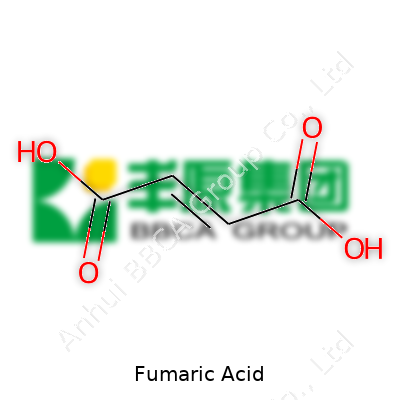
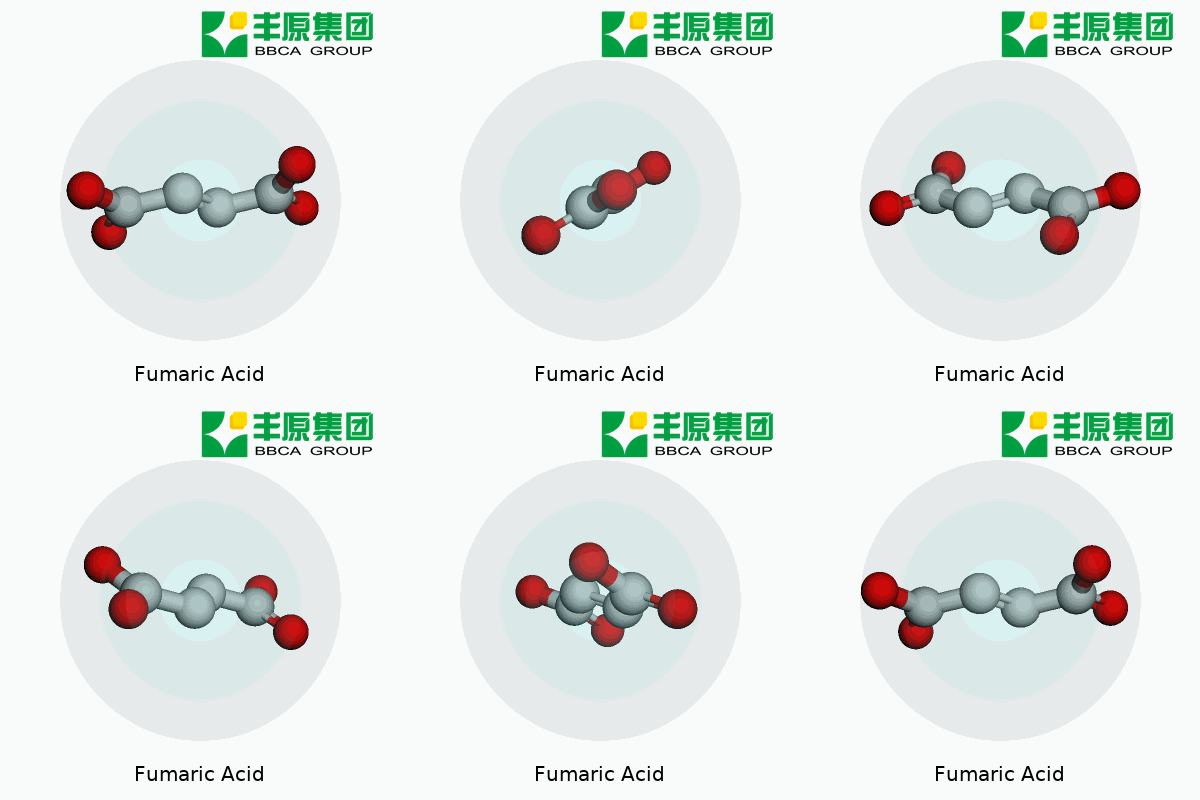
Our hands know fumaric acid’s texture—fine crystals, practically odorless, with a sharp acidic bite that sets it apart from citric and malic acid relatives. Its melting point hovers at 286°C, decomposing if pushed further, a feature that calls for careful heat management during downstream operations. Sparing solubility in cold water means tailored particle sizing and agitation during batch runs ensure uniform dissolution. With a molecular formula of C4H4O4 and a molar mass of 116.07 g/mol, fumaric acid assumes a trans configuration, making it more stable than maleic acid, which we often field inquiries about. The difference in solubility and acidity between isomers dictates process design, especially in large reactors where the wrong isomer can gum up pumps and lines. Every lot is monitored against benchmarks for appearance, water content, and assay to guarantee downstream reaction outcomes and regulatory compliance.
Our end-users demand clarity and consistency so we supply fumaric acid packaged in heavy-duty bags or drums under controlled environmental conditions to prevent moisture uptake. Batches are checked on delivery for purity, which for food grade must sit at a minimum of 99.5%. Standards like FCC (Food Chemicals Codex) and EU regulations dictate lead, arsenic, and heavy metal thresholds. Labeling on every drum pinpoints batch ID, production date, expiry, and net weight. Barcoding systems embedded in our shipments trace each batch back to origin, and every package carries clear pictograms warning of eye and skin irritation, aligning with the Globally Harmonized System. Paperwork matches both REACH and TSCA rules. This focus on tight specification control enables our material to pass pharmaceutical audits and quality routines demanded by multinational buyers around the globe.
Most of our production shifts rely on catalytic isomerization of maleic acid, which itself starts as maleic anhydride, sourced from n-butane oxidation in air. Maleic anhydride hydrates to form maleic acid, then a carefully tuned acid-catalyzed isomerization converts it to fumaric acid with high yield. This route maintains cost-effectiveness and scalability, as opposed to the older plant extraction techniques abandoned decades ago due to inefficiency. Quality hinges on catalyst selection, temperature, and minimizing contamination during recovery. Continuous reactors give better throughput and solvent recycling. Some R&D teams work with bio-fermentation using Rhizopus fungi or genetically engineered microbes, although output only matches the scale required for specialty grades or low-carbon footprint targets. Upstream purification and crystallization circuits remove residual catalyst and byproducts, ensuring no color or trace odor contaminates food and pharma shipments.
Every season, customers seek new derivative compounds based on fumaric acid’s robust carboxylic structure. The compound undergoes esterification with alcohols to create diethyl fumarate or dimethyl fumarate, valued as pharmaceutical intermediates or plasticizer feedstocks. Hydrogenation transforms fumaric acid to succinic acid—a solvent, food additive, and polymer precursor. Fumaric acid readily takes part in Diels-Alder reactions, essential for certain specialized resins and coatings R&D programs. Our teams adjust reaction parameters, such as pH or solvent polarity, to realize modifications that expand the reach of fumaric acid chemistry. This versatility drives ongoing investment in process intensification and new reactor designs to minimize waste and boost yield.
Throughout our production schedule and shipping records, we cross-reference a raft of names—trans-butenedioic acid, allomaleic acid, or E297 (the food grade additive number in Europe)—to avoid confusion. Older literature and supplier jargon sometimes still reference ‘boletic acid’ or ‘lichenic acid,’ but our labeling always defaults to contemporary recognized names. Finished material dispatched to food customers usually bears the E-number, while technical batches for resin or agricultural use focus on chemical names to assist regulatory clearance at ports.
Handling several metric tons of fumaric acid powder makes safety personal for our crew. Bags must be moved gently; dust control remains paramount because inhalation irritates respiratory passages and eyes sting if dust wafts up after a spill. Respiratory protection, proper ventilation, and allergen risk labeling are non-negotiable. Eye-wash units and spill kits sit close to bagging stations. On the factory floor, all staff train in proper storage—cool, well-ventilated, away from oxidizers or strong bases. Training drills and certifications form the backbone of our ISO-certified processes, and every safety data sheet update reflects both international and in-house incident learnings. Long-term, neither feeding trials nor chronic exposure studies found notable carcinogenic or mutagenic concerns in practical use, yet gloves and masks remain standard. The cost of laxity far overshadows that of personal protection.
We watch food producers scoop up our acid for use in leavened breads, where its slow solubility supports longer shelf life and tart flavor stability under baking. Beverage companies appreciate the acid’s punch and ability to stabilize vitamin blends. Pet food and livestock feed customers capitalize on its suppressive action against certain bacteria and molds. Resin manufacturers crave its double bond for synthesizing unsaturated polyester resins; their fiberglass sheets and auto body parts depend on a molecular backbone only fumaric acid can provide. Pharmaceuticals call for ultrapure grades, and creams or oral tablets send smaller but valuable orders. Between these sectors, rapid shifts in demand—especially after regulatory changes—force us to keep storage, packaging, and logistics highly flexible. Beyond the classic sectors, R&D teams worldwide probe metal chelation, biodegradable plastics, and even radical scavenging. Each new field pushes us to tinker with both process and packaging.
Much of our progress in fumaric acid comes from constant feedback with end users and focused lab work. Improved catalysts for the isomerization stage have cut energy input and upped selectivity. In-house analytics run dozens of batch samples through titration, HPLC, and even mass spectrometry to profile purity and trace contaminants. We support collaborations with universities on green biosynthetic techniques, often using residue streams as feedstocks to nudge the process toward better sustainability. Pilot reactors allow real-time adjustment to crystallization conditions, driving higher yields and tighter quality benchmarks. Patents roll out covering novel blends with food preservatives, slow-release resin formulations, or biodegradable composites, protecting shared intellectual property and rewarding those who risk capital in genuine innovation. It’s a continuous relay between market needs and what chemistry can open up.
Handling bulk fumaric acid means tracking toxicology data as closely as any material cost. Our toxicologists review peer-reviewed publications and commission in-vivo and in-vitro tests to understand ingestion, inhalation, and dermal exposure risks. Acute toxicity rates stay low by industrial standards, lowering environmental and occupational health premiums. Nutrition trials reflect acceptable daily intake far above what even the heaviest food industry use presents to the consumer. Inhalation remains the main irritant risk, so investments in dust suppression equipment directly reduce absenteeism and claim rates. Waste water streams are neutralized before discharge so local aquatic systems stay protected, with data logged for local authorities. Safety education keeps our handlers ahead of potential issues rooted more in operational error than in chemical hazard.
We see fumaric acid demand continuing to diversify. Plant-based proteins and sustained shelf life have vaulted this acid’s use in global baking and drinks. Bioplastics technology stands ready to commandeer increasing tonnage as sustainable alternatives gain regulatory and consumer traction. Our own R&D pipeline targets bio-fermentative production from carbohydrates and agricultural residue as next steps for both decarbonization and cost control. Stronger links between academia and manufacturing will convert low-carbon footprints into market wins. Regulatory agencies review novel applications—such as pharmaceutical controlled-release technology or advanced medical coatings—ensuring steady opportunity expansion. New analytical technologies sharpen our quality and trace detection practices, raising the bar for batch-to-batch consistency across a growing marketplace. Fumaric acid will travel further as logistics and packaging innovation extend shelf life and break bulk barriers. Success relies on responsiveness, a relentless focus on safety, and deep process experience—traits that shape every kilogram we ship.
Every day on the production floor, it’s clear how much fumaric acid means to foods and drinks across the spectrum. Take a jar of fruit spread or a pack of tortilla wraps. Without the stable, tart profile from fumaric acid, a lot of flavors would fall flat or spoil quicker than usual. Bakers use it for leavening because fumaric acid cuts dampness and gives a firmer texture, especially in goods like tortillas and rye bread. Beverage makers turn to it to bring a steady, lasting sour note to powdered drinks. Unlike some acids, it dissolves slowly and gives a smoother pucker, avoiding harsh aftertastes.
In our lines, consistency counts. Modern food processors need ingredients that keep microbes at bay, cut down on waste, and hold their flavor straight through shipping and shelf time. Fumaric acid delivers on those fronts. Whenever we partner with a snack producer, we talk shelf-stability. Every gram counts: a tiny bit of fumaric acid can drop pH fast, locking out mold and cutting spoilage without a trace of flavor pollution.
Beyond the kitchen, fumaric acid finds real work in plastics, resins, and coatings. Our chemical reactors run for hours blending it with other raw materials. It brings strength and flexibility into unsaturated polyester resins, often used in construction panels and automotive body parts. Every batch reflects choices made for durability, colorfastness, and curing speed. Without fumaric acid, the finished parts just don’t stand up to weather or wear in the same way.
Metal cleaners and laundry agents rely on its acidity to break down tough deposits. In our detergent division, we notice clients asking for raw materials that meet strict environmental guidelines. Fumaric acid sources straight from plant sugars fit that demand, which opens doors for more sustainable cleaning products.
Some colleagues might overlook how fumaric acid supports health beyond food. Pharmaceutical manufacturers pick it as a building block for certain medicines—especially for skin and neurological conditions. Its stability and predictable behavior make it easier to manufacture controlled-dose tablets. Each time we run batches for pharmaceutical customers, we’re held to precision standards set by regulators. No shortcuts—just transparent sourcing and traceable batches.
We’ve watched the market shift as customers ask more about sustainable sourcing and clean-label products. Sourcing fumaric acid from natural fermentation rather than petrochemicals creates a smaller environmental footprint. That means less fossil fuel in the cycle, which lines up with what food and drug companies look for now. At the same time, switching to greener sources takes real investment in new fermenters, QA tracking, and dedicated logistics.
Every change on our line ripples into our customers’ processes. Food safety audits, kosher and halal certifications, and allergen controls all add layers of review before an ingredient leaves our warehouse. We support R&D teams trying new blends, and we stand ready to troubleshoot when a batch misbehaves. As regulations tighten—especially in Europe and North America—we keep investing in validation and traceability. It’s not just compliance; it’s the foundation of long-term trust.
That’s where manufacturing goes beyond chemistry. Turning fumaric acid from a basic compound into a reliable ingredient involves not just process know-how, but real accountability to partners up and down the supply chain. Each successful batch doesn’t just taste tangy or reinforce a resin; it proves the value of standards and experience built over years on the production line.
Every time the safety of a food additive comes up, experts, regulators, and manufacturers find themselves addressing the same core question: does this substance actually put consumers at risk? Fumaric acid, long used in processed foods, gets its place in headlines periodically. These conversations are necessary, especially as consumers question what goes into their food and how it might affect their health.
Years of manufacturing fumaric acid have brought the topic close. This compound, with a sharp tang, frequently ends up in beverages, baked goods, and confections. It’s not a new face in the industry. Even as trends shift, this organic acid remains a staple for maintaining acidity, improving taste, and increasing the shelf-life of packaged products. What keeps it reliable? Years of scrutiny by regulatory bodies and strict controls within production plants.
In our own experience, the handling of fumaric acid reflects much bigger safety priorities shared by regulatory authorities and food producers. Purity matters — contamination doesn’t just break trust, it’s illegal. Standard protocols ensure purity with every batch, monitored by routine lab analysis. Keep in mind, most people actually get small amounts of fumaric acid naturally from eating fruits and vegetables. Synthetic or naturally sourced, once purified to food-grade standards, its chemical footprint is identical.
Consuming fumaric acid in the typical quantities found in food comes nowhere close to the thresholds flagged by global safety organizations. Several regulatory agencies, including the US Food and Drug Administration and the European Food Safety Authority, recognize its use as safe under listed conditions. Acceptable daily intake levels are set with wide safety margins. Most processed food rarely approaches a fraction of these limits. Fumaric acid enters many diets unnoticed, blended into dough conditioners or powdered drink mixes. Its use is both widespread and historically accepted.
No chemical, including natural ones, is risk-free. Problems come with heavy overconsumption or misuse, not from routine usage at regulated levels. In rare cases, extremely high concentrations could trigger gastrointestinal irritation — the same can be said for citric acid or ascorbic acid. Responsible usage, by manufacturers and consumers alike, keeps risk well below concern. In production environments, employees take care with direct exposure, using gloves and following training protocols — the same way they would handle any concentrated organic acid.
For food manufacturers, traceability and transparency have become essential. Records get audited, and batches can be identified and tracked back to their source. This attention to detail, basic as it sounds, plays a central role in consumer safety and trust. The regulatory framework around food acids today works.
As with any ingredient, clear labeling lets consumers choose what fits their dietary needs. Anyone sensitive to acidulants, or who has specific medical conditions, can avoid products containing them. For the vast majority of people, fumaric acid in food holds no special threat. Responsible sourcing, strict production controls, and consistent regulatory oversight back that up every single day.
After working in chemical production lines for years, the benefits of fumaric acid rarely stay hidden for long. Straightforward to work with, fumaric acid helps streamline entire processing schedules across several industries. From where I stand on the manufacturing side, what matters most is reliability in performance, safety in handling, and the value it brings companies who trust our materials.
A lot of our partners in food manufacturing highlight how fumaric acid creates sourness and tartness in mixes where predictable, sharp flavor counts. Baked goods use it for leavening, since fumaric acid reacts at just the right rate with baking soda, releasing carbon dioxide and letting dough set up with the volume and lightness people expect. As a preservative, this acid balances pH to favor shelf life, blocking the growth of spoilage microbes especially in tortillas, pie fillings, and spreads. The way it dissolves gently in cold water adds practical flexibility—important on busy lines with little time to waste correcting clumping or dispersal issues.
We see animal feed producers turning to fumaric acid to reduce pH and hold feed freshness steady. Lower pH controls mold risks, while also showing evidence of supporting digestion in poultry and swine. Feed mills benefit from its directness as an acidulant—always appreciated for its ease of blending and quick function in moist feed mixes.
In resins and unsaturated polyester production, this acid steps up as a dependable building block. Our factory teams appreciate the clean reaction profiles fumaric acid offers when forming resins for construction panels, automotive interiors, and reinforced plastics. Chemical stability through storage reduces headaches, so warehouses run on tighter timelines. Makers of synthetic lubricants, paints, and printing inks all use fumaric acid for its solid contribution to cross-linking and durability characteristics.
Unlike some more reactive or hazardous acids, fumaric acid stays stable and straightforward to handle with proper procedures. Our decades of batch production taught us it doesn't release strong fumes or require any elaborate gear beyond typical PPE. Client safety teams often mention how fewer regulatory complications help keep compliance simple, letting them focus on production targets instead of paperwork.
Customers are shifting toward friendlier choices, and here, fumaric acid stands out. Produced through straightforward fermentation or from maleic anhydride, the process avoids heavier byproducts. Waste remains minimal and handling residuals poses few hazards according to published safety reviews. That can tip the scales for companies seeking to lower their environmental burden, without trading away performance.
Manufacturers like us know a well-chosen ingredient can reshape profit and reliability across multiple categories. Fumaric acid’s broad reach in everyday products and industrial essentials continues to prove its practical value in every batch we make.
In our line of work, fumaric acid is nothing new. Our team handles, produces, and ships this compound daily. It’s common in both food processing and manufacturing. Most people know it as an acidity regulator in foods, but it also appears in cleaning products and animal nutrition. With any widely used compound, people wonder about potential side effects—especially when used in bulk.
Our plant workers occasionally ask about the risks. Skin and eyes remain the most at risk during handling. Dry fumaric acid can cause irritation after prolonged or repeated contact. The powder’s fine nature means even a small breeze can make it airborne, so inhalation becomes a concern. Anyone who inhales high concentrations may notice throat irritation and coughing. We stick to best practice: everyone near production lines wears gloves, goggles, and sometimes masks, especially during bagging or mixing. Over the years, we have not seen severe cases, but mild, localized irritation does pop up from time to time.
Fumaric acid in foods enjoys global acceptance as a safe and reliable additive. It’s found in bread, drinks, candy, and even tortillas. Toxicology studies show that, for the average person, the quantities used in processed foods fall well below risk thresholds. Rarely, someone might have increased sensitivity, which could result in stomach upset or minor allergic reactions. We never overlook these exceptions, but they remain uncommon based on marketplace data and studies.
Any food-grade chemical can create unexpected effects for certain people. Reports of side effects from consumers tend to relate to excess intake—amounts higher than would ever result from regulated use. Human bodies generally process small amounts with no trouble; at high doses, gastrointestinal upset becomes more likely.
Waste management and runoff control keep fumes and dust away from the larger ecosystem. Our team stays vigilant here, not just for regulatory compliance, but because years of hands-on experience teach us caution. Fumaric acid breaks down naturally over time, so long-term environmental buildup does not match that of many heavier metals or persistent organics. Good ventilation in the workspace and careful attention to spills prevent most of the workplace-specific exposure risks.
We rely on closed systems, sealed transfer points, and clear staff training. Engineering controls form the backbone of our safety mindset. Daily walk-throughs and feedback from line operators guide upgrades or extra safeguards. Having a workforce that calls out any short-term discomfort means we can keep practical risk low. There’s no substitute for real, on-the-floor vigilance combined with up-to-date science.
Any chemical, including fumaric acid, deserves real respect. Years of direct engagement reinforce the importance of solid hygiene, process oversight, and quick response to small issues. For most people, following established guidelines easily avoids side effects. Problems tend to arise from neglect, not from the routine use of fumaric acid at permissible levels.
Daily life in our chemical plant brings us into direct contact with fumaric acid in many forms—from bags destined for food manufacturers to bulk containers for animal feed. Over years of production, we've learned that customers often ask about “the right dosage.” The answer rarely fits into a single sentence. The correct amount of fumaric acid depends on how it's being used and the regulations to which an industry must comply.
Fumaric acid enters global supply chains as a strong acidulant in everything from bakery goods to beverages. Food applications reflect strict regulatory guidance, with authorities such as the US Food and Drug Administration and the European Food Safety Authority setting clear maximum use levels. For instance, the FDA allows it as a food additive under 21 CFR 172.350, recognizing it as safe when used in accordance with good manufacturing practice. Practical experience shows that in baked goods, dosages usually stay below 0.5 percent by weight of the finished product. Drinks and fruit-flavored items generally require even less. This low concentration works because fumaric acid has more acid strength per gram than citric or tartaric acid. Small quantities bring pronounced tartness and extended shelf life without masking true flavors.
Animal feed represents another important application. Over the years, customers in livestock production have shifted to fumaric acid as a reliable acidifier for piglets and poultry feed. Scientific trials often cite supplementation rates of about 0.5 to 1.5 percent in compound feed. Field experience matches the literature: higher doses rarely offer additional benefits, and sometimes greater inclusion may stir up palatability issues or affect digestive health in animals. Regular customer feedback helps us refine our own plant’s quality controls, keeping batches consistent for ease of dosing by feed formulators.
Pharmaceuticals demand special consideration. Only pharmaceutical-grade fumaric acid fits their standards. Pharmacopeias tend to specify limits for daily intake and purity. For industrial uses, the right dosage comes down to the final function: whether it’s polymer synthesis, resin curing, or a pH adjuster. Every process shows its own ideal range based on target specifications and the reactivity of other materials in the mix. Our technical team often works directly with industrial clients to review their application, process flows, and end goals, and in these cases, optimum doses may only be determined through controlled plant trials.
In our experience, more fumaric acid doesn’t equal better outcomes. Overdosing in food and feed can trigger off-flavors or even regulatory violations. In industrial settings, it can throw off product performance and create unnecessary waste. Our plant spends considerable effort on batch consistency and documentation, knowing that even small dosage errors can ripple through a supply chain.
Supplying fumaric acid goes beyond shipping a product. Many customers benefit from guidance born from decades of hands-on manufacturing. On-site training, documented handling protocols, and access to our technical expertise reduce errors and help customers stay compliant. Staying engaged with updated food and feed regulations also ensures neither we nor our customers fall behind on safety and quality benchmarks.