Over the years, gulonic acid has evolved from an academic curiosity to an industrial workhorse, offering reliability across chemical, food, and pharmaceutical applications. Years ago, the early literature placed gulonic acid among the various sugar acids, often overshadowed by its well-known relative, ascorbic acid (vitamin C). Industrial chemists recognized its potential as research intensified in the mid-1900s. Production processes improved, yields increased, and suppliers began to understand the value of a pure, correctly labeled acid. Early manufacturing seldom produced material of consistent quality, with variable impurity profiles and even doubts regarding which form—D- or L-gulonic acid—had more promise. Our development department saw these inconsistencies firsthand and devoted years toward refining analytical and isolation techniques. This background is not just history; it points to why today’s standards for gulonic acid purity and labeling have become so strict.
Modern gulonic acid isn’t a mystery compound anymore. In our facilities, the focus remains on high purity levels, water solubility, and batch-to-batch consistency. As a sugar acid derived mainly from glucose, it resembles ascorbic acid structurally. Our technical team interacts with downstream formulators who rely on its chelating properties, reducing ability, and gentle acidity. Physical clarity and defined melting points grew more important as specialty chemical and food producers began asking for material meeting not only quantitative yield targets but also microbial and heavy metal benchmarks. Reliable supply doesn’t just keep our business running, it also ensures innovation further down the supply chain.
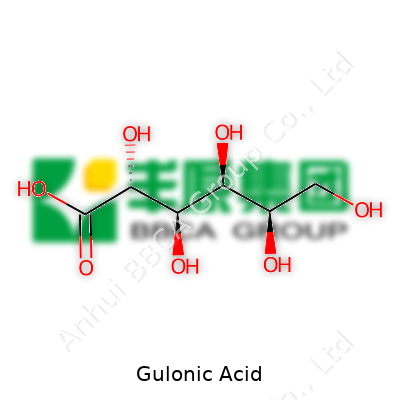
Within the plant, gulonic acid’s physical qualities drive equipment design, storage choices, and packaging selections. This sugar acid typically appears as a white to off-white crystalline powder. Its non-hygroscopic nature means it resists caking under reasonable humidity, though exposure to air over weeks invites gradual browning. At a molecular level, gulonic acid bears multiple hydroxyl groups and a terminal carboxylic acid function; this reactivity demands attention during grinding and transfer stages to avoid contamination. Chemically, it dissolves readily in water, resulting in mildly acidic solutions. Heat stability stays moderate—it doesn’t tolerate high temperatures indefinitely—so we avoid thermal stress during drying and blending.
In plant practice, technical specifications form the language between manufacturer and user. Our team sets limits for assay, moisture, ash, heavy metals, and specific optical rotation to reflect both safety and utility. We print all required identification—such as CAS number, chemical structure, and grade—directly on packaging. Clear labeling avoids confusion, aids logistics, and supports those tracking traceability in health-related applications. Without precise lot coding and compliance with food or pharma regulations, any misstep risks shipment rejection or customer dissatisfaction. Filling this role as a manufacturer means standing behind our lot histories and documentation every day, not just during audits.
Whether using chemical oxidation from glucose or biotransformation with specialized bacteria, we keep a tight rein on quality. Chemical synthesis involves oxidation with agents like bromine or nitric acid, but we learned through years of mishaps to limit over-oxidation or incomplete reaction. More recently, fermentation approaches have grown, employing selected microbial strains in controlled reactors, leading to improved selectivity but requiring biotech know-how and vigilant monitoring. Our process design has to minimize coproducts and simplify downstream purification. Filtration and crystallization steps demand attention to detail to maintain color, particle size, and ease of handling.
From an industrial chemist’s bench, gulonic acid’s multiple hydroxyl groups invite a host of modifications. Esterification, oxidation, and reduction can create derivatives with pharmaceutical utility or improved solubility. We’ve experimented with direct lactonization to create gulonolactone, which appears in food and supplement formulations. Controlled reactions require knowledge of both reaction kinetics and byproduct control; careless choices yield side products that complicate downstream filtration or render a batch unfit for high-purity markets. Each modification protocol gets evaluated for scale-up risks and regulatory requirements in our in-house pilot labs before pushing anything to manufacturing batches.
Gulonic acid also circulates in the market as D-Gulonic acid, L-Gulonic acid, gulonate, and even as ‘hexonic acid’ in older works. Naming consistency matters a great deal, especially to quality assurance staff. The wrong synonym on a shipping label can create customs or warehouse bottlenecks. Besides scientific nomenclature, food additive registration codes and pharmacopoeia monikers carry real consequences for where and how the product may be used. A misunderstanding here wastes both time and money, which no manufacturer can afford.
Even subtle safety oversights during production or packaging can ripple through downstream applications, including foods and pharmaceuticals. Gulonic acid itself doesn’t present acute toxicity using standard handling practices, but dust management and cross-contamination are constant worries in large-scale settings. Significant attention goes into dust extraction, container integrity, and proper personal protective equipment for production workers. We routinely review training for our teams in handling acids, even relatively mild ones, to prevent eye or respiratory irritation. Technical-grade material gets stored away from incompatible substances, and we regularly audit our operations through both internal checks and third-party visits.
Application requests have spread from laboratory uses to more demanding commercial needs. Gulonic acid functions as a precursor for vitamin C synthesis, an acidulant in foods, a specialty reagent in analytical chemistry, and a building block in several pharma intermediates. Our R&D group receives requests from regenerative medicine ventures looking into its metabolic pathways, as well as from food companies interested in mild acidification and shelf-life extension. Animal nutrition products occasionally draw on its unique non-metal chelation abilities. Each application brings its own documentation and performance requirements, often requiring tailored production protocols or additional batch certificates.
Investment in R&D sets our product apart on a competitive global stage. Ongoing projects center around improving yields from renewable feedstocks and lowering waste generation. Many current methods for gulonic acid production rely on glucose conversion, so any bump in enzyme selectivity or reactor productivity means better economics and lower environmental impact. Downstream, we’re examining functional modifications—like esterification and salt formation—to open up new utility in supplements and specialty foodstuffs. Our analytical team also pushes for more robust impurity profiling to meet tightened safety standards in health-related markets. By maintaining a continuous loop between lab-scale discovery and plant-scale application, we stay ready to adapt to industry shifts.
Direct oral toxicity remains low for gulonic acid, based on both historical literature and our own in-house animal studies. That said, as with any organic acid, excessive exposure can bring about stomach upset or, in rare cases, metabolic disruption. We dedicate resources to understanding chronic low-level exposure in food and feed applications. Analytical chemistry advances allow us to screen for structurally related byproducts with sometimes different safety profiles. Ensuring that our materials meet international food additive and pharma requirements rings hollow unless supported by independent toxicity validation. This ethos builds trust with global clients and keeps our technical and regulatory groups allied.
The expanding need for more sustainable vitamin C synthesis keeps gulonic acid in the spotlight for industrial chemistry. Biotechnological approaches remain a growth area, with both genetic engineering and process optimization enhancing yields. New downstream applications in functional foods and medical intermediates present technical challenges, but also opportunities for differentiation. Collaboration between chemists, engineers, and business partners continues to open up new processes, including more energy-efficient isolation and recovery techniques. We expect more stringent purity requirements, especially from the pharmaceutical and food industries, which drives investments in analytical and manufacturing upgrades. Gulonic acid won’t just remain a supporting player but could anchor new production paradigms as sustainable chemistry catches up to performance and cost needs.
Working inside a chemical plant gives a real sense of which materials see regular use across many industries. Each day, our team handles gulonic acid because it holds a unique place in both fine chemistry and commercial production. Having manufactured this compound for years, I’ve watched its profile change, driven by both scientific advances and stricter quality standards globally. Our expertise gives us a distinct perspective on the practical uses that matter most in real-world settings.
Gulonic acid often gets attention for its critical role in the production of ascorbic acid, also known as vitamin C. Our plant’s process converts gulonic acid through a series of seasoned steps. This transformation process remains at the heart of modern vitamin C synthesis, as established by the Reichstein process, which revolutionized large-scale production back in the 1930s. Even with newer biotechnological methods now available, the tradition of using gulonic acid continues because it delivers efficiency and cost effectiveness in volume manufacturing.
Many pharmaceuticals depend on well-characterized intermediates. Gulonic acid serves as a reliable building block for a range of vitamin-related and bioactive compounds. Its structure allows chemists to make modifications that yield new derivatives—some of which show promising activity as antioxidants or as facilitators for targeted drug delivery. When regulatory authorities demand clear traceability and purity, in-house manufacturing control becomes crucial. This responsibility directly impacts a project’s success, since impurities at this stage can cascade into the final dosage forms.
Our laboratory also supplies gulonic acid for specialized ingredients in the food sector. Formulators use it in the development of certain food additives or nutritional supplements, often seeking precise control over taste, solubility, and shelf-life. Because gulonic acid comes from a carbohydrate source, it can be integrated into food systems that prioritize origin and traceability. Some customers focus on functional foods, leveraging gulonic acid for its precursor role rather than as a direct flavoring or preservative.
Gulonic acid finds its way into numerous research protocols. Synthetic chemists and academic groups use it to probe reaction mechanisms or develop new methods for stereoselective synthesis. Consistent supply of pure material supports new pathways and discoveries, especially in carbohydrate chemistry. Year after year, university partners rely on our product for reproducible experiments and scale-up trials. This partnership extends the compound’s impact beyond commercial goods into scientific innovation, furthering our understanding of biologically relevant molecules.
Staying ahead of shifting regulations and ensuring uninterrupted production remain daily concerns. Quality control at each stage, from raw material sourcing to finished gulonic acid, defines our reputation. Market uncertainty—be it a change in demand for vitamin C, new food trends, or evolving drug standards—pushes us to invest in better analytical tools and tighter process controls. By collaborating closely with buyers, regulatory consultants, and academic teams, we can anticipate challenges before they force sudden changes in operations.
The continuing need for reliable, high-quality gulonic acid suggests it will keep its role as both an indispensable intermediate and a starting point for new chemistry in years to come. Our team’s experience shows that sustainable improvements stem from detailed attention to customer goals and consistent upgrades to our own process knowledge.
Gulonic acid comes up now and then in discussions around vitamin C production. We see it in our facilities because it acts as a direct precursor in the industrial synthesis of ascorbic acid. For those unfamiliar: ascorbic acid is vitamin C. Our line workers, engineers, and chemists all cross paths with gulonic acid in its pure form. The material’s not a household name like citric acid, but it plays a vital role behind the scenes in modern food science and pharmaceuticals.
As manufacturers, we insist on clarity about what enters the human food chain. Regulators across different regions, such as the FDA and European Food Safety Authority, have not classified gulonic acid itself as a food additive for direct human consumption. This distinction matters. Many chemistry students know gulonic acid because it sits a single enzymatic step away from vitamin C. Yet, vitamin C has lengthy safety reviews, allowing its widespread use, while gulonic acid has not undergone the same range of toxicological or metabolic studies for oral intake.
We see this play out in production lines: the acid appears briefly, as a transient in tanks or columns, before conversion moves along. We never bottle gulonic acid for direct market shipment. Researchers have looked at metabolites and breakdown products. Urinary excretion studies sometimes detect gulonic acid after heavy vitamin C intake, indicating the body can process it in small, trace exposures. Still, this traces metabolism, not safety.
Every worker entering the synthesis areas follows chemical hygiene rules. Our teams limit exposure to gulonic acid through closed system reactions, scrubber units, and routine air monitoring. Material safety data indicates gulonic acid can irritate mucous membranes and skin at high concentrations. Engineering controls and routine training lower risks to essentially zero for our staff. From a plant standpoint, gulonic acid never gets mixed into foods during any of our processes. We segregate process lines sharply at this point.
Demand for clean-label ingredients and closer-to-nature processes has spurred calls for reviewing intermediates such as gulonic acid. Scientific literature about its safety as a direct food ingredient runs thin. Our technical library tracks regulatory filings and published research; most entries about gulonic acid focus on synthetic steps, not consumption. No accepted daily intake limits, toxicology margins, or broad human feeding studies exist for this molecule.
We sometimes get requests from buyers, food technologists, or supplement innovators about gulonic acid as a fortifying agent. The practical answer does not change: chemical intermediates need rigorous testing before any talk of direct use in foods. Cutting corners on safety reviews puts consumer health—and our industry’s reputation—at risk.
Inside the plant, every process step gets documented, and gulonic acid’s journey always ends in conversion, not packaging for end use. As a chemical manufacturer, our focus stays on efficiency, safety, and regulatory compliance at every step. Gulonic acid matters to industry professionals because it leads to products with solid evidence and approval for human benefit, but it does not stand on its own yet in the safety debate for food consumption.
Years of handling gulonic acid in large-scale production show its behavior more clearly than any textbook or material safety data sheet. While we process and package this compound for labs and industries, the direct contact our teams have with gulonic acid offers a practical view on safety and potential side effects.
Gulonic acid itself often receives attention for its roles in synthetic chemistry and research settings. Our staff works with the pure acid, both in powder and solution forms. We enforce strict protocols to prevent any exposure, especially because inhaling powders or handling concentrated solutions sometimes brings irritation. Most notably, irritation tends to show up as redness or itching on exposed skin. More rarely, someone who does not use gloves may report cracked or dry hands after a long shift on the line.
Inhalation of dust, which happens mostly during transfer or weighing, can trigger sneezing or a dry cough. Our air filtration and ventilation systems help, but accidental releases are still possible with fine powders. We learned that repeated exposure, particularly in dusty environments, produces sensitivity in the nose and throat. Workers appreciate barrier creams and personal masks, which tend to prevent most issues.
Accidental ingestion almost never occurs under our plant conditions due to our policies and training. In theory, though, swallowing gulonic acid in an uncontrolled environment may cause stomach upset. This mainly concerns research groups or downstream companies that might use the compound in processed forms. We highlight that most chemicals, including gulonic acid, should never be tasted or handled without protective gear. Stomach cramps, mild nausea, or diarrhea are risks whenever unfamiliar acids enter the digestive system.
Splatters and droplets worry our supervisors more than anything else. Even mild acids sting the eyes, and gulonic acid is no exception. Production staff all wear goggles, as eye contact delivers immediate discomfort—tearing, burning, and sometimes blurred vision for a short period. Fast rinsing usually solves the problem, but in manufacturing, good habits remain the best defense. We keep eyewash stations close to all blending and packaging lines.
Gulonic acid rarely triggers allergies, based on our health logs. Regular medical checks support that claim. Still, companies handling this acid should never rule out sensitization over very long periods. We notice people new to the material sometimes report mild headaches, though those disappear once they adjust to new routines and better housekeeping practices.
Years of chemical production highlight a key lesson—side effects mostly depend on exposure levels and how carefully the material gets used. Personal protection and proper training go a long way in keeping our teams safe. Companies farther down the supply chain can cut risks almost entirely with gloves, goggles, and workplace hygiene. Gulonic acid has its place in the lab and shop floor, but like all chemicals, respect and attention to safe handling keep side effects to a minimum. Manufacturers see the practical side of these risks, giving us a clear view on what it takes to avoid unnecessary harm.
We have spent years manufacturing Gulonic Acid for both research and industrial buyers. Our facility produces batches that meet strict purity expectations, making consistency the rule rather than the exception. We often receive questions about the optimal dosage, especially for use in supplement formulations, food technology, and chemical synthesis. Let’s clear up where current knowledge stands and why careful handling of dosage matters.
Gulonic Acid remains best known as an intermediate in the synthesis of Vitamin C (ascorbic acid). Most businesses purchasing it are using it as a precursor chemical in fermentation setups rather than as a direct food additive. Regulatory guidelines for direct human consumption have not been established in most jurisdictions, largely because Gulonic Acid itself is rarely used directly for nutritional supplementation. Its metabolic pathway in the human body is not as well charted as other ingredients.
Scientific literature points to its role inside pathways that convert glucose into Vitamin C in species with that metabolic activity. For humans, who cannot perform this conversion, intake has not been prioritized for regulation. The focus tends to remain on downstream products like ascorbic acid. Dosage references in scientific and technical contexts deal with application volumes and concentrations in synthesis, not direct human use.
Our own customers, whether involved in fine chemicals or experimental food applications, never settle on arbitrary volumes. Accurate dosing always comes down to the specific purpose and desired reaction output. Chemical companies like ours maintain strict protocols, using titration and batch analytics to validate dosage in reactions to avoid waste and unexpected byproducts.
Whenever a customer asks for guidance, we underline that Gulonic Acid shouldn’t be dosed into consumer products without full toxicological review and ideally a regulatory greenlight. Even with a well-characterized ingredient, trace contaminants, pH sensitivity, and enzyme interactions all play a role in end-use safety. No established Recommended Daily Allowance (RDA) or similar guideline exists for Gulonic Acid. Any supplier offering “target” dosages for direct human consumption is likely overreaching the evidence.
In our process, quality assurance teams never treat Gulonic Acid as a ready-to-eat or general wellness ingredient. If product developers wish to try novel uses, they coordinate with toxicology or regulatory consultants before considering any internal or external testing. Our biggest volume shipments tend to support technical use cases—fermentation and ascorbate synthesis. Here, precise dosing determines yield and process safety, but we still do not recommend a blanket “dose” for anything related to human health.
Research institutions and safety boards need to conduct robust studies to set formal intake guidelines. As a manufacturer, we are ready to supply high-purity Gulonic Acid for regulated, ethical testing, but we never draw conclusions without data. Real solutions to dosage questions begin with open data sharing between producers, end users, and independent scientists. Until that process matures, manufacturers must stick to technical support for industrial usage rather than speculate on daily human dosages.
Few outside our manufacturing halls appreciate how moisture wreaks havoc on Gulonic Acid. Hydroscopic tendencies turn careless storage into wasted product and headaches with every shipment. Early on, we learned that keeping even a few drums in a humid environment spells clumping, lost yield, and unpredictable purity. Stack the pallets too close to drafty warehouse doors—expect to see pitting or accidental hydrolysis that doesn’t show up until it’s time for quality control.
Our experience shows that the simplest solutions keep inventories reliable. Non-reactive containers such as polyethylene drums or lined fiber drums lock out stray humidity and minimize risk from ambient air. The cost of a proper seal pays back many times over, sparing the operation from unplanned downtime due to product degradation.
Temperature swings represent another uncontrolled variable that only experience teaches you to fear. Any storeroom with direct sun exposure or poor insulation starts to act like a low-budget sauna—accelerating the very breakdowns that lead to failed batches. Our best results come from uniform, cool environments. You won’t find mixers or damage control rushing to fix clumped or compacted lots when these basic criteria are followed.
Storing Gulonic Acid on lower racks keeps accidents and spills localized and accessible, reducing escalation risks. Overhead racks spell disaster during loading or leaks—once, we lost half a drum to a single drop when a forklift operator misjudged clearance. Now, all drums stay within safe reach and away from pedestrian routes or main corridors. Segregation from both foodstuffs and incompatible chemicals stands as a line nobody in production crosses. Too many years in the business teach that shortcutting this rule means explaining yourself to safety inspectors at best, emergency services at worst.
We stick to a ‘first-in, first-used’ approach. Old inventory hides too easily behind stacks, leading to unplanned disposal and compliance issues. We date every incoming drum clearly, staging them so nothing gets buried. Our long-term staff know to check seals and label clarity during every move. Recent audits showed near-zero incidents of expired material—proof that a bit of discipline pays off.
Active monitoring for humidity and temperature catches problems early. Digital loggers with alarms send alerts before a brewing issue wipes out a week’s supply. Good airflow, without direct drafts, keeps dust down. Some years ago, after a power failure knocked out our main dehumidifier, we built out a redundant system and manual backup. Losing a day to clean up was a lesson we didn’t repeat.
Local codes set minimums, but experience tells us that going above the minimum forms real savings. Insurance claims and spoiled product eat more margin than extra pallets or dehumidifiers ever could.
True reliability in Gulonic Acid storage comes from day-to-day vigilance, regular checks, hands-on experience, and a refusal to rely on chance. This foundation supports every process downstream—from formulation to customer delivery.