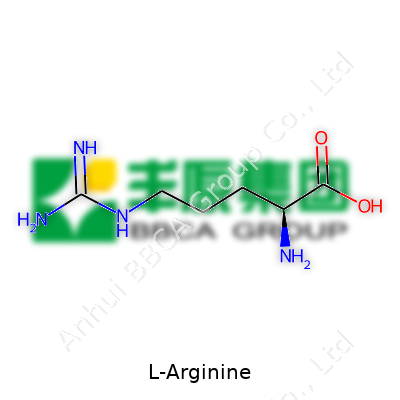
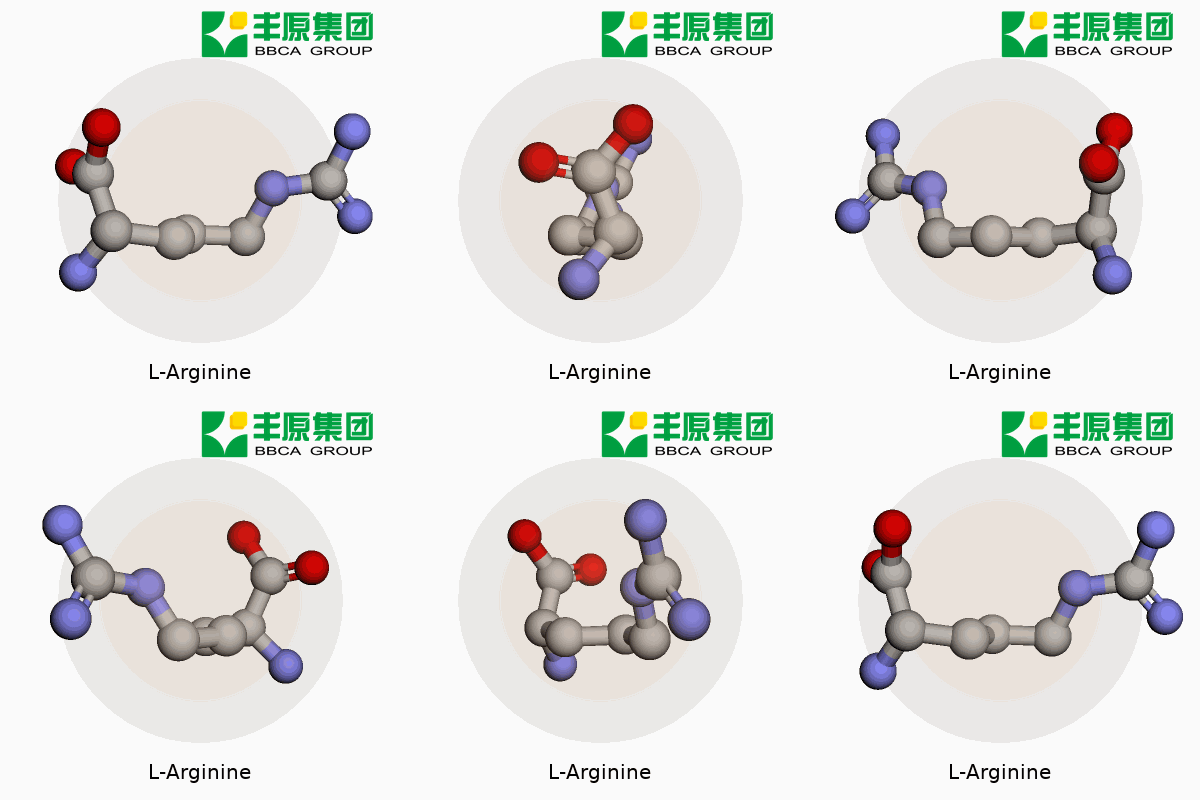
Producing L-arginine dates back more than a hundred years as chemists first isolated the amino acid from lupin seedlings. Early researchers did not have the tools or reactors common now; those original extractions came from laborious plant digestion and fractionation. Over the decades, as fermentation technology advanced, manufacturers like us moved away from animal and plant extraction. Modern microbial methods replaced those risk-heavy processes, reducing batch-to-batch inconsistencies and improving environmental impacts. Looking at industry records, scaling up L-arginine came in waves: first by improving yields through microbial engineering, then by tightly controlling substrates to suppress undesirable side products. These drivers have pushed L-arginine into the mainstream, supporting both pharmaceutical and nutraceutical customers with greater reliability.
In the manufacturing facility, L-arginine stands out among amino acids for its versatility. We see demand from multiple sectors—sports nutrition, clinical infusions, food ingredients, and even chemical synthesis. What unites these areas is the reliance on a high standard: particle size, color, odor, and purity can make or break a batch for nutrition or pharma applications. Whether entering a cGMP corridor or a food-grade blending line, only tight controls keep complaints away. Experience shows that cost pressure constantly rises, but shaving corners on raw inputs or drying steps leads to rework or waste. Investments in both in-line real-time analyzers and strong QMS frameworks have become as vital as reactor capacity.
L-arginine arrives from the reactor as a crystalline, white powder with a faint, characteristic odor and a slightly sweet taste. It dissolves freely in water but almost not at all in ethanol, letting downstream processing take advantage of easy washing steps to separate impurities. Its isoelectric point, around 10.8, means we watch pH closely during fermentation since product yield drops fast if the media fluctuates. Shelf life depends more on moisture and storage temperature than many appreciate, so packaging lines use desiccants and robust barrier films, avoiding yellowing or caking at customer sites. Assay values typically run beyond 98.5% for most regulated applications, checked both by HPLC and titration.
Customers request finer and finer controls on heavy metals, microbial counts, and residual solvents, especially from clinical nutrition or parenteral end uses. Specifications often reference JP, USP, FCC, and EP standards, with differences in allowable levels of related substances or particular enantiomeric purity. Our labeling team keeps paperwork strictly up to date as authorities audit ingredient traceability. Non-GMO and allergen statements attract frequent scrutiny, with country-of-origin paperwork checked at every export. Label accuracy remains under regular review, as one recall triggered by a batch mix-up can cost months in damage recovery. Face-to-face communication with clients about technical sheets and certificates makes a real difference mitigating delays or regulatory headaches.
L-arginine manufacturing used to mean hydrolyzing proteins, then painstakingly isolating target fractions. Most commercial scale today leverages Corynebacterium or Escherichia coli fermentation, with process steps including media sterilization, precise pH adjustments, oxygenation, and substrate feeding strategies. Cell removal by centrifugation and filtration, followed by carbon treatment and crystallization, take up most of the operational time. It takes experience on the line to notice microbial contamination risks or to spot off-color filtrates before the waste becomes unmanageable. Minimal direct solvent use keeps worker risks and emissions low. By-products like biomass and spent media head to animal feed or anaerobic digestion, avoiding waste where feasible.
In our development labs, L-arginine serves as more than just one amino acid: researchers modify the molecule’s guanidino group for specialty reactions, especially within peptide synthesis and as a precursor to nitric oxide donor agents. Under acidic or basic hydrolysis, L-arginine degrades to ornithine and urea, so stability testing includes forced degradation protocols that guide storage advice. Reactions with aldehydes or glycation under heat pose headaches for those making nutraceutical blends, mandating constant vigilance to avoid Maillard reaction byproducts. Downstream, some applications demand arginine salts—like arginine hydrochloride—which call on dedicated handling and extra purification, avoiding contamination of base product streams with unwanted ions.
Common names appear across supply chains: 2-amino-5-guanidinovaleric acid, L-2-Amino-5-guanidinopentanoic acid, or simply “Arginine Base.” Clients sometimes confuse D-arginine or DL-arginine, but production lines keep strict separation to avoid cross-contamination, especially for injectable uses. There are branded versions, but regulatory filings stick to simple chemical names on technical documents. Our tracking system assigns distinct batch and sub-lot numbers to ensure traceability across all commercial and clinical consignments.
On the factory floor, dust control sits near the top of the list for operational safety. Arginine powders generate fine particles that, if not controlled, can trip up both GMP and occupational hygiene audits. Our teams run HEPA extraction and maintain dust class zones, recognizing that amino acids, though not acutely toxic, can irritate lungs and eyes. Training refreshers about anti-static handling and clean-down procedures keep both contamination and under-the-radar dust explosions firmly at bay. Storage spaces operate under climate control, keeping product free from water ingress and light-induced breakdown. Risk assessments shape every protocol, guided by incident logs and published toxicological findings from regulatory databases.
Customers from industries as wide-ranging as sports performance and medical nutrition drive most of our production. L-arginine’s unique roles as a nitric oxide precursor and urea cycle intermediate won it favor among researchers investigating cardiovascular and metabolic disorders. On the sports side, supplement formulators ask for granular grade with proven solubility profiles and clean taste, avoiding off-flavors in finished drinks. For injectable and dialysis applications, sterility assurance and ultra-low bioburden dominate our testing protocols. Pet food clients even request technical documentation attesting to bioavailability in animal diets. Each sector brings its own regulatory demands and packaging quirks, keeping our technical support lines busy every week.
R&D for L-arginine keeps the manufacturing team in constant dialogue with the scientific community. Bioengineers at our pilot plant screen strains under patents, aiming for higher yields on cheaper substrates. Analytical chemists work to refine detection of masked impurities and to speed up batch release. Nutritionists and clinical partners probe new uses, such as immune support or as adjunct agents in cancer therapy. Collaborative projects with universities aim to unlock the genetic switches in fermentation organisms, increasing productivity or minimizing downstream waste. In-house, we continually test for stability enhancements, alternate excipients, or processing tweaks that meet new regulatory hurdles before they arrive.
Anyone on the plant floor will confirm: L-arginine carries little acute toxicity for healthy adults, but risk rises in people with impaired kidney function or rare metabolism disorders. Workers handling the product review MSDS sheets, follow standard precautions, and monitor for signs of skin or respiratory irritation. Toxicologists in regulatory agencies report rare (but real) events like hypotension or gastrointestinal distress from excessive L-arginine intake. Batch records track every deviation, aligning final product with the strictest published limits for pharmaceutical and infant uses. Continued surveillance helps us pick up adverse event patterns and adjust processes before incidents widen.
Looking ahead, L-arginine stands poised to serve even wider roles as new research uncovers health and therapeutic benefits. CRISPR and directed evolution technologies may soon optimize fermentation strains to deliver higher titers and cleaner profiles, reducing costs and environmental impact. Recombinant platforms appear on the horizon, integrating more sustainable feedstocks. Medical research into cardiovascular, metabolic, and neurodegenerative conditions keeps interest high, prompting re-investment in both process technologies and analytical support. Packaging and logistics teams expect more calls for sustainably sourced ingredients in “clean label” markets. On the technical front, combination products and novel arginine derivatives keep our development chemists busy, answering new challenges from innovative customers.
Producing L-Arginine at scale offers a direct window into its practical uses and why it remains in steady demand among supplement brands and formulation partners. Over the years, feedback from customers and considerable research data have shaped my understanding of what this amino acid really does for people. L-Arginine became popular first with sports nutrition brands, but interest soon broadened to cardiovascular wellness supplement makers and even topical skin care developers.
L-Arginine acts as a precursor for nitric oxide in the human body. This pathway can influence blood flow, because nitric oxide signals blood vessels to relax. As a manufacturer, I've watched heart health supplements consistently lead the bulk orders—formulators and brands ask for evidence-backed, well-purified L-Arginine for their blends geared toward supporting healthy circulation. Research studies have described how supplemental L-Arginine, when used appropriately, can support healthy endothelial function. Athletes and physically active adults also tell us they appreciate this effect, especially those training hard or looking for recovery support after strenuous activity.
Many endurance athletes and fitness enthusiasts rely on L-Arginine not just because of its role in nitric oxide production, but also due to its reported impacts on exercise capacity and recovery. Over time, the patterns are clear from customer orders: pre-workout mixes, muscle function formulas, and even plant-based sports drinks frequently list L-Arginine among core ingredients. Feedback highlights perceived improvements in stamina and reduced muscle fatigue. These themes show up not just in testimonials—scientific journals discuss how L-Arginine may help buffer exercise-induced stress and promote efficient nutrient transport.
From the factory floor to small research teams partnering with us, questions about L-Arginine’s effect on the immune response and metabolic function are frequent. This amino acid supports protein synthesis and plays a role in the urea cycle, which deals with waste processing in the body. Customers in the wound-healing segment ask about purity and solubility, which matter when creating specialized medical nutrition. Clinical reports suggest that L-Arginine aids in the body’s natural repair processes, potentially speeding up recovery time, especially after surgical procedures or physical injury, by encouraging new tissue formation.
In my experience, not all L-Arginine on the market delivers the same value. Quality depends strongly on raw material selection, process control, and robust testing. Impurities or inconsistent particle size can spark headaches for supplement makers and end users alike. Blending ease, shelf life, and taste all depend on solid production practices rather than cutting corners. To address these concerns, we answer specification questions, offer support for regulatory compliance, and invest in thorough finishing processes that improve product stability.
Across health and wellness sectors, L-Arginine holds value for customers with different goals: cardiovascular support, fitness performance, immune health, and metabolic function. Production improvements and responsible sourcing remain priorities. It’s clear from customer requests and published research that thoughtfully manufactured L-Arginine, handled with an eye for detail at every step, continues to play an important role in everyday health solutions.
As a manufacturer deeply involved in producing L-Arginine, I regularly hear questions about safety and side effects. The buzz around this amino acid drives many to try it for gym performance, circulation, or even heart health. Many people think “natural” supplements come with no risk. The truth is that everything we take—even daily vitamins—affects the body in its own way. Those working in production see both the benefits and the warnings come through in industry tests and customer feedback.
Customers most often report issues like bloating, stomach cramps, diarrhea, and nausea after taking higher doses. Science backs up what users tell us—studies link doses over 9 grams per day to these digestive problems. Usually, these side effects appear early on as the gut gets used to the supplement, and they fade when people lower their dose. Our own technical support team hears about these complaints most often from first-time users or those stacking L-Arginine with other amino acids.
L-Arginine pushes the body to produce more nitric oxide. That means blood vessels can relax more and blood pressure can drop. For some, especially those on medication for high blood pressure or erectile dysfunction, this can mean lightheadedness or fainting if blood pressure dips too low. I advise buyers to talk with doctors before starting L-Arginine in such cases. Factory quality assurance labs regularly test for product purity so that inconsistent dosage or contamination won’t make this worse.
Some people forget that supplements interact with other things they take. L-Arginine can interact with blood thinners, diabetes drugs, and certain heart medications. From our perspective, the biggest risks show up when customers use the supplement without telling their physician. That creates complications—a patient on nitrates for chest pain could see serious drops in blood pressure. We see this more often in customer complaints submitted during audits or industry surveys than in clinical studies, since those studies exclude at-risk people.
L-Arginine doesn’t suit everyone. People who have had a heart attack need to approach with caution. Research has shown that extra L-Arginine may actually raise risk in this group. The supplement also isn’t recommended for people with herpes infections since it might trigger outbreaks. Direct calls and messages from healthcare providers to our technical line reflect how real these risks are outside of organized trials.
Manufacturers control the purity and form of L-Arginine but consumers play the bigger role in safety. Most side effects come from dosing too high, mixing supplements, or skipping proper medical guidance. The best path involves choosing reputable sources, reading the label, and starting with a lower dose. We in production can promise purity and consistent product—but keeping the risks low depends on consumers using the product wisely and with input from their healthcare team.
Many people wonder how best to take L-Arginine and what the safe amount really is. Over the past couple decades, we’ve supplied pharmaceutical and nutrition companies with L-Arginine in both bulk powder and tablet-grade forms, so conversations around dosing, purity, and safe use come up a lot. The science behind amino acids like L-Arginine keeps growing, but some basics about its use don’t change.
L-Arginine enters discussions for athletic performance, cardiovascular health, and even as a potential help for erectile function. What most people don’t ask right away is: what goal should L-Arginine support? Clinics and supplement brands tend to focus on these three main areas:
Manufacturers produce L-Arginine with close attention to purity, because customers in sports and medicine expect reliable results. Our product goes through chromatography and detailed purity checks, so people receive the dose they expect, without common contaminants.
Research and practical use converge around some established ranges. Most adult users take between 3 to 6 grams per day, usually split into two or three servings. Fitness-oriented brands sometimes recommend up to 9 or even 10 grams a day, though that comes with a higher chance of stomach upset for some people. Hospitals and clinics experimenting with higher amounts rarely go beyond 20 grams in controlled trials, and that’s only under medical supervision.
It makes sense to start small. Many professional users begin with a modest 2-3 gram split dose to see how it feels, then add more based on their body’s response and their intended outcome. For tablet users, this usually comes to two or three tablets spaced throughout the day. Powder blends dissolve easily in water or juice, and end customers often prefer this route for pre-workout supplements.
L-Arginine absorbs best on an empty stomach, thirty to sixty minutes before meals. Food slows the uptake, so users looking for fast absorption—such as athletes before exercise—take it before eating. Mixing it in water or a small amount of juice usually helps avoid aftertaste and assists with quick dissolution. Customers with sensitive digestion sometimes take L-Arginine after a light snack to avoid cramps or loose stool, which occasionally occurs with high single doses.
Long experience manufacturing amino acids confirms people occasionally react to additives or impurities, so buyers should demand certificates of analysis beyond just a generic “USP grade” claim. Genuine L-Arginine—99% pure or better—remains safe for adults at low-to-moderate dosages, but people with preexisting heart, kidney, or metabolic issues should talk to a doctor before starting a new regimen.
Demand for amino acids keeps climbing, but we always point out that the reliability and source of the raw material matters at least as much as the actual dose. Although some supplement labels promote higher numbers, more doesn’t always match better results. Careful dosing, reasonable expectations, and close attention to product quality form the wisest path for regular users.
Producing L-Arginine stretches beyond pipes and reactors; we see the end users—athletes, fitness enthusiasts, and clinical patients—depending on quality, purity, and traceability. Every batch that leaves our plant has a story linked to health and wellness trends. The role this amino acid plays in muscle growth and athletic performance keeps coming up, so let’s break down what really matters.
L-Arginine stands out because the body uses it to make nitric oxide, a gas that helps dilate blood vessels. Increased blood flow means muscles can take in more nutrients and oxygen during intense training. When we design our fermentation and purification steps, keeping contaminants low and bioavailability high makes a practical difference. Impurities or variances in manufacturing impact performance and safety, which feels distant in a spreadsheet but real to someone looking for training results.
There’s plenty of talk among athletes and researchers about L-Arginine’s influence on strength and muscle mass. Reports show some increases in exercise capacity and improved recovery, especially in those doing resistance or endurance training. Studies point toward higher nitric oxide levels as a key factor. As a manufacturer, we follow the research not just to comply, but to understand how our product fits into real-world use.
Low-grade L-Arginine, or batches with inconsistent particle sizes or residues from downstream processing, run the risk of delivering poor results. We constantly invest in process controls and routine quality tests. Some production routes produce unwanted byproducts—ensuring these are below detection limits demands vigilance. We track feedback from supplement formulators. Consistent L-Arginine means consistent formulation, predictable results, fewer customer complaints, and lower returns.
News stories often focus on dramatic effects. Reality is more nuanced. L-Arginine alone does not replace rigorous training or a balanced diet; it acts as one piece of a larger puzzle. Some users don’t respond as expected because of individual differences in physiology, metabolism, or training intensity. High doses sometimes cause digestive discomfort. Users should check labels for purity and not rely on dubious sources, since contamination with allergens or heavy metals can slip through in poorly regulated operations.
There’s a natural urge for fast results. Athletes and their trainers look for safe, proven support for muscle growth and endurance. Reliable L-Arginine, produced under tight controls, answers only one part of the equation. We see the best outcomes in customers who use supplements sensibly, monitor overall protein intake, and stay hydrated. Education around usage helps too—misuse frustrates both users and manufacturers.
Our focus remains on transparency, ongoing quality checks, robust traceability, and clear communication about both the potential and the limits of L-Arginine for athletic goals. By keeping the supply pure and information honest, we support realistic expectations so that progress in the gym is backed by confidence in what’s inside every scoop.
At our facilities, workers talk a lot about what customers ask most, and one of the questions that keeps coming up is whether L-Arginine can be safely taken with other medications or supplements. Frank conversations with health professionals and industry scientists show the landscape is crowded. People combine vitamins and products, expecting nothing but benefits, yet interaction risks rarely get the attention they deserve.
From research and real-world feedback, L-Arginine lands on shelves for its popularity in workout aids, heart health blends, and even some performance products. The compound assists the body in making nitric oxide, which relaxes blood vessels and improves blood flow. That mechanism shapes both its value and its risk profile.
Manufacturing the ingredient gives us an uncensored view — we often see vitamin companies press for higher purity, fewer contaminants, or more rigorous testing. Their customers, often with existing health conditions, may already be taking medication for blood pressure, diabetes, or cholesterol. And that’s where experience tells us good manufacturing isn’t enough if people ignore medical reality.
L-Arginine’s vasodilating effect means it works in ways similar to some prescription medicines. People already on blood pressure-lowering drugs or nitrates for chest pain can tip too far into low blood pressure territory if they add L-Arginine without guidance. The risk is not a “theoretical” one; we’ve spoken to colleagues—manufacturers, not marketers—who have heard from end-users winding up in emergency rooms for fainting or dizziness. The science backs this up. Interactions with erectile dysfunction drugs, especially those that alter nitric oxide pathways, also stack effects in unpredictable ways.
Even blood thinners can become riskier with L-Arginine. As the supplement changes blood vessel behavior, it sometimes skews how the body reacts to anticoagulants, potentially worsening bleeding episodes. Every time a new supplement blend gets formulated, serious discussions happen in the plant quality-control office about putting appropriate warnings on the packaging.
Those formulating multicomponent supplements need to be aware that mixing L-Arginine with other amino acids or ingredients that impact the cardiovascular system can either reduce or boost its effects. Too much optimism about “synergy” sometimes brushes past basic safety checks.
Placing all responsibility on consumers never worked. What works is transparency across the supply chain. Labels alone reach a limit; consumer education and pharmacist training pick up some of the slack. Factory tours remind us that delivering quality L-Arginine is just the start. We urge buyers to review published case studies or trial data before blending it with pharmaceutical or supplement regimens. Even wellness practitioners admit that sharing a current medication list before adding any supplement, including L-Arginine, wards off most serious problems.
Quality assurance teams in our plants keep pushing for better cooperation with supplement brands, pressing for straightforward messaging on packaging. A quick conversation between consumer and healthcare provider usually saves the most trouble. The safest approach remains respect for real science—checking reliable drug-supplement interaction data and rechecking patient health status before combining L-Arginine with other products, no matter how good its reputation or purity.