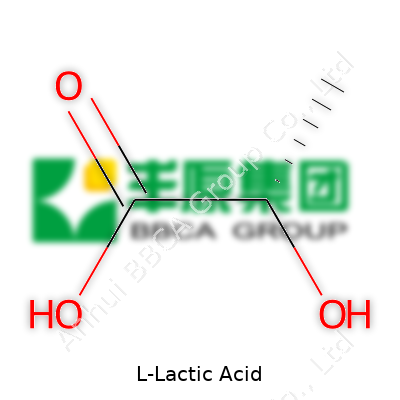
L-lactic acid tells a story marked by a mix of innovation and necessity. In earlier days, it showed up as a product of souring milk—bacterial fermentation turning sugars into a tangy acid. Around the middle of the 19th century, chemists uncovered more about its chemical nature, crude extraction, and how to purify it. Today, plants worldwide dedicate entire fermentation lines to churning out high-purity L-lactic acid from agricultural feedstocks. We’ve engineered efficient strains of lactic acid bacteria, fine-tuned fermentation conditions, and found ways to coax every last percent of yield from sugars derived from corn and sugarcane. The historical drive always had a very practical focus: demand for biodegradable plastics, food preservation, and personal care spiraled up, keeping pressure on us to improve every link in the chain.
L-lactic acid works as both a chemical commodity and a specialty ingredient. It leaves our lines as a colorless, syrupy liquid with a mild, tart taste easily dissolved in water. Every batch undergoes strict scrutiny for optical purity—those who need high-quality polylactic acid for biodegradable plastics, for instance, rely on a pure L-isomer. Food producers count on it to acidify cheese, cure meats, and control pH in carbonated beverages, and its gentle acidity makes it a mainstay in topical pharma and skincare. Whether a tanker-load or a drum, our deliveries join a supply chain with real reach, supporting manufacturers across the globe.
No two processes feel the same if your lactic acid varies. This organic acid features a molecular formula of C3H6O3, a specific optical rotation that shifts light in only one direction, and a melting point just below typical room temperature, so you mostly find it as a liquid or clear solid at slightly cooler storage. It boils at high temperatures under reduced pressure and rapidly absorbs moisture from air. Notable for a strong hydrogen-bonding capability, L-lactic acid blends into water or alcohol with no fuss and plays nicely with most ingredients in food or pharma. Acidity hovers around pKa 3.86, which makes it a solid choice for mild acidulation. We monitor density, pH, and residual sugar levels on every lot, since trace impurities or off-isomers can upend both chemical synthesis and taste profiles.
Certifying grade and purity sits at the foundation of our reputation. Every outgoing batch gets a unique batch number linked to raw material sources, process conditions, and final analytical results. We target standard content above 88% (w/w) for concentrated liquid forms. For food and pharma grades, we keep metals and microbial counts below industry thresholds. Color must remain near water-white. Regulatory-compliant labeling ensures clients know the isomeric form, purity, storage recommendations, potential allergens, traceability, and expiration. The market for lactic acid expects absolute clarity—a spec deviation can halt a bottling line or trigger a recall, so we tie traceability with technical rigor.
We rely on microbial fermentation at industrial scale. Starch or sugar syrups feed proprietary lactic acid bacteria which prefer to churn out the L(+)-isomer with remarkable stereoselectivity. A tightly controlled pH, temperature, and aeration schedule keeps them productive and avoids formation of unwanted D-isomer or byproducts. After fermentation, the broth undergoes filtration, purification through ion-exchange and activated carbon treatments, then final concentration via evaporation or vacuum distillation. Over time, the industry shifted from animal or milk-derived routes to fully vegan, plant-based substrates, as demand for certified sources and allergen control soared. Even small tweaks in feedstock quality or process control can tip productivity, and food chain interruptions—floods, droughts, market tariffs—demand nimble sourcing.
On the shop floor, L-lactic acid goes beyond a commodity. Esterification transforms it into ethyl or butyl lactates—solvents for inks or cleaners—under carefully controlled catalyst conditions. Polymerization gives rise to polylactic acid (PLA), a bioplastic that’s become a sustainable alternative to petroleum-based options, requiring strict removal of water and residual contaminants for even polymer chain lengths. Lactic acid neutralization by bases leads to its salts like sodium or calcium lactate, often requested for food safety or electrolyte restoration in sports drinks. In biomedical fields, further derivatization yields specialized oligomers or copolymers, tailored for tissue engineering or medical implants. Each new downstream synthesis needs tight control on residual water and contaminants, since traces can sabotage yield, slow curing, or skew bio-compatibility.
Across markets, customers know L-lactic acid by several names—2-hydroxypropanoic acid, milk acid, even E270 in food additive rosters. Regulatory filings may require its CAS number, but most purchasing desks just call it L-lactic, L(+) lactic acid, or by product code when ordering specific grades. In broader commodity trading, sometimes you’ll see only “lactic acid,” missing the isomer letter—those details matter, since D and DL forms have very different applications and regulatory clearances. Pharmaceutical or personal care brands might adopt branded variants or local naming customs, but at its core, the molecule remains the same, with nomenclature variants reflecting either purity or source.
Years of handling lactic acid have taught us where the risks hide. Liquid lactic acid, despite its food origin, carries corrosive potential—contact undiluted can irritate skin, eyes, and mucosa. Operators wear gloves, splash goggles, and long sleeves. Spills get immediate neutralization and clean-up. Our process tanks and transfer lines use compatible polymers or stainless steel, since lactic acid can corrode mild steel or reactive materials over time. Air handling prevents caustic mists from escaping during concentration. Storage sits in cool, ventilated areas, away from strongly alkaline or oxidizing chemicals. Regular site audits and staff drills prepare teams for leaks or accidental exposures. All these measures come from practical lessons: near-miss events, supplier recalls, and regulatory visits that keep us awake at night. Consistent adherence to both GFSI-accepted food standards and chemicals plant safety codes underpins every batch.
On the ground, L-lactic acid touches everything from packaged foods, dairy, and beverages, to biodegradable plastics, detergents, wound care solutions, and cosmetic exfoliants. It acidifies and preserves, balances flavor, mediates fermentation, and enhances microbial stability. In plastics, polylactic acid derived from our lactic acid creates clear, compostable cups and packaging, responding to consumer demand for sustainable materials. Sports nutrition companies dose it for pH buffering and electrolyte management. Wound management uses our lactic acid in hydrogels and dressings that maintain moist healing environments. Researchers in pharma work with lactic acid and its oligomers for controlled drug release. Each market pulls on distinct purity or physical specification—for example, medical devices require not only sterility but ultra-low metal content. Agriculture even gets in on the action, as lactic acid derivatives join animal feed preservation regimens.
We commit significant resources to fine-tune strains and optimize downstream purification. Increasing demand for PLA bioplastics led us to invest in genetically engineered bacterial strains for higher yield, faster fermentation times, and sharper isomer selectivity. Process innovations—like membrane filtration—reduce wastewater and eliminate by-product contamination. Analytical teams at our site track minute levels of residual sugars, organic acids, and trace metals with each process tweak. R&D moves well beyond the bench; pilot scaling gets immediate attention, as industrial-scale fermentation throws up challenges smaller process lines miss. Collaboration across the supply chain speeds up testing for food-contact safety, bio-compatibility, and regulatory adaptation. Sustainability also drives continuous evaluation of new feedstocks like lignocellulosic hydrolysates or agricultural waste. We push boundaries to meet both cost constraints and the rising tide of bio-based material demand.
Toxicological reviews show lactic acid poses low acute hazard at typical exposure levels—our teams follow strict occupational safety controls, and chronic toxicity concerns remain rare in documented literature. Local exposure—the risk of skin or eye irritation—remains the biggest day-to-day hazard, especially at higher concentrations, with inhalation risk limited to mists during large spills. Downstream, food-grade lactic acid finds GRAS status in many countries. For environmental safety, lactic acid and its salts easily biodegrade in aerobic wastewater systems, so discharge risk remains modest. Long-term studies on bioplastic breakdown rates do highlight microplastics and environmental residue, but lactic acid itself usually degrades without persistent toxic intermediates. Still, our regulatory department monitors global databases and adapts handling according to the latest research.
Demand projections expect continued growth across all major uses—bioplastics eclipse traditional plastics, food producers push for cleaner labels, and pharmaceutical research requests new derivatives. We see significant uptick in customer requests for carbon footprint data, sustainable sourcing, and green chemical processes. International regulation keeps evolving, so non-GMO, halal, kosher, vegan-certified processes and documentation have become a baseline, not an option. New applications continue opening: tissue engineering scaffolds that rely on ultra-pure lactic acid derivatives, next-generation biodegradable polymers, or lactic acid blends for advanced corrosion inhibitors. Competition grows sharper each year, with new entrants from Asia, Europe, and the Americas vying for market share. Those who scale up, drive down trace impurities, and demonstrate transparent environmental practices will lead the pack. The future belongs to bold producers willing to collaborate with both raw material suppliers and end users—to innovate, adapt, and deliver uncompromising quality batch after batch.
In the chemical industry, L-Lactic Acid never sits on the sidelines. Years of manufacturing it have shown us just how essential this material can be, both as a core ingredient and as an intermediate. Production starts from the simple fermentation of natural sugars, a process we’ve refined for consistency and purity that customers expect batch after batch. Its origins in renewable resources shape its reputation, drawing attention from both traditional and modern applications.
Food manufacturers value L-Lactic Acid for its ability to regulate acidity and act as a preservative. Yogurt, cheese, pickled vegetables, and beverages benefit from its clean flavor profile. Our own experience with large-scale dairy production partners shows that even a small tweak in lactic acid concentration can shift taste and shelf life. The ingredient does more than just preserve; it brings out the tang in sourdough or the brightness in salad dressings. Our technical support teams often work alongside these manufacturers to streamline dosing and ensure quality.
Formulators in the personal care sector draw on L-Lactic Acid’s gentle exfoliating properties. Its natural origin and compatibility with other ingredients have made it a mainstay in facial cleansers, peels, and lotions aimed at brightening and smoothing skin texture. Pharmaceutical companies making intravenous fluids, solutions for wound healing, and specialty tablets rely on the compound for purity and safety. As a manufacturer, we carefully monitor bioburden and impurities at every stage to support these sensitive applications.
The increasing call for greener plastics has highlighted L-Lactic Acid as a key building block. Polylactic acid (PLA) plastics, made from L-Lactic Acid, break into safe natural substances instead of lingering in landfills for centuries. We invest in process technologies that drive down production costs while reducing carbon output. Researchers working with our team have demonstrated how plant-based feedstocks, like corn or sugarcane, create L-Lactic Acid streams with lower environmental impact than fossil-derived alternatives.
Textile finishers and tanners adopt L-Lactic Acid in their workflows to soften materials and adjust pH for dyeing. Finished fabrics feel better against the skin, and leather gains suppleness that can’t be matched with more aggressive chemicals. Feedback from these industries often helps direct our process improvements, like achieving tighter control over contaminant profiles and production timelines.
We continue to see issues with global supply of feedstocks, and fluctuation in sugar prices sometimes pushes up operating costs. Our response focuses on extending supplier networks and improving fermentation yields. Regulatory changes around permissible inputs and labeling requirements demand vigilance. Collaboration with industry groups helps us anticipate new protocols and adapt manufacturing lines ahead of deadlines.
Through these real-world applications and the challenges we navigate daily, L-Lactic Acid stands as one of the most versatile compounds we produce. Its usefulness across so many production lines reinforces why the chemical industry continues to rely on steady, high-quality supply from trusted manufacturers.
In our daily work producing L-lactic acid, we often field questions about its impact on sensitive skin. Concerns come up from both large cosmetic companies and small batch skincare creators. Most people know lactic acid as a chemical exfoliant found in lotions, creams, and masks. Its reputation draws on proven results—gentle exfoliation, increased hydration, and improved skin texture. The issue of safety, especially for delicate skin types, gets a lot of attention and for good reason.
We produce L-lactic acid by fermenting natural sources like corn or sugar. This makes it a natural alpha hydroxy acid (AHA). It helps by loosening the bonds between dead skin cells so they can shed more easily, supporting skin renewal. Its molecular size is larger than some other AHAs such as glycolic acid, which leads to slower penetration through the skin. From our test batches and stability trials, this reduced penetration slows down the onset of irritation and makes the acid less likely to cause sharp stinging or redness.
Sensitive skin reacts easily to environmental stress, temperature changes, and sometimes even tap water. When exposed to acids, there’s concern about burning, itching, or flares of redness. In our experience, the risk from L-lactic acid comes down to two things: concentration and pH. At lower concentrations—usually under 10% in leave-on products—most people experience minimal issues. Higher concentrations and lower pH levels drive up the risk of irritation, even for those who do not consider themselves sensitive.
We’ve worked with formulators who want clinical results while avoiding customer complaints. They balance concentration and buffer the formula to keep the pH higher, usually over 3.5. Our technical support team has tracked thousands of batch tests and it’s clear—a properly buffered formula can make a huge difference. Patch testing during formulation stages reveals that when pH is too low, even robust skin types start to show visible irritation.
Peer-reviewed studies support our observations. Clinical trials have shown that lactic acid at low concentrations, especially when formulated with skin-calming ingredients like allantoin or panthenol, yields smoother, more hydrated skin with fewer side effects. The skin’s natural moisturizing factor (NMF) contains lactic acid itself, which tells us the body already knows how to use and process this compound. Allergic reactions to L-lactic acid from non-animal sources remain rare.
We often advise formulators to start with the lowest concentration that gives visible benefits and to use time-release (encapsulated) approaches when possible. Layering L-lactic acid with humectants, emollients, or even ceramides further reduces the risk of flares. Clearing impurities from the raw ingredient by using high-purity grades helps too, since microbial or unknown residues introduce extra variables.
After years of production, lab testing, and customer feedback cycles, it’s plain that L-lactic acid can be safe for sensitive skin in carefully formulated products. Respecting the balance between exfoliation and safety keeps users happy and coming back. Manufacturers, including our own teams, watch for innovation in buffers, purity, and delivery systems to keep formulas gentle and effective. Developing new batches always means remembering the complex biology of human skin and approaching every formula with a healthy respect for that complexity.
L-Lactic acid comes from renewable sources through fermentation. In our experience, it bridges performance and sustainability for industries aiming to improve product functionality and safety profiles. This organic acid features in products from skincare to food and cleaning formulations. Being the manufacturer, we witness L-Lactic acid driving both performance upgrades and regulatory ease.
Our labs see L-Lactic acid’s versatility each day. In personal care, formulators use it as both a pH adjuster and a gentle exfoliant. Unlike synthetic acids that sometimes cause irritation, L-Lactic acid offers a milder approach, favored by brands focusing on sensitive skin. Formulating cleansers, serums, or lotions—our clients consistently report better skin feel compared to alternatives.
Processing matters. L-Lactic acid’s concentration, dilution, and mixing sequence play into final product quality. At our facility, we control the acid’s purity and optical activity tightly. Lower-purity grades or racemic mixtures can shift a product’s effect or shelf stability dramatically. Customers seeking L-Lactic acid in food or beverage applications rely on this purity to avoid off-flavors and unwanted byproducts.
For cosmetics and personal care, we advise adding L-Lactic acid to water phases, ensuring the pH sits between 3.5 and 4.0 after blending. Higher acid concentrations tend to boost exfoliation, but can push irritation risk. Based on batch testing, we find that concentrations between 2% and 10% suit most rinse-off and leave-on formulas. Shelf testing with various preservatives prevents microbial growth without sacrificing sensory feel.
Food manufacturers add L-Lactic acid as a flavor enhancer, acidifier, or preservative. Dairy alternatives, processed meats, and plant-based products benefit from its clean-tasting profile. We stress the value of dosing accuracy—excess L-Lactic acid imparts sourness that cannot be masked by sweeteners or spices. Automation in dosing lines ensures lot-to-lot consistency and lets us provide technical guidance that makes recipes scalable.
A large number of requests relate to storage and compatibility issues. Unsealed containers attract moisture quickly, and exposure to high temperatures reduces shelf life. We maintain climate controls in our warehouse and advise partners to do the same to stop decomposition and discoloration. We’ve seen improper storage in customer plants leading to brownish tones, pH drift, and costly waste.
Another common challenge appears with mixing. If L-Lactic acid is added too quickly or without adequate agitation, localized high concentrations can occur. This can affect both texture and product safety. Continuous addition with inline mixers or recirculation pumps eliminates these hotspots in high-throughput lines. We test agitation strategies in-house before recommending process upgrades.
Authorities in North America, Europe, and Asia set clear boundaries for L-Lactic acid content in final products, especially for foods and personal care. Our technical team keeps watch for regulatory updates, reformulating products as necessary. Detailed traceability, guaranteed by rigorous batch records on our manufacturing floor, reassures customers that finished goods meet the required standards.
Every year, we receive feedback that L-Lactic acid helps companies reach their sustainability targets without giving up on performance. Whether it goes into biodegradable wipes, vegan cheese, or facial toners, its impact stretches beyond chemistry. Modern consumers demand transparency, and L-Lactic acid sourced from renewable crops meets that standard. As both a manufacturer and a partner, we view its growing adoption as a practical answer to shifting industry needs.
Every day, we work with L-lactic acid in the plant—converting raw materials into a wide range of products that touch food processing, personal care, cleaning solutions, agriculture, and more. Over the years, we’ve fielded a lot of questions about any potential side effects this acid might have, both for the workers handling it and the people using products containing it.
Anyone who handles concentrated L-lactic acid in production knows there’s a sharp sting to skin or eye contact. The acid is notorious for causing redness, a burning sensation, and even blistering with lengthy exposure. Our operators at the mixing tanks and packaging stations wear gloves, goggles, and aprons, and we ensure eye-wash stations are checked each shift. Splashes are rare, but even a small amount can cause big discomfort. There’s no substitute for a proper safety routine when handling the concentrated form.
Customers sometimes call to ask about irritation from skincare products made with our L-lactic acid. Mild concentrations, carefully formulated, gently exfoliate dead cells, which can leave the skin looking fresher. A poorly calibrated formula or overuse, though, leads to itching, dryness, and peeling. Some people with sensitive skin experience redness soon after use. Dermatologists recommend patch testing new products and starting with low strengths for a reason. In our experience, proper pH adjustment during production greatly reduces complaints.
L-lactic acid lends a tangy taste to yogurts, pickles, and other fermented foods. It’s produced naturally by microbes but sometimes added for extra flavor or preservation. Regulatory agencies set limits for a reason—too much can upset digestion. Large doses have caused cramps or diarrhea for some. Workers around the ingredient tank sometimes notice a sour smell, and we train everyone not to ingest it directly. Quality control runs batch checks to keep concentrations in the safe zone.
A handful of people walk away with headaches, breathing problems, or palpitations after exposure to strong lactic acid fumes. Anyone with asthma or chemical sensitivities reports symptoms most often in poorly ventilated spaces. Our line leaders keep air moving through the plant and track air quality during busy production runs. Modern labeling laws require full ingredient disclosure on foods and personal care items. This is meant to help sensitive individuals make safe choices.
Consistent training, transparent communication, and careful process control prevent almost every issue we hear about with L-lactic acid. Over the decades, our team has seen a drop in incidents since ramping up PPE policies and refining our formulas. We pay close attention to every step—from raw acid receipt to final product blending—to stop avoidable accidents and ensure safe, high-quality deliveries to our customers.
Feedback from partners, customers, and our own employees shapes how we handle L-lactic acid here. Addressing side effects isn’t just a regulatory box to tick; it keeps the job site safer and leads to better results in end products. As more industries explore sustainable bio-based ingredients, transparent conversations about potential impacts build trust and keep everyone informed.
Every day in our plant, lactic acid production pulls together decades of fermentation and purification knowledge. In skincare, L-lactic acid offers gentle and measured exfoliation, presenting a milder alternative to glycolic acid for surface cell renewal. The natural origin and chirality of L-lactic acid matter since the L-isomer plays well with skin biology, participating as a humectant and pH adjuster. Today, formulating with this alpha hydroxy acid involves more than simply dropping it in a bottle—interaction with other ingredients shapes both user experience and formula reliability.
Blending L-lactic acid with humectants, emollients, and antioxidants takes careful adjustment. For example, incorporating glycerin or sodium hyaluronate prevents excessive dryness, counterbalancing exfoliating acids. In our lab work, lactic acid maintains stable performance alongside stabilizers such as EDTA and tocopherol. These stabilizers not only preserve product quality but also support compatibility in multi-ingredient solutions.
L-lactic acid shows good synergy with niacinamide in controlled pH environments. We run numerous stability tests to validate blended formulations. Raising pH too far erodes the acid’s effectiveness—conversely, too low pH can irritate sensitive skin. Thoughtful craftsmanship allows lactic acid and niacinamide to co-exist in the same product by holding pH around 4-5.
Retinol and pure L-ascorbic acid bring their own formulation hurdles. Mixing strong acids with retinol may increase sensitivity or degrade vitamin A. Likewise, L-ascorbic acid, which prefers a low pH, can remain stable in lactic acid-based formulations if the total acid concentration is tightly regulated. By methodically screening interactions under accelerated stability conditions, we see clear separation of active phases or microencapsulation as practical routes to house acid and vitamin C or retinoids together without rapid breakdown or irritation.
L-lactic acid helps address roughness and dryness, revealing smoother texture over time. Skincare developers often ask about adding peptides or ceramides. We find that peptides tolerate carefully acidified environments, so peptide-lactic acid serums emerge without major degradation when processed under controlled temperatures. Ceramides hold up well too, especially inside emulsions where careful blending minimizes hydrolysis. Skin-barrier actives like panthenol or allantoin complement lactic acid’s gentle exfoliation, supporting recovery and barrier function.
Formulation safety earns our constant attention. pH drift, microbial growth, and cross-reactions are daily concerns in a manufacturing facility. To solve this, preservatives suited for acid media such as ethylhexylglycerin extend microbial control. Using robust material compatibility testing, we ensure L-lactic acid never reacts unfavorably with silicone elastomers, thickeners, or botanicals commonly used in luxury skincare.
Formulators use L-lactic acid today not only for gentle peels but also to lighten pigment irregularities and refine uneven skin tone—usually combined with niacinamide, vitamin E, or ferments. Every addition brings a new challenge to stability, texture, or consumer sensation, but through precise control of raw material sourcing and real-world stress testing, manufacturers step up to these challenges. Understanding both the acid’s inherent properties and the unique demands of skin ensures every ingredient pairing aims for better, safer user results, not just on paper, but in everyday use.