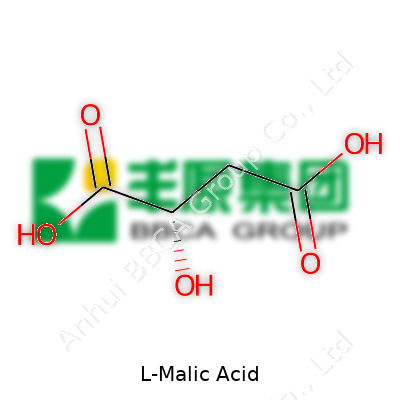
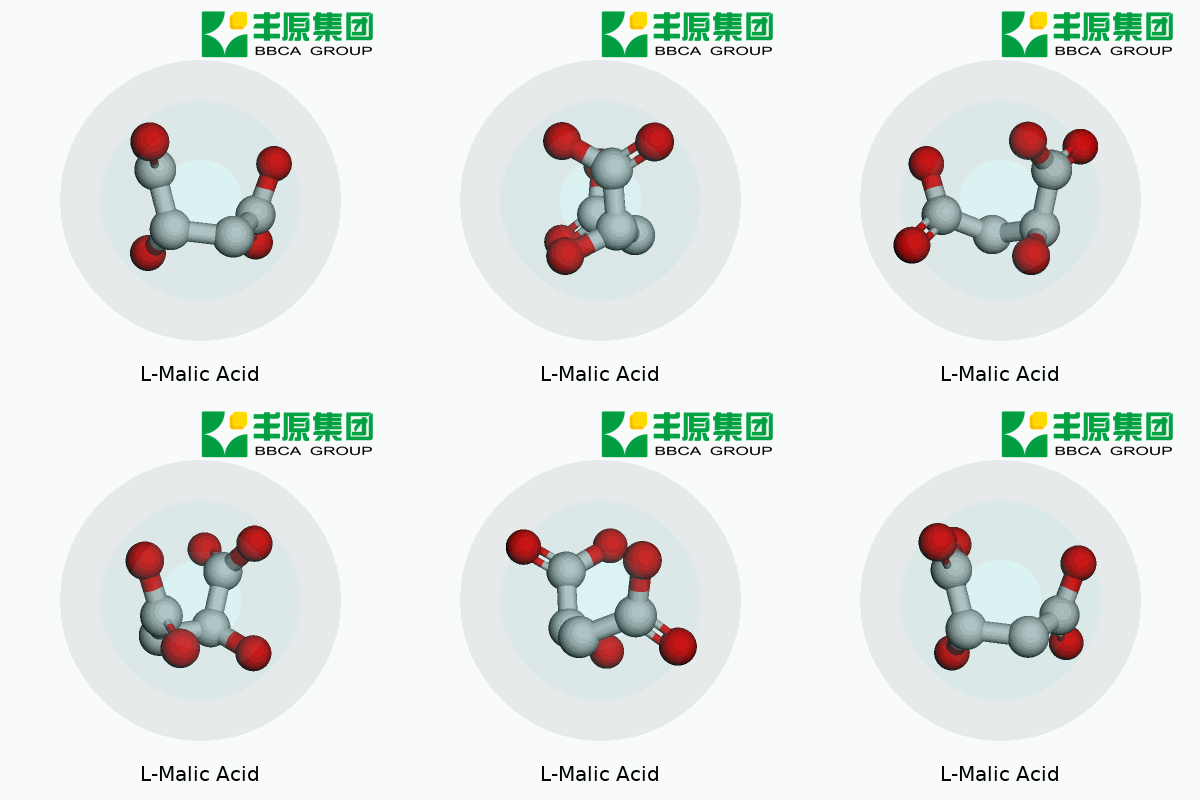
In manufacturing, L-Malic Acid occupies a special place thanks to a long arc of discovery and technical progress. Old chemists in the nineteenth century, starting with Carl Wilhelm Scheele, who extracted malic acid from apple juice, probably never foresaw the scale modern plants reach today. Over years, researchers separated out the L- and D-isomers, revealing major differences in taste and how the body digests them. Once fermentative microbiology scaled up in the later twentieth century, we rolled out biotechnological ways of making L-Malic Acid that matched both the yield and environmental standards food and beverage markets require. In our facility, we moved step by step—fermentation bioreactors replaced kettle extractions, and control systems brought the kind of batch reproducibility early pioneers never could manage. This is a molecule with deep roots in fermentation, cellular respiration, and food biochemistry, yet the techniques used now bear little resemblance to the glassware and guesswork of the past.
L-Malic Acid falls under the hydroxy dicarboxylic acid family, presenting itself in nature in apples, grapes, and many other fruits. What matters most for manufacturers and buyers alike is purity—not just the right chemical identity but the specific enantiomer with proven acceptability for the body. L-Malic Acid delivers a mild, persistent sourness that’s smoother than citric. Operations in our plants treat every batch as a careful balancing act: achieving food-grade levels, limiting impurities below strict limits, and certifying Kosher and Halal suitability when needed. Once processed to food or pharma grade, the finished product is packed for easy handling, but it’s always a fine, water-soluble powder at root. Those in technical fields respect that L-Malic Acid’s double acidity and chiral structure unlock reactions simply not possible with structurally similar compounds. Using this molecule, we reach key benchmarks not only in taste but also in bioavailability and performance.
In the plant, L-Malic Acid arrives as a crystalline white powder. It has a tart, but less biting taste than its cousin citric acid. Solubility in water remains high—suitable for beverage syrups, pharmaceutical excipients, and process chemistry. With a melting point around 100–130°C (decomposition begins soon after), careful temperature control during processes like drying, blending, and tableting prevents degradation. L-Malic Acid bears two carboxyl groups and one hydroxyl group in its chiral structure. Specific rotation, usually measured in analytical labs, separates the L-form from the D- or the racemate. For most plant workers, the acid’s critical modulus: acid value and moisture. These decide flowability and stability, especially during high-speed packaging or long storage. Chemically, L-Malic Acid fits midway between stronger acids like citric and milder ones like tartaric.
Market standards require L-Malic Acid of high purity—usually above 99%—with very low heavy metal content, low sulfates, and absence of foreign acids. Certificate of Analysis (CoA) data matters intensely in our business: the slightest batch-to-batch variability can prompt a recall, especially in food or pharma. All labels must make origin, ingredient, net weight, batch number, and validity period plain to trace any problem later. It’s routine for regulatory agencies everywhere to demand clear country of origin and hazard classification, so accurate tags and lot numbers rule every shift in the warehouse. On plant paperwork, shelf life and storage instructions often cause more debate than synthesis steps because a minor slip-up with moisture can cause solid cakes or clumps that never dissolve fully in end-use. Our team relies on validated procedures—HPLC, polarimetry, titration—for every shipment to keep downstream complaints to a minimum.
Commercial L-Malic Acid production leans heavily on fermentation nowadays. Glucose or other carbohydrate feeds flow to bioreactors seeded with specialized strains of Aspergillus or Rhizopus fungi. Fermentation runs at strictly controlled pH, temperature, and oxygen to steer microbes toward the L-isomer, not the D-form or racemate. Once broth acidity maxes out, we draw off the liquor and filter out biomass. Multiple downstream steps then remove salts, colors, and organic impurities: activated carbon, ion-exchange columns, crystallization, and centrifugation. Some older chemical methods—hydration of fumaric acid or chemical racemization—still exist, but controlled fermentation beats them for sustainability, yield, and worker safety. Manufacturing staff keep a close eye on batch analytics, since even minor contamination by the D-isomer jeopardizes product acceptability in sensitive markets.
L-Malic Acid plays several roles in both basic chemistry and applied manufacturing. This acid blows open more possibilities than single-function acids: its twin carboxylic acid groups offer one route to salts (malates), its hydroxyl band catalyzes esters used as flavoring agents. Under dehydration, L-Malic Acid shifts to form maleic anhydride. This property opens up opportunities for synthesis of polymers, resins, and specialty intermediates in our operation. In food pressing, L-Malic Acid stabilizes color and manages tartness profiles, acting both as a pH control agent and a sequestrant for metal ions. In laboratories, its chirality lets it act as a resolving agent for racemates, a step critical for fine chemical and pharmaceutical manufacturing. Our process engineers often exploit the acid’s ability to form complexes with minerals—this boosts mineral solubilization in supplements. Compared to citric or tartaric acid, malic acid displays unique reactivity under heat, and improper handling can convert some of it to fumaric or maleic acid.
In technical paperwork and regulatory filings, L-Malic Acid travels under several names. Chemists know it as (S)-2-Hydroxybutanedioic acid or L-Apple acid. In food ingredient lists, E296 identifies it. Both “malic acid” and “L-malic acid” see use among clients, but specifying the isomer—L-form—prevents confusion with DL- or D-malate, since only the L-form counts as a true nutrient in human biochemistry. European Pharmacopoeia and FCC standards require full nomenclature and CAS identification to support traceability. These synonyms serve a crucial purpose in logistics as shipments cross borders: consistency guarantees regulators and customers receive the compound with the right physiological effect.
Handling L-Malic Acid in a production setting refreshes old lessons in occupational health. Its low toxicity makes it easier to work with compared to stronger acids, but dust controls and respiratory protection still matter, especially on large powder transfer lines. Eye and skin protection shield against dryness or irritation. Spillage draws attention as the acid’s moisture-absorbing quality creates slippery surfaces. Storage in sealed bags inside dry, ventilated rooms curtails clumping and maintains quality. From a regulatory angle, food ingredient evaluations mark it as Generally Recognized As Safe (GRAS). We train workers in emergency response protocols anyway. Cleaning routines keep buildup low in mixing and filling machines to reduce both contamination and cross-product mixing. All labeling flags the acid as an irritant—not a severe or reactive hazard, but a material whose safety record comes from vigilance, not luck.
Beverage manufacturers and food processors drive demand for L-Malic Acid in our business. In soft drinks, juices, and flavored waters, it shapes acidity that lingers without overwhelming. Winemakers lean on it for controlled malolactic fermentation, targeting precise taste and aroma profiles. In confectionery, our technical specialists demonstrate how the acid aids in pH adjustment, prevents sugar crystallization, and extends shelf life. Pharmaceuticals rely on malic acid as a buffering agent, but it also serves as an excipient to enhance tablet solubility. Dietary supplement markets want it as a chelating agent, especially to improve magnesium and calcium absorption. Everyday detergents and personal care products deploy malic acid for its mild acid strength, matching the pH of skin better than harsher acids. In metal finishing, plant managers prefer it over citric or phosphoric acid as a descaling or cleaning agent when less aggressive corrosion is needed. This wide range of applications means our production flexibility decides our market reach.
Inside the R&D labs, L-Malic Acid prompts innovation well beyond old uses. Scientists test its ability to replace artificial acidulants in “clean label” foods where simpler ingredient lists hold market value. Studies dig into bioavailability: L-form interacts best with human metabolism, entering the citric acid cycle smoothly and promoting energy production. Some teams develop controlled-release tablets for supplement developers, while others optimize crystallization protocols for higher purity. Regulatory researchers work on improving detection of isomeric purity to keep fakes or racemates from reaching sensitive health markets. We collaborate with fermentation specialists to bring more sustainable, lower-waste processes onstream, keeping carbon input and energy use minimal. As focus heightens on environmental compliance, new filtration and crystallization steps arrive to minimize process water and chemical use. R&D does not rest on safety, either: every change prompts fresh toxicity and dietary studies to ensure no tradeoff in consumer protection.
Extensive toxicological studies on L-Malic Acid confirm that, in reasonable dietary concentrations, the compound does not cause adverse effects in mammals or humans. Metabolic studies show that L-Malic Acid enters the Krebs cycle and breaks down into carbon dioxide and water with high efficiency. Chronic exposure studies support an exceptionally high no observed adverse effect level (NOAEL). Workers face irritation risks from fine dust inhalation, so investing in dust management and regular health checks for exposure prevents even minor issues. Acute toxicity remains low, but as always, we stay alert to evolving research on impurities or byproducts that could emerge in large-scale or high-intensity uses. By adhering to published dietary guidelines and working within food additive limits, our team keeps both customers and employees protected.
Based on current demand and ongoing studies, L-Malic Acid stands ready for broader application not just in food or pharma but also in green chemistry, biodegradable polymers, and specialty supplements. Fermentation R&D promises lower-cost, higher-yield processes with reduced reliance on petrochemicals—a direction already favored in regions with strict carbon curbs. In personal nutrition, formulators continue to uncover roles for malic acid in muscle health, fatigue reduction, and mineral supplementation. The regulatory climate pushes us to guarantee the highest isomeric purity, low environmental footprint, and faster analytical validation. Our company prepares for a market where custom blends, enhanced delivery formats, and novel applications in both industrial and consumer sectors drive production dynamics. Each advancement springs directly from a blend of chemical insight, plant-floor experience, and deep respect for both the molecule and its users.
At our chemical plant, we handle tons of L-Malic Acid each year. The interest has only grown as more manufacturers recognize its usefulness. L-Malic Acid enters the process as a white, crystalline powder, and in the hands of our technicians, it becomes a backbone ingredient across several industries. Every batch that leaves our site carries our direct attention, because the way customers use it introduces responsibilities beyond just making a compound that passes the usual purity specs. Real-world results matter. For this reason, we talk with quality control teams from food, beverage, cosmetic, and pharmaceutical operations on a weekly basis. They want to know how L-Malic Acid interacts in their recipes, what storage conditions preserve its potency, and how subtle shifts in ingredient balance can affect the result on the shelf. L-Malic Acid never stays idle for long around here.
Food producers call for L-Malic Acid to accentuate flavors—especially in candies and beverages where a bright, persistent tartness defines the product. It is a mistake to think of it as just another sour agent. We see R&D labs testing out batches to sharpen apple notes in juices, brighten citrus sodas, or round out the sweetness in jams. L-Malic Acid creates a durable tang that holds up better over time than citric acid. In our feedback sessions, product developers note how the acid amplifies fruit flavors and brings the right mouthfeel without overwhelming the original recipe. Some even ask for detailed information on how our drying and storage techniques influence its handling in big, automated plants, because a change in granule form can shift the way it dissolves. This attention to form and function stems from their direct consumer feedback, which our team finds invaluable.
Nutritional supplement makers bring up another side of L-Malic Acid. It plays a role in sports nutrition as a chelating agent, binding with minerals to assist with absorption in the gut. Some customers request it specifically for inclusion in capsule and powder blends targeting energy support. We have to ensure that our production avoids cross-contamination, since other compounds like dairy or gluten would spoil the clean-label reputation these supplement brands depend on. L-Malic Acid also surfaces in effervescent tablets, where its reactivity in water ensures a smooth dissolve and pleasant taste. Both production scale and traceability come into sharp focus for supplement companies, and our facility’s batch records help answer their compliance teams’ toughest questions.
Cosmetic chemists visit us for L-Malic Acid, aiming to use it as a gentle alpha hydroxy acid in exfoliating creams and serums. We discuss the acid's solubility and skin feel, since performance in topical formulas depends not just on concentration, but on how it mingles with active extras and delivers results that users can feel. Our technical team regularly assists with pilot runs for new facial peels, providing samples that allow labs to test tolerances and optimize blends. Away from the glamor of cosmetics, L-Malic Acid also finds a place as a descaling agent in cleaning formulas, especially where safer, food-grade acids are required. Commercial kitchens and food processors tell us that they rely on its organic origin and regulatory approvals for confidence in both cleanliness and safety, since residues have to be minimized.
Producing consistent L-Malic Acid requires accuracy in pH control and filtration during every run. Seasonal humidity or minor changes in raw materials can nudge the reaction yield, which is why we invest in real-time monitoring instead of post-batch corrections. We also meet regular audits from large food and pharma companies. Traceability, residue testing, and transparent documentation allow us to build trust over years, not just with one-time orders. The most meaningful conversations happen face-to-face at industry shows, where someone brings up a new product line and we work together on a solution that only a hands-on approach can deliver. In this way, the story of L-Malic Acid at our plant always ties back to direct feedback, rigorous consistency, and respect for the challenges our customers meet in their own factories every day.
L-Malic acid often turns up in the world of food and beverages, especially if you dig a little deeper into ingredient lists or work inside a factory processing raw materials. Running a malic acid unit keeps you close to science but also grounded in practical concerns about what ends up in food. Over the years, I have learned to respect both the chemistry and the rigorous safety expectations laid down by food safety authorities.
Malic acid forms naturally in apples and many other fruits. Commercial processes rely on fermentation or chemical synthesis, yielding a food-grade material that has to meet purity and safety benchmarks. Our lines operate under strict hygiene controls. Batch records trace the journey of each drum right back to its raw feedstocks, and laboratory teams check for contaminants—including heavy metals and microbial activity—at multiple points.
Food agencies across the globe have reviewed malic acid for decades. The World Health Organization issued guidance that sets out acceptable intake limits. The FDA and European Food Safety Authority also classify it as a food additive suitable for routine use, as long as manufacturing stays within agreed-upon purity levels and dosing limits set out in finished products.
In over twenty years of working in chemical manufacturing, there have been no cases of severe harm from its use in foods when producers stick to regulations. Most issues—complaints about sour flavor or mild digestive upset—arise if an unusually high concentration appears in an end product. Flavor specialists manage this by blending malic acid carefully with other acids, relying on accurate scales and automated dosing to get it right. Workers on the floor receive clear training. Oversight catches errors early.
Safe consumption ties directly to how the ingredient gets handled—not just in our plant but throughout the supply chain. Cross-contamination stands out as a real risk if the same machinery handles both food-grade and technical-grade chemicals. For this reason, many factories run separate lines, use color-coded tools, and isolate storage zones. These practices help us keep food-grade lots free from unwanted impurities.
Another point gets connected to shelf life and storage conditions. L-Malic acid remains stable in cool, dry rooms. Moisture leads to clumping or, worse, provides a spot for microbes. Our teams monitor warehouse environments using humidity and temperature recordings, coupled with first-in-first-out shipping protocols. Materials that slip beyond expiration dates don’t get shipped out.
Some challenges remain. Smaller processors sometimes rely on bulk suppliers rather than original production sites, which can introduce gaps in traceability. It benefits everyone when resellers remain transparent about their sources and when end-users request documentation before accepting lots. Investment in digital tracking and blockchain systems could support even tighter transparency on the market side.
Keeping malic acid safe runs on more than compliance. It calls for constant attention to detail, honest communication, and rapid adaptation when regulations change or new data comes forward. As science progresses, industry groups and authorities may revisit limits. Our commitment as manufacturers is to stay ahead, keep safety a top priority, and make sure what starts as a raw white powder ends up supporting trust and quality at your table.
Standing at the reactors in our facility, I smell a sharp but clean aroma every time we process a batch of L-malic acid. To a chemist, it’s more than just a souring agent. What we make every day goes right into some of the world’s best-loved foods and drinks. The reason is simple. L-malic acid’s appeal comes from its ability to bring out a crisp tartness that makes flavors pop without overpowering other notes. Soft drinks rely on it for punch. Candies brighten up with its tang. Even jams and ready-to-drink teas pick up balanced acidity from this single compound.
L-malic acid breaks down smoothly in the human body as a natural metabolic intermediate, so brands can rely on clean-label messaging. To food technologists, it means getting the sour—but not the bitterness—of citric acid, offering more flexibility in recipes. Over decades of feedback from customer R&D teams, the most consistent request is that L-malic acid consistently masks the aftertaste of some high-intensity sweeteners, like aspartame or stevia. In practice, that means our ingredient helps sugar-reduced products taste more like their full-sugar counterparts.
A batch of apple-juice concentrate made with L-malic acid holds its color and flavor longer through processing and storage. The acid slows microbial activity in certain applications, acting as a mild preservative in tandem with other hurdles. That allows companies to deliver a less-processed taste profile while still meeting shelf life targets. Process engineers find that dry blends flow and dissolve better with L-malic acid than with citric or tartaric versions, which can clump or leave residues in liquid machinery.
Scaling up L-malic acid uses fewer process chemicals and gives higher yields compared to the older chemical routes for related food acids. Most of the world’s production today is bio-based, starting with microbial fermentation of renewable sugars. Our plant’s carbon footprint calculation reflects those advances. Energy input per kilogram of product has dropped year after year as fermentation efficiency improves and waste valorization becomes standard. Lower energy means lower costs and less environmental impact—a double win for both factory and customer.
Nutritionists continue to ask about any health impacts from acidulants. Because L-malic acid matches a naturally occurring acid found in fruits, it’s well-studied and safely approved for use around the world. Unlike some synthetic acids, there’s no evidence for negative health effects even at typical industry dosing. We regularly field questions about dietary restrictions. The L-isomer used in foods and supplements is non-GMO and suitable for vegan, vegetarian, kosher, and halal diets. The science is clear: in reasonable amounts, malic acid simply works within the body’s citric acid cycle.
Food and supplement makers tell us they want reliability above everything else. Each lot leaving our plant must hit tight specifications—no off-colors, no odd odors, no grit. Recent investments in quality-control tech now catch minor defects at parts-per-million levels. Customer audits have shifted from concerns about contaminants to asking for documentation about process sustainability and traceability. Our technical team works daily on yield optimization and waste minimization, always guided by feedback from downstream partners.
L-malic acid keeps shaping better food, drinks, and supplements simply because it performs—on the line, in the lab, and on the shelf. Our facility keeps growing not from marketing but from simple proof in everyday products.
As a chemical manufacturer producing L-Malic Acid on an industrial scale, we’ve spent decades researching its properties, safety, and practical uses. Food and beverage processors, pharmaceutical firms, and technical industries all rely on L-Malic Acid for its unique ability to adjust acidity, balance flavor profiles, and serve as an intermediate in metabolic pathways. Most inquiries we receive focus less on its function and more on its safety—specifically, potential side effects in consumer and industrial applications.
L-Malic Acid occurs naturally in many fruits, most notably apples, and its role in the citric acid cycle means it’s familiar to the body’s metabolism. In our experience, routine exposures during manufacturing or application rarely cause adverse reactions. Workers following recommended safety practices—protective gear, dust control measures, and routine clean-up—report minimal discomfort. Rarely, someone sensitive to organic acids may notice mild skin or eye irritation with direct, concentrated contact. Proper training and use of standard hygiene practices help avoid most issues in the workplace.
Human tolerance to L-Malic Acid is high, considering the prevalence of this compound in foods and its use as a food additive. Reputable scientific sources including EFSA and FDA recognize L-Malic Acid as safe. At the dosages allowed in foods, beverages, or supplements, reports of negative effects stay low. Occasionally, people with exceptionally sensitive stomachs may experience temporary digestive upset: bloating or mild discomfort at excessive intake levels. In our dealings with clients in the food and beverage sector, complaints about health impacts remain uncommon and ordinarily relate to excessive use beyond regulated recommendations.
We sometimes field questions from health practitioners about vulnerable populations. Data point to rare interactions among individuals with certain metabolic disorders, such as fumarase deficiency or advanced renal dysfunction. Such conditions interfere with organic acid metabolism and, in the rare instances when patients ingest significant amounts of L-Malic Acid, overload symptoms can occur. These remain medical rarities and are not a factor in general consumer settings. Our technical team spends time collaborating with clients formulating products for sensitive populations, always encouraging consultation with healthcare professionals in such cases.
Quality control begins in the factory. We invest heavily in purification, residual contaminant screening, and strict adherence to Good Manufacturing Practices. This effort prevents trace impurities from entering the finished product—an often overlooked source of unforeseen sensitivity reactions. In downstream use, we always recommend continued education for application chemists and QA managers so that final goods stay within accepted use rates. Open communication lines with regulatory agencies keep safety standards evolving and responsive; we routinely review emerging medical literature to spot trends outside the normal range of experience.
In large-scale production and day-to-day supply, L-Malic Acid demonstrates a strong track record for safety. Potential side effects tend to fall within predictable patterns: minor irritation on direct contact and digestive upset only at levels far above customary use. Focused attention on handling, purity, and application limits continues to reduce risks, letting manufacturers and consumers enjoy the benefits of this hardworking acid without significant downside.
Running a plant where L-malic acid rolls off the line each day, I see firsthand how much stable storage affects both customer satisfaction and worker safety. We produce tons of this acid—crystalline, odorless, tart—so cutting corners on storage has never crossed our minds. L-malic acid absorbs moisture from the air at a surprising rate. Left exposed, it clumps, loses free-flowing qualities, and brings risk of microbial spoilage, especially in humid climates. Once, we traced a shipment rejected by a beverage company to careless storage right at the warehouse dock, where open sacks sat under a leaking roof.
Few people outside chemical plants realize how much water vapor floats around in the average facility. L-malic acid loves water. Given the chance, it draws moisture right out of the air, turning a fine powder into a sticky mess. Beyond production headaches, this mess shortens shelf life and even alters acid strength. We never leave bags unsealed or unstacked. Drum liners and heat-sealed multi-layer bags give a solid barrier. Storing pallets atop raised platforms—the good, sturdy kind—helps keep sacks above any accidental spill or puddle. Temperature swings lead to condensation inside containers, even if the room itself isn’t humid, so direct sunlight stays off storage rooms. Materials left baking in hot corners of a warehouse don’t hold up as well, and product complaints prove it.
We refuse to let grit, dust, or chemical vapors float in from other processes or shipments. L-malic acid easily picks up flavors and odors from surroundings. Years ago, a neighbor loaded vanilla extract in the same dock area, and that faint aroma crept into several bags. We overhauled storage fencing after that. Dedicated, enclosed rooms stop cross-contamination. Twice a week, we check for leaks and sweep floors. Regular audits catch small issues before product quality slips. It sounds fussy, but customers want acid, not anything else.
No policy beats people who understand why habits matter. We train forklift drivers and warehouse staff every month, showing what happens if sacks tear or containers get punctured. If a spill or rupture happens, we tackle it fast with proper gear and disposal steps. Forget gloves or dust masks, and people complain of skin and throat irritation. We post spill and storage instructions right near the pallet rows, not hidden in a binder.
Thermo-hygrometers hang along every aisle. The readings go on daily checklists—no guesswork. If levels drift too high, dehumidifiers kick in. Chilled storage isn’t needed, but cool conditions make sense in hot climates. Every month, we sample from random bags and scan for off-colors or caking. Any trace means that batch stays with us and never heads out the gate. Traceability records connect all bags to their storage racks. Proper stock rotation, moving the oldest first, limits any chance of material sitting too long.
Customers tell us everything, especially if powder in their mixing silos clumps or acid tastes unexpectedly flat. Each complaint prompts a storage review. Upgrades—like double-layer bags or tighter building insulation—started after partners outlined their real-world storage headaches. Every change leads to better results both in our records and our partner’s end products.