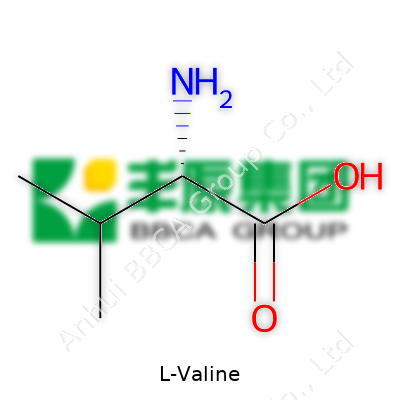
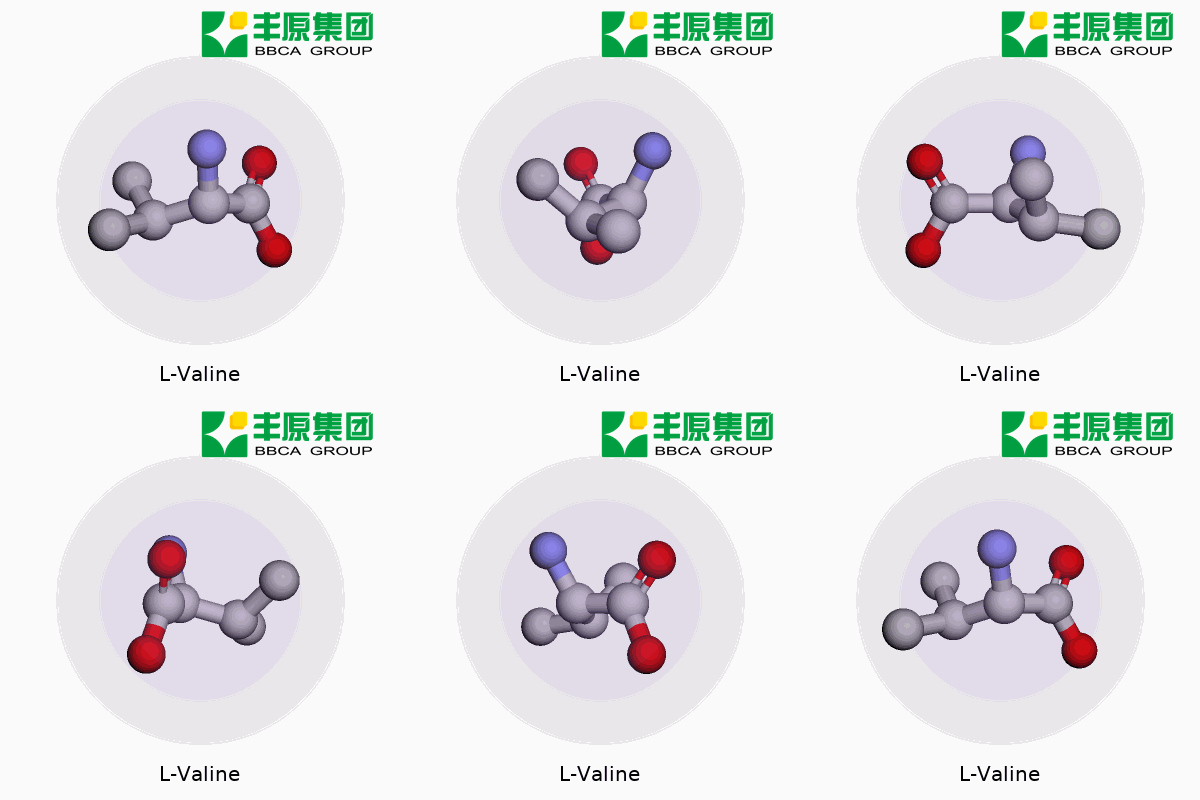
L-Valine caught the attention of early 20th-century biochemists seeking to map the tapestry of protein structure. From the outset, its isolation underscored something fundamental: not every essential component comes from within the body. The earliest production harnessed extraction from casein and other protein-rich animal sources. Over years, industrial fermentation began to outpace traditional extraction, paving the way for today’s high-output, high-purity manufacturing. In our facilities, we have embraced fermentation using Corynebacterium glutamicum and similar organisms. This shift not only solved the problems of scale and purity but also lessened reliance on animal-derived feedstocks. Now, decades later, L-Valine serves as a benchmark for how amino acids have leapt from niche laboratory interests to vital industrial commodities, touching everything from basic nutrition to advanced biomedical research.
L-Valine stands among the branched-chain amino acids, sitting right next to leucine and isoleucine in both molecular structure and biological function. Our production focuses on pharmaceutical, feed, and food grades, but the lines between these categories often reflect regulatory demands more than core chemistry. Deliveries run the spectrum from fine powders to granulated forms, shaped by user needs. Customers in animal nutrition demand consistent flow characteristics, which has driven us to adopt granulation and anti-caking treatments. The tight control over stereoisomeric purity—ensuring the L-form dominates—remains a continual focus because only this form offers nutritional value in metabolic pathways.
At room temperature, L-Valine appears as a white, crystalline powder with a slightly sweet taste. Its solubility in water sits at about 8.8 grams per liter at 25°C, which shapes its blending behavior in aqueous formulations. Melting point lands near 300°C with decomposition, making direct thermal processing tricky—something every operator learns during early production optimization. With a molecular formula of C5H11NO2 and a molecular weight of roughly 117.15 g/mol, L-Valine’s branched alkyl side chain imparts its hydrophobic physical personality. Stability under normal storage conditions has enabled us to guarantee long expirations, provided moisture ingress gets controlled. Over many years, no batch has surprised us by deviating far from these core properties.
Our technical documentation covers purity, moisture content, specific optical rotation, and heavy metal content as non-negotiable core indicators. Typical assays return purity above 98.5% on dried basis. Moisture hovers below 0.2%, supported by aggressive silica drying and vacuum sealing. Specific optical rotation usually lands between +26.6° and +28.8° (in 6N HCl solution), reflecting strict L-isomer retention. We commit to keeping lead and arsenic levels below 2 mg/kg and 1 mg/kg, respectively—analytical data back every certificate. Labels meet international demands for traceability, storage conditions, and batch identification. These protocols help downstream manufacturers comply with regulator audits without surprise or delay. There’s a running debate in quality units about whether to add even more metrics, but after enough shipments, practicality often wins out.
A shift from extraction to microbial fermentation marked the big turning point. Today, most manufacturing lines run on glucose or molasses as carbon sources, supporting Corynebacterium glutamicum or Escherichia coli engineered for valine overproduction. Looking at our fermenters, every input gets monitored: agitation rates, pH (steady near 7.0), temperature (30-37°C), and dissolved oxygen targets, all balanced to maximize yield and minimize byproducts. Post-fermentation, broth undergoes purification via centrifugation, activated carbon filtration, ion-exchange chromatography, and crystallization. Any deviation in steps can introduce unwanted D-isomer or contaminants, so process control sits at the heart of every batch run. While some new techniques—membrane filtration, advanced genetic modification—offer tantalizing productivity gains, the proven protocol still dominates our shop floor.
In chemical synthesis labs and industrial setups, L-Valine serves both as a feedstock and a synthetic intermediate. The carboxyl group, amine, and side chain grant it ample modifiability, which researchers exploit to create esters, peptides, and N-blocked derivatives. We occasionally support custom orders involving protection of the amino group with Boc or Fmoc for peptide synthesis, a process requiring careful control of reaction conditions to curb racemization. L-Valine reacts readily in standard peptide coupling, supporting the solid-phase and solution-phase peptide synthesis fields. In rare cases, certain clients have needed L-Valine methyl ester hydrochloride as a synthetic precursor, an order that requires extra handling due to increased hygroscopicity.
L-Valine appears in literature and trade under several guises: L-2-Aminoisovaleric acid, (S)-Valine, and Val. In the veterinary and feed sphere, customers recognize it as L-2-Amino-3-methylbutanoic acid. International shipments reference CAS number 72-18-4 and EINECS 200-773-6 with every consignment, a reflection of regulatory harmonization. In global trade, the English and Latin names suffice, but domestic users often fall back to local language equivalents. Every label we issue recognizes this mix, making universal identification possible across borders and time zones.
Production demands operational discipline. Raw material handling requires closed systems to avoid contamination or cross-reactivity. Our operating teams run automated monitoring in fermentation and downstream purification areas, limiting direct exposure. At the user level, L-Valine’s low dust potential makes it safer to handle than many amino acids, but prolonged inhalation or direct skin exposure still calls for gloves and basic dust masks. For bulk storage, temperature and humidity control assure consistent product quality, with periodic checks to preempt caking or color change. Regulations require us to maintain safety data sheets aligned to global standards, and routine emergency drills help prevent complacency.
Nutrition—both human and animal—consumes most global production. Feed applications, especially for poultry and swine, keep our reactors running around the clock. These animals lack the metabolic machinery to synthesize L-Valine, so diets require supplementation for optimum growth and feed utilization. Food fortification extends the value chain, allowing cereal, dairy, and sports nutrition brands to offer more complete amino acid profiles. Pharmaceuticals draw on L-Valine for intravenous nutrition, advanced peptide drug synthesis, and metabolic research. Specialty chemicals and personal care tap into its chirality and bioactivity, though volumes remain dwarfed by classic nutritional sectors. We see academic groups increasingly interested in L-Valine for study of metabolic diseases, hinting at even broader uses down the line.
Our R&D teams focus efforts on strain improvement and process intensification. Genomic editing targets higher yields and reduced byproduct formation, working toward cleaner, cheaper production. Analytical development teams invest in chromatographic and spectrometric methods to track stereoisomer ratios and possible contaminants, sometimes uncovering minute anomalies that escape older assays. Customers push us into tailored specifications—think granule size for automated dosing, or impurity profiles that let their products meet rising international standards. There’s also a robust collaboration with upstream suppliers to validate renewable feedstocks, reflecting a commitment to sustainability. Over the last decade, participation in industry consortia has shared best practices, speeding up adoption of safer, greener, and more consistent fermentation techniques. The upshot: faster, more consistent production, fewer surprises, and a more sustainable supply chain.
Based on years of accumulated industry and regulatory data, L-Valine remains low in acute toxicity. In laboratory conditions, excessive intake can lead to mild gastrointestinal disturbances in both animals and humans, with chronic exposure studies reinforcing that the body eliminates excess through normal catabolic pathways. Researchers continue to study possible metabolic imbalances when high-dose supplementation interacts with other branched-chain amino acids, especially in clinical settings. We support toxicity testing protocols at manufacturing scale through OECD- and FDA-aligned methods. No credible evidence links standard dietary or occupational exposure levels to serious adverse effects. Documentation stays up to date to help animal nutritionists and regulatory professionals maintain a clear risk profile.
L-Valine’s future in industrial manufacturing looks bright. Trends point to rising demand, powered by growth in global protein consumption, the sports nutrition boom, and livestock feeding practices that limit crude protein emissions. Our challenge centers on keeping scale and sustainability in step. Advances in metabolic engineering could reshape yield profiles, reducing resource input per kilogram produced. As feed and food regulations grow more demanding, pressure mounts for cleaner, fully traceable supply chains; blockchain-led ingredient verification sits on the horizon. The emerging fields of tissue engineering and synthetic biology make L-Valine an intriguing ingredient for next-generation biomaterials. R&D teams will continue to push process innovation, making L-Valine not only more abundant and affordable but also more precise in application, crossing boundaries beyond food and feed into new biomedical frontiers.
Working as a manufacturer of L-Valine, we see questions roll in from buyers, nutritionists, and feed formulators every week. The answer boils down to a handful of core uses, all shaped by how this amino acid powers essential roles in animal and human biology. In our tank rooms and reactors, batch after batch of L-Valine supports industries that can't compromise on feed quality, health outcomes, or consistency.
A huge portion of global L-Valine production goes straight into animal feed. Swine and poultry feeders—especially in regions with tough feedstuff restrictions—look to L-Valine to balance amino acid profiles. Corn and soybean meal don't always meet the specific amino acid requirements for muscle development, so supplementation bridges this gap. We see feed companies fine-tune their blends based on growing data from field trials, animal health records, and cost-performance analysis.
Producers want leaner meat yields and fewer digestive waste issues in livestock. L-Valine proves critical here: its absence can trigger growth stunting or poor feed conversion rates, leading to inefficiencies in protein use. Adding this ingredient makes sense economically and environmentally. Fewer resources go to waste, less nitrogen enters local ecosystems, and farmers earn better returns per animal.
On the pharmaceutical and supplement side, L-Valine often gets blended into sports nutrition products or medical formulas. Athletes, in particular, reach for "branched-chain amino acids" (BCAAs) blends—L-Valine stands alongside L-Leucine and L-Isoleucine in this group. Endurance and strength athletes claim quicker recovery, reduced muscle breakdown, and less fatigue by getting enough BCAAs in their routines. Studies back the muscle protein synthesis story, and that signals steady demand for L-Valine from our production lines.
Medical practitioners also recognize its value in clinical nutrition. Certain metabolic or digestive disorders require complete amino acid mixtures. Professional hospital food manufacturers ask us about traceability, process transparency, and microbial purity. L-Valine isn’t just a functional molecule—it also represents a marker of control and quality for specialty diet designers.
All L-Valine does not come out identical. We track customer demands for lower endotoxin levels, consistent bulk density, and tight particle size distribution. The goal: keep formula behavior predictable, whether it's mixed in a chemist’s blender or an animal feed mill's auger. Regulatory bodies want reassurance, auditors check records, and buyers test for contaminants. Data from our plant lab flows back to the floor, pushing us to keep clean fermentation and separation standards.
Issues with supply or quality impact dosing in both feeds and supplements. We've watched markets react to shortages—a typhoon disrupting shipments in one region can leave another scrambling for substitutes. Diversified sourcing and investment in local production facilities form part of the answer.
The broad story about L-Valine is familiar to those in the amino acids business, yet each year the details shift. As protein sources change and food science evolves, manufacturers like us keep fixing problems and adapting specifications. Most batches sent out from our site end up improving animal growth, supporting recovery in clinical diets, or ensuring sports blends meet rising demand for clear labels and food safety. That gives a grounding and a sense of responsibility beyond the production metrics everyone measures.
From the floor of a chemical manufacturing plant, raw ingredients do not stay mysterious for long. We see L-Valine from its naked powder state to its role as an essential amino acid. Our production team deals with sourcing natural feedstocks or synthetically producing L-Valine for industries ranging from food fortification to nutritional supplements. The buzz around amino acids like L-Valine comes with questions from supplement companies and consumers alike. Safety sits at the core—what gets put in your body should pass more than one test.
Steps start with quality. Our internal teams perform contaminant testing across each batch—residual solvents, heavy metals, and microbes are some key checkpoints. Consistent protocols drive traceability from raw materials all the way to final packaging. The idea is simple: only L-Valine, with no dangerous impurities, gets through. That is our promise long before a bottle hits pharmacy shelves or supplement shops.
Working inside manufacturing, we see all grades of L-Valine—animal nutrition, food grade, and pharmaceutical grade. All end up at different destinations. For dietary supplements, the purity bar sits highest. Some customers ask about side effects or overdose. We refer back to data gathered over years. Healthy adults consuming L-Valine through supplements rarely report issues if they stick to standard dosing listed by reliable health authorities. The body uses L-Valine in muscle tissue repair, metabolism, and energy production. Overstepping intake by large margins may cause side effects ranging from digestive discomfort to stress on the kidneys, especially for individuals with pre-existing health issues.
Scientific publications and regulatory bodies such as the United States Food and Drug Administration recognize L-Valine as safe when taken in line with recommended dosages. The amino acid appears in common protein sources: beef, eggs, cheese, soy, and legumes. Our manufacturing stays aligned with Codex Alimentarius and compendial standards, and our facilities submit to global inspections. Misuse does not stem from the chemical itself, but from ignoring personal health factors or using more than indicated.
Customers sometimes ask if L-Valine can interact with medication or special dietary needs. Medical conditions influence amino acid tolerance, and no supplement replaces the role of a healthcare provider. If we get technical questions about child or elderly use, or questions tied to kidney health, we let safety win—always defer to the professional. As a manufacturer, we provide pure L-Valine; safe decisions about dosage and suitability rest with users and health experts.
Reputation builds on long-term trust. We make sure every shipment includes transparent lab reports and origin documents. We keep safety data honest—even when customers ask tough questions. New clinical studies inform our practices, and industry recalls teach us humility. L-Valine does its job when made right and taken with care. From our vantage point, a safe supply chain means answering for every particle inside the drum, and never cutting steps in the name of speed or margin. The substance itself offers benefits, but safe use depends equally on respect for science and personal biology.
Walk through any production facility in the amino acid industry, you notice that some raw materials pull more weight than others. L-Valine is one of those. Over the past decade, more customers from feed, food, and pharma sectors have asked questions that go beyond purity certificates. They’re interested in why L-Valine keeps showing up on their ingredient lists. Our team’s day-to-day experience confirms that it does much more than fill a nutritional column.
L-Valine sits among the branched-chain amino acids, together with leucine and isoleucine. From a production standpoint, its key value comes from supporting protein synthesis. Ruminant, swine, and poultry producers use it to achieve better growth rates because it helps animals process nutrients efficiently. Decades of research back up that farm animals fed the right balance of essential amino acids show improved feed conversion ratios. Valine is often the limiting amino acid in modern, low-protein feed formulations, especially when protein sources like soybean meal get reduced for cost or sustainability reasons. If missing from the mix, animals stall in growth and waste expensive resources. We see fewer feed complaints and more consistent performance data in herds and flocks when farms use precise valine supplementation.
Our pharma partners value strict control of impurities and reproducibility, since L-Valine supports muscle synthesis and recovery in medical nutrition formulas. In hospital settings or sports recovery, the difference between a well-absorbed supplement and a poorly formulated one is tangible to patients and athletes. L-Valine’s role in energy generation doesn’t get enough attention: during high-intensity exertion, muscles tap into valine to help delay fatigue. Product managers in supplement companies rely on supply consistency, and from our angle, good fermentation and purification practices keep ingredient specs tight.
Producing L-Valine with quality, traceability, and environmental responsibility calls for real investment in technology. We began pivoting to advanced microbial fermentation and finer crystallization steps several years ago. This cut residual byproducts and improved product consistency, which end-users consistently report as a key factor for success. Safe handling at the plant level, containment, and attention to water and energy use all play into our daily processes. Where some manufacturers cut corners, we lean into traceability. Our clients want documentation at every step, so every batch can be traced to exact fermentation lots and purified with dedicated systems.
Customers now ask about not just what our L-Valine can do, but how we make it and how it fits into broader goals like resource conservation and animal health. Some even ask about carbon footprint per kilogram. Product recalls due to off-specification lots or contamination have reminded many in the industry about the cost of shortcuts. Our team learns from these market signals and pushes for ever-tighter in-house controls. We see L-Valine not as a commodity, but as a critical support for customer innovation in feeding, healing, and fueling the world.
L-Valine forms a staple in most amino acid portfolios we produce. Many who reach out ask about the correct daily dosage—something nutrition labels and health websites discuss often, but rarely with clarity. In our facility, we see the real questions revolve around evidence and real-world application, not only the numbers printed on the bag.
Research shows that adults usually take in between 13 and 24 mg of L-Valine per kilogram of body weight each day through a balanced diet. For someone weighing 70 kilograms, that equals about 900 to 1,700 milligrams daily. Athletes and people recovering from injury might aim higher, as protein breakdown climbs and muscle rebuilding accelerates. Some sports nutrition blends on the commercial market even increase this range up to 2,000 or 3,000 milligrams per serving, reflecting feedback from trainers and clinical studies tracking nitrogen balance and muscle preservation.
Those relying on plant-based diets sometimes struggle to reach their amino acid targets, as plant proteins can be limited or less bioavailable. We field regular inquiries from vegan supplement brands asking if a boost of L-Valine can help bridge this nutritional hurdle, especially for consumers looking to build lean mass or support general health. Our laboratory specialists point to published research from food science journals: supplementing with branched-chain amino acids—L-Valine being one of the three main ones—can improve muscle protein synthesis rates and curb muscle loss in physically stressed individuals.
Still, more isn’t always better. Consuming far above recommended ranges, especially without professional guidance, risks burdening the kidneys and disrupting the balance among amino acids. During production, we test each batch for purity and label accuracy because precise dosing lets health professionals and end users manage their regimens with confidence. Careful formulation matters most for those with chronic illness or kidney disorders, where any excess could harm instead of help.
With the growth in amino acid demand across sports, medical, and vegan markets, it’s become clear that quality starts with raw materials. We track every input during our fermentation and purification steps and maintain trace records for each lot. The reason is simple: impurities or incorrect strengths can throw off physiological balance, especially if a supplement label promises one thing and delivers another. Errors in dosing creep in when input materials fluctuate or when manufacturers use shortcuts. Rigorous in-house analytics prevent these issues here, where our team prioritizes wellness over quick margins.
Doctors and nutritionists constantly update their guidance as new studies emerge. Those considering higher intakes—beyond a balanced diet—do best by consulting a health care provider. As a manufacturer on the supply side, we encourage this habit, since individual needs change with age, lifestyle, and medical background. Accurate intake stems as much from informed conversation as from what comes off the manufacturing line.
The takeaway from years handling and formulating L-Valine? Intake should reflect both science and the real needs of people using it. Not everyone needs or benefits from high doses. In our daily operations, we field more technical questions about correct blending and fortification than about pushing the highest number possible. Responsible manufacturers focus on delivering precise, verified doses so that dietitians and end users can aim for the right target—neither too much nor too little—based on robust science and real-world feedback.
We have produced L-Valine for many years, supplying it both for food supplements and pharmaceutical applications. Process operators here handle it every day, and the feedback from users covers a wide range—from large nutrition formulators to precision labs. Most of the questions people bring up relate to whether L-Valine caused any problems, or whether extended use creates concerns.
L-Valine belongs to the family of essential amino acids, which are required for protein synthesis. Our technical teams rarely receive reports of direct negative side effects when L-Valine is used at standard levels. Consuming L-Valine through protein-rich foods or as part of reasonable dietary supplements typically causes no issues in healthy adults. Research supports this, noting that adverse effects almost always trace back to excessive intake, far above typical recommended dosages.
Cases do exist where users see mild symptoms: digestive discomfort, unease in the stomach, a sense of fullness, or very occasionally headaches. We often hear about these symptoms from customers who self-administer unusually high doses, trying to “boost recovery” or accelerate muscle gains. Any compound, even water, taken in gross excess creates problems. After analyzing feedback and tracing supply chain returns, we find these mild complaints fade when the user lowers their intake to sensible levels.
It’s important to take conditions like maple syrup urine disease (MSUD) into account. This rare inherited disorder affects branched-chain amino acid metabolism, including valine. We caution health professionals and industry partners working with vulnerable groups about avoiding L-Valine supplementation unless directly supervised by a medical team. Our own regulatory compliance staff remind distributors and direct customers to declare full product content on every shipment for this reason.
Scientific consensus matches what we see in practice—normal dietary intake of L-Valine poses no threat to health. For example, regulatory bodies in North America and Europe cite no established upper intake limit in otherwise healthy populations. Yet, neither our team nor health professionals can guarantee safety for megadoses, which sometimes surface in the gym culture. Responsible dosing practices must guide anyone using concentrated powders or custom formulations.
Surprisingly, most issues flagged as “side effects” relate less to L-Valine itself and more often to contamination in poorly processed material. Heavy metals or residual solvents from inferior manufacturing create genuine health hazards. As a chemical manufacturer audited by international food and pharmaceutical agencies, we emphasize validated batch testing and strict chain-of-custody procedures. Customers sending in samples of off-brand products sometimes discover impurities unrelated to L-Valine. Sticking to thoroughly tested amino acids—sourced from established plants—makes a difference for health and regulatory confidence.
From a manufacturing standpoint, side effects largely depend on how much and how pure the L-Valine is. Healthy adults working with moderate intakes show no consistent problems. The rare issues are mild and reversible on proper dosing. At-risk populations have special needs and require extra vigilance. In our experience, L-Valine is safe when produced cleanly and used as intended.