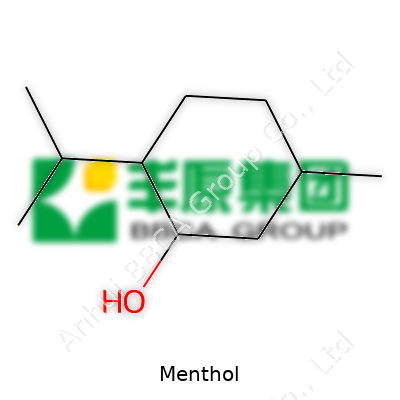
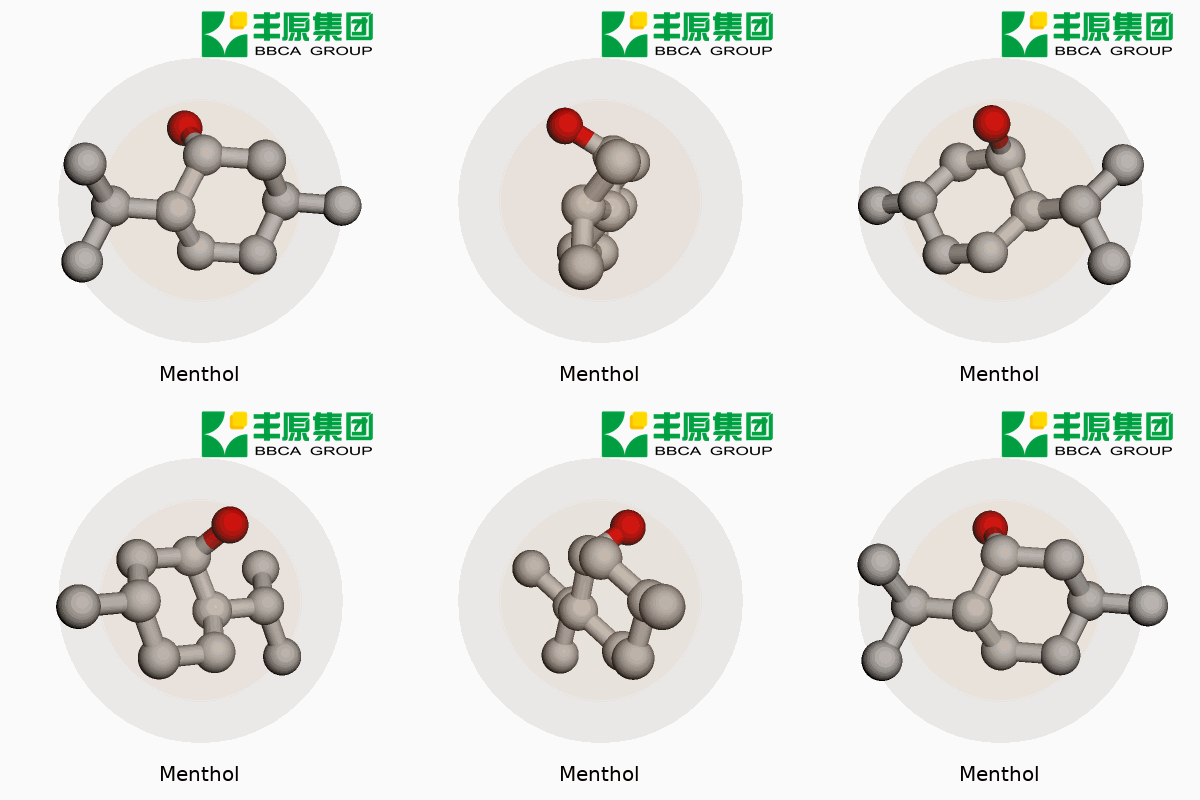
Menthol’s journey started with plant extraction long before refining and purification became routine in industrial practice. Traditional cultures distilled its value from peppermint and cornmint, but commercial significance grew as demand for cooling sensations in confections, medicines, and topical products emerged. We have seen the transition from crude leaf distillation to highly engineered, precisely controlled synthesis. The earliest users relied on batch methods with unpredictable outcomes. Modern equipment and process controls sharpen yield, purity, and reproducibility, shaping how today’s supply chains respond to the global appetite for menthol. This transformation goes beyond harvesting and technical refinement; it bends toward better stewardship of resources as natural mint faces environmental limits, making synthetic menthol indispensable to satisfy both scale and sustainability.
In our manufacturing facility, menthol shows up as colorless, crystalline solids, typically shaped as fine needles or granules. The material’s unmistakable peppermint aroma signals purity to anyone who has handled raw menthol. Over the years, we have fine-tuned procedures to minimize impurities like thymol and isomenthone. Consistently meeting international standards, such as those set by the European Pharmacopoeia and USP, remains a baseline in our quality protocols. A robust traceability system covers everything from raw material intake to final packing, reinforcing our commitment to integrity and transparency throughout production.
Menthol has a melting range near 41-44°C and often sublimes at room temperature, so packaging must combat vapor loss and maintain potency from our doors to the client’s operation. This cyclic terpene alcohol demonstrates moderate solubility in water and exceptional compatibility with alcohol, oils, and volatile organic solvents. The sensation it delivers comes from a well-understood interaction with cold receptors, not from lowering product temperature. Its optical rotation is a reliable identity marker, allowing rapid detection of racemization during processing. Years of experience show moisture remains the top adversary in bulk storage—caking, loss of crystallinity, and off-smells result when the correct controls slip. Good handling practice at every station ensures shipped menthol performs identically to our internal reference batch.
Each batch issues out with documentation verifying assay, stereochemistry (almost universally (>99%) L-menthol for pharmaceuticals), residual solvent content, heavy metals, and particle size distribution where relevant. We use fixed labeling standards to meet regulatory requirements for both hazard communication and traceability. Explicit statements indicate origin (synthetic/natural), proper shipping name, and bulk lot number for every drum or carton. Tracking labeling changes and responding to regulatory updates form a routine but essential part of our workflow, reflecting the evolving expectations in global markets.
Decades in operation have taught us well: the natural route yields purity limits—the best lots rarely reach the chemical benchmark that controlled synthetic methods deliver. Our synthesis relies primarily on catalytic hydrogenation of thymol derived from m-cresol intermediates, delivering high L-menthol selectivity. This method gets most attention because it simplifies scale-up, generates less waste, and ensures predictable performance with lower environmental burdens than sprawling plantations. Continuous process improvement lowers reaction energy and tailors crystallization for smoother filtration and more manageable downstream processing.
Menthol’s structure allows for functionalization that creates new value in fragrance and pharmaceutical industries. Esterification, oxidation, and halogenation remain common in our fine chemical division, producing derivatives for extended application—ranging from menthyl acetate to menthone. We document all modification pathways and systematically evaluate the reaction byproducts, understanding the need for total material accountability as both regulators and customers scrutinize supply chains. Our analytical team continuously builds proficiency in separating complex mixtures by chiral chromatography to guarantee the stereochemical purity critical to sensory and biological effects.
Menthol travels globally under many aliases: L-menthol, hexahydrothymol, (−)-menthol, and peppermint camphor are common. In pharmaceuticals and food, product labeling must sharply distinguish between natural-source and synthetic grades. Our catalog avoids confusion by referencing industry-standard nomenclature and explicitly linking tradenames to internationally recognized identifiers whenever possible.
Menthol requires smart management despite its familiarity. In high concentrations, it can irritate skin, eyes, and mucosa. Dust exposure is a routine concern: agitation, pneumatic transfer, and grinding each introduce particulates into the air, necessitating extraction and filtration systems that regularly undergo inspection. Our training emphasizes personal protective equipment, source containment, and strict separation of raw and finished areas. Emergency preparedness hinges as much on documented procedures as on the ingrained habits of experienced operators. Our operations continuously incorporate learnings from incident reports throughout the chemical sector, not just from menthol production, to keep our workplace safe year after year.
Whether destined for oral care, food products, pharmaceuticals, tobacco, or topical analgesics, our menthol forms a critical input in most manufacturing recipes, often at levels below one percent. The scale of demand in confections and oral hygiene far eclipses its use in other sectors. In pharmaceutical applications, finer control over purity and contaminants is necessary. We frequently collaborate with formulation scientists to refine particle size or solubility characteristics for easier dispersal in high-speed processes or novel dosage forms. Continuous support to client R&D teams means we see product innovation as a shared endeavor, not just as a transaction.
R&D remains the motor that keeps us ahead, responding to new sustainability targets and product challenges. Current studies focus on catalytic processes using renewable feedstocks and more selective crystallization techniques that sharply reduce waste streams. Advances in analytical monitoring give us real-time insights into purity and cyclization. Structured collaborations with academic labs and cross-sector research groups enhance our view of menthol’s potential, particularly in functionally complex delivery systems and combination therapies.
Menthol’s status as “Generally Recognized as Safe” masks complexities that demand ongoing vigilance. Acute toxicity is low, but repeated exposure in occupational settings draws our attention to subtle endpoints—such as skin sensitization and potential inhalation effects from mists or vapors. Large-dose ingestion remains rare, but animal studies and controlled clinical trials delineate a comfortable margin of safety in consumer uses. We keep current with toxicological literature and regulatory reviews, updating our assessment protocols to align with changing scientific consensus and incorporating new endpoints or emerging methodologies wherever warranted.
New technical and consumer expectations direct the evolution of menthol manufacturing. Climate stresses on mint cultivation urge us to invest in synthetic biology and greener chemistries. Biotechnological menthol, produced from engineered yeast or bacterial systems, promises lower environmental impact and more flexible scaling. Demand for allergen-free, ultra-pure menthol drives research into next-generation crystallization and purification. Regulatory trends will only tighten on trace impurities and sustainability reporting, compelling manufacturers like us to push for ever more efficient, transparent practices. Ultimately, maintaining direct partnerships with downstream users and investing in process innovation set the foundation for menthol products that meet both tomorrow’s standards and the changing palate of the world market.
Menthol comes to us straight from nature. Harvested mostly from mint oils, especially from Mentha arvensis and peppermint, menthol gives off that unmistakable cooling feeling found in countless familiar products. Over years in chemical manufacturing, the process of isolating and purifying menthol has become far more efficient. What once demanded staggering amounts of peppermint leaves now uses fractional distillation, crystallization, and inventive chemical synthesis. This lets us keep step with growing industrial demand while protecting natural mint resources.
Consumer brands turn to menthol for more than just flavor. In oral care, menthol finds its way into toothpaste and mouthwash, relied on for its cooling bite and mild anesthetic effect. That same sensation makes menthol a fixture in medicated balms, ointments, back rubs, throat lozenges, and nasal inhalers. Chemists run trials year after year to ensure consistent quality and therapeutic outcomes—artificial substitutes never measure up to genuine menthol crystals in these uses. Across our facilities, technicians fine-tune each batch to guarantee the right profile for medicinal needs, especially for topical analgesics and inhalation solutions.
Menthol doesn’t stop at healthcare. Smokers recognize menthol’s bite in cigarettes and e-cigarette liquids. It helps mask harsh tastes and soothes the throat, which has prompted regular scrutiny by regulators and health authorities. The flavoring profile has spurred increasing restrictions in some regions—an issue that manufacturers like us follow closely. Food and beverage sectors put menthol in gum, confectioneries, and syrups for its uplifting, refreshing zing. Each of these industries demands exacting purity and regulatory compliance, with pressure on manufacturers to test for residual solvents, pesticides, and adulterants.
Maintaining menthol’s purity has always presented challenges. The global supply chain can introduce variability in raw mint oil, and every year brings new tests from international regulators. Years of experience have taught us to embrace ongoing analytical upgrades, such as gas chromatography and advanced crystallization. We sample every batch to confirm optical rotation, melting point, and contaminant levels match established standards.
As environmental and sustainability priorities have risen, our factories implemented closed-loop systems to recover solvents and reduce emissions. Menthol manufacturing, once a waste-heavy operation, quietly stands at the forefront of green chemical production. Biotechnological methods show promise for future extraction and synthesis, possibly blending biotechnology and traditional chemistry for scalable, eco-friendly production.
Supply chain risks remain. Climate changes threaten mint-growing regions, pushing manufacturers to diversify sourcing and extend contracts directly with growers. Counterfeit materials, especially low-grade synthetics, have flooded some markets. Quality control never lets up—robust traceability and analytical checks separate the genuine from the questionable.
Menthol stays in high demand precisely because consumers and formulators know the difference. Reliable manufacturing ensures toothpaste tastes right, balms soothe tired muscles, and that unmistakable coolness performs as expected. Every day brings new uses, tougher regulations, and smarter technologies. Building on over a century of production know-how, menthol remains as versatile as it is essential.
Menthol, with its cool, minty profile, shows up in everything from cough drops to topical ointments. Decades of large-scale production have given us a front-row seat to its behavior in both food and personal care. Companies like ours extract it from peppermint oil or build it up synthetically, focusing on purity and traceability along the way.
Feedback from food technologists and personal care formulators shapes our understanding as much as any chemical analysis. Menthol offers that distinct cooling sensation because it activates cold-sensitive nerve endings on skin and mucous membranes. In food, small, well-measured quantities pass rigorous flavor safety reviews and help customers mask bitterness or create refreshing sensations. Health agencies such as FDA and EFSA have studied menthol’s effects and set clear guidelines for safe inclusion in foods and oral care.
Dermatologists and pharmacists don’t hesitate to point out menthol’s usefulness as a counterirritant. Ointments rich in menthol distract from minor aches, making the cooling sensation part of the pain relief process. Over-the-counter regulations require us to follow strict dose limits to avoid excessive exposure. Too much menthol—just like with any active substance—can cause skin irritation or, rarely, more pronounced reactions such as rash or swelling. This steers us away from treating menthol as “just another flavor” and keeps us tightly focused on controlled blending and lot-testing.
Consumers often wonder about menthol’s safety for children, expecting mothers, or those with sensitive skin. Industry protocols never use menthol in formulas for infants or young children, and warn against inhaling high doses through pure crystals or vaporizers. Poison centers keep records of accidental ingestions, reminding the public that concentrated menthol products—especially pure crystals or essential oils—don’t belong in reach of children.
Synthetic and natural menthol both undergo chromatography and purity checks, with established suppliers reporting trace levels of byproducts or allergens. We know that consistency isn’t the only thing that matters: it’s the repeated audits and real feedback from the field that help us refine quality. Chronic misuse or heavy exposure carries real risks—so every batch destined for food or topical use travels with documentation, warning labels, and usage limits.
Education still goes a long way. Some home remedy circles treat menthol oil like a cure-all, which doesn’t match up with what toxicologists and pharmacists tell us. Clear on-pack information and transparent safety documents protect consumers more than marketing ever could. Our technical support always listens to health professionals and shares changes to exposure thresholds or labeling requirements before they go mainstream.
Menthol’s long history in food and topical products earns trust only when backed by up-to-date risk assessments, steady process control, and open communication with users. Chemical manufacturing thrives on these habits more than any single safety certificate.
Not a day goes by in the plant without another request for menthol—flavorings, pharmaceuticals, oral care, and beyond. We watch the supply move from raw synthesis to shipment, so questions about its benefits are easy to answer from where we stand. Menthol isn’t just a recognizable ingredient; its noticeable cooling effect sets it apart. That sensation draws on a simple truth: menthol binds to cold-sensitive receptors in the skin and mucous membranes, creating a real sensation of coolness.
In oral hygiene, toothpastes and mouthwashes rely on menthol’s fresh taste. Clients in flavor and fragrance see consumer demand chasing after that minty, sharp top note. We consistently see orders from companies eager for the consumer trust that menthol instantly brings—people associate it with clean, fresh, well-made products. Over-the-counter throat lozenges and topical ointments push for stronger, purer menthol because it soothes irritation and brings relief. The sensation isn’t just psychological; the presence of menthol can temporarily reduce discomfort in sore throats and minor aches.
As a manufacturer, menthol blends smoothly into both water-based and oil-based systems. That ease of processing matters when targets call for high output. The crystalline nature of our menthol lets us offer consistent quality with simple quality control checks. Pharmaceutical partners rely on this because regulations require tight specifications. No one wants to deal with batch failures when large volumes are at stake. Consistency saves both time and money.
Menthol often sits on lists of approved flavoring agents or topical anesthetics. That doesn't just offer peace of mind for the end manufacturer; it reinforces why a reliable source is necessary. As a company with an eye on quality, every batch gets lab-tested. Documentation trails and batch traceability matter to us and to every other manufacturer handling compliance audits.
Demand for menthol keeps rising. Natural extraction from peppermint oil takes up a lot of agricultural land, while synthetic menthol allows more scale and consistency. Our investment in greener synthesis pathways aims to reduce waste and energy use. Steps like in-process recycling and optimized purification cut down both emissions and costs—a real win for producers under pressure to improve sustainability.
Menthol crosses boundaries between food, pharma, and personal care. Perfume manufacturers care about odor profile; cough drop companies ask about purity limits for medicinal use; vape product makers want tight particle size distribution to avoid clogging. By working up close with formulation chemists, feedback from each sector shapes what we offer and how we make it. Those collaborations refine our quality benchmarks, helping us improve each cycle.
Menthol’s longstanding popularity challenges us to produce efficiently, remain compliant with evolving standards, and anticipate new uses. As regulations shift and consumers push for natural and responsible sourcing, we look for ways to align manufacturing practices with new expectations. Menthol’s journey through the plant teaches that real value comes from not just delivering the chemical, but offering confidence in every shipment.
Menthol, with its sharp and refreshing aroma, has been a mainstay of our production line for decades. Processing raw materials, refining the crystals, checking purity with every batch—none of this happens in a vacuum. We know where our menthol ends up: consumer products, pharmaceuticals, food applications. The responsibility sticks with us long after a drum leaves our plant. Now and then, questions resurface about its safety. That’s not surprising, given how common menthol has become in cough drops and topical creams. Our job extends far beyond making it. We follow up, monitor new studies, and stay up to date on industry and regulatory discussions so customers stay informed too.
Mistakes happen faster than most people realize. Pure menthol is not something to take lightly. Even at the plant, workers avoid extended skin contact and wear proper safety gear. Irritation can flare up at relatively low exposure. Sensitive skin may develop rashes or a burning sensation, and menthol, left on without washing, will amplify that reaction.Breathing in high concentrations also poses problems. Some employees in our warehouses use special respiratory protection during transfer operations, especially when handling freshly milled material. Too much menthol vapor irritates airways, triggering coughing or shortness of breath. That same property—the cooling, tingling feel—is the edge of its risk curve. In finished goods, formulations get strict review and have to meet defined dosage guidelines for safety reasons.
People often encounter menthol in lozenges or toothpastes. Used as intended, risks fall into rare categories: allergic response or misuse. If someone swallows a product meant for external use, side effects escalate. Nausea, abdominal pain, and (for children especially) more severe reactions can follow. Over years of production, we’ve shared data with healthcare regulators to make sure labels include age restrictions and use guidelines. In some countries, certain menthol products are specifically labeled to warn against pediatric use unless directed by a doctor.Menthol also interacts with some medications. It can reduce the effectiveness of certain topical drugs or increase skin permeability, making other substances absorb faster. Our technical service teams work with pharmaceutical clients to keep these interactions in mind during new product development. We conduct stability trials, check solubility, and review toxicology data whenever a reformulation request comes in.
Not every risk needs fear, but every risk deserves respect. Fact-based, traceable manufacturing habits keep our operations safe and help prevent the kind of accidents that create serious health problems. The future of menthol involves better consumer education and improved child-resistant packaging. Upstream, we invest in workplace air monitoring and skin protection programs. Downstream, we support research on safer delivery systems, especially in pediatric products and over-the-counter medications.Good manufacturing buffers most hazards from ever reaching a customer’s hands. Yet, the final line of defense will always be clear instructions and honest warnings—backed by evidence from people willing to learn from experience. We keep our eyes on the science and share what we know. Transparency offers more protection than any hidden process or vague reassurance ever could.
Our work centers on producing menthol — both from natural sources and through synthetic processes — so questions about its value in pain or congestion relief come up a lot. Over the years, the uses spread far beyond flavoring. Many know menthol from topical balms and chest rubs. Its cooling effect isn’t just a sensory trick. Menthol binds to specific receptors in the skin and nose, creating a real sensation of coolness. In pharmaceutical batches, we see strict controls: purity has to clear 99%. Anyone using it medically expects consistency down to the molecule.
Cooling isn’t just a surface effect. Menthol interacts with TRPM8 receptors. These play a role in how nerves perceive cold. For someone with sore muscles or a headache, that cooling sensation can temporarily distract from the discomfort at a neurological level. Most customers in pain relief request menthol for just this reason. The brisk scent also helps open up the nasal passages, at least in part, due to its action on nasal sensory nerves. We have supplied the compound for major cold remedy brands, and demand surges every cold season when congestion tops concerns.
Menthol’s actual analgesic properties show mixed results in research. Medical studies confirm topical analgesic effects for mild pain. Pure menthol oil at the right concentration soothes tension headaches, often within minutes. Some nasal sprays and inhalants improve the subjective feeling of easier breathing. Doctors usually recommend menthol for symptom relief, not as a cure. Too much on sensitive skin can cause irritation, so we monitor quality carefully to support responsible end use.
Cheap or diluted menthol doesn’t deliver a clean cooling effect. Years of fine-tuning our crystallization and purification steps pay off every time a customer requires reliable product. We see safety concerns when small operators cut corners. Pharmaceutical partners come to us for supply chain transparency. Robust quality processes protect both patient safety and consumer trust. One batch with unwanted impurities can set back months of work and damage a brand’s reputation.
The biggest challenge comes from misapplication. Some consumers believe more menthol means stronger relief — but concentrated forms can burn skin and mucous membranes. Labels usually carry clear warnings, but not every user reads them. Fresh instructional outreach from manufacturers can reduce avoidable side effects. More industry-led education helps bridge the gap between real benefits and safe use.
From the factory floor to the medicine cabinet, menthol’s reputation grew through careful production, rigorous research, and listening to feedback from healthcare professionals and everyday users. Not every natural product stands the test of science. Menthol continues to earn its place by connecting what we do in manufacturing to what matters most: safe, predictable relief for people facing discomfort, whether by breathing easier or easing minor aches.