Decades before advanced color chemistry shaped the dye industry, chemists explored the utility of aromatic amines in textile applications. O-Anisidine, known in laboratories as 2-methoxyaniline, comes from that early class of molecules that unlocked new shades and better lightfastness for synthetic dyes. The compound’s journey began with painstaking distillations and crude coal tar separations—now nearly obsolete compared to the precisely controlled synthesis available today. Shifts in environmental awareness and workplace safety have left their mark on how we run our process lines. Early manufacturing lacked the continuous real-time monitoring systems we now use to ensure not only purity but occupational safety as well.
O-Anisidine forms the backbone of several dye classes, especially azo and triphenylmethane dyes. As a starting material, its unique methoxy substitution at the ortho-position brings robustness to chromophores, boosting both their color intensity and resistance to degradation under ultraviolet light. Our operation focuses tightly on maximizing conversion rates and minimizing byproduct contamination, recognizing that downstream dye performance traces back to the integrity of our batch chemistry. Clients in pigments, textiles, and ink manufacturing depend on this consistency—not as a nicety, but as a production necessity that dictates the success or failure of entire product runs.
Our experience handling O-Anisidine daily gives us a deep appreciation for both its strengths and hazards. It presents as a light amber liquid around room temperature, with a faint aromatic odor. The boiling point hovers near 243°C, yet traces of moisture or residual impurities nudge that figure either way, a crucial observation for process engineers tuning their purification columns. It dissolves easily in alcohols and ethers, stubbornly resists water dissolution, and darkens upon exposure to air. These characteristics demand vigilant storage and transportation—steel or glass-lined tanks, a blanket of nitrogen, and frequent tank valve checks form our everyday routine.
On any given batch, we monitor aniline content, ortho/meta/para isomer ratios, and methoxy group retention using GC, HPLC, and IR spectroscopy. Our daily QC logs run thicker than we’d like, but industry regulations and client demands will not accept guesswork. Product labeling prioritizes hazard communication—with pictograms and hazard codes—as well as batch traceability. Contrary to what outsiders may believe, labeling does more than tick regulatory boxes. It keeps transport and storage teams aware of proper handling, emergencies, and correct disposal, which is the real-world layer between safe operation and environmental incident.
Commercial O-Anisidine synthesis typically begins with the nitration of anisole to yield ortho-nitroanisole. We reduce the nitro group via catalytic hydrogenation—often over palladium on carbon, under specific temperature and pressure conditions for optimal selectivity and throughput. The reduced crude is purified by vacuum distillation or crystallization, depending on target purity. During scale-up, exotherms in the reduction step need close management; our reactor operators undergo rigorous training to prevent runaway reactions. Lessons learned from small spills or near-misses have led to redundant monitoring systems layered throughout our production plant.
Downstream, O-Anisidine acts as a versatile nucleophile, engaging readily in diazotization followed by coupling to make bright red, orange, and blue azo dyes. In the pigment sector, sulfonation or further alkylation opens pathways to water-dispersible formulations with distinct particle sizes. Modifications to the methoxy group or amine backbone can tweak a pigment’s solubility or binding characteristics, giving close control over shade and application fit. These transformations sound routine on paper, but each step creates new process safety hazards, from uncontrolled gas evolution to potential allergen production. Extensive pilot testing mitigates risk before plant integration.
O-Anisidine appears on order sheets and shipment manifests under several synonyms, including 2-methoxyaniline, o-methoxyphenylamine, and ortho-anisidine. For customs paperwork, harmonized codes refer to it as both an aromatic amine and a dye intermediate. Internally, shifts assign shorthand since repetitive full names slow down data entry. This multiplicity in labeling demands careful reconciliation of supplier lot numbers and external invoices to prevent supply chain confusion—details that matter under audit or contract dispute.
Every shift starts with safety briefings referencing the latest SDS and incident bulletins. O-Anisidine bears classification as a carcinogen and suspected mutagen, and we treat it as such in all operations. Respirators and chemical suits hang on hooks at transfer points, and spill berms surround high-risk areas. Air and surface monitoring, along with periodic employee testing, ensure chronic exposures do not go unnoticed. Our plant underwent several costly upgrades to closed-loop transfer systems after years of working with open tanks. Mechanical reliability and human vigilance together have cut incident rates sharply, with every near-miss discussed openly during the morning review. Training never stops, and regulators inspect regularly.
Dye and pigment manufacturers rely on O-Anisidine for its role in generating vivid shades in textiles, plastics, and printing inks. The flexibility of its chemical structure lets R&D teams tweak color tone, lightfastness, and chemical resistance, responding to shifting market tastes and regulatory frameworks. Beyond coloration, specialty chemical sectors use this molecule as a building block in the synthesis of agrochemicals and pharmaceutical intermediates, where the ortho-methoxy group confers specific reactivity advantages in multi-stage syntheses. These broad applications drive long-term demand and set the tone for production planning, which must adjust not only to market cycles but also to sudden regulatory change or raw material disruptions.
In-house development focuses on process optimization, greener methods, and improved operator safety. We push for higher catalytic efficiencies to reduce waste and pursue solvent recycling initiatives to limit offsite disposal volumes. Partnerships with academic groups explore enzyme-catalyzed alternatives to traditional metal-catalyzed reductions, chasing lower energy input and minimized hazardous byproducts. Analytics teams have rolled out new online detection tools using mass spectrometry, cutting time from sampling to result and providing early warning of off-spec product. Continuous improvement stems from a real need to stay profitable against tightening environmental limits and rising energy prices.
Legacy toxicology studies flagged O-Anisidine as both acutely toxic and a probable human carcinogen, sparking stricter occupational limits worldwide. Our experience echoes these concerns—trace skin exposure or inhalation leads to rapid health symptoms in maintenance staff, which triggered redesign of PPE protocols and routine medical checks. We cooperate with medical researchers and regulatory authorities on epidemiological tracking and look for emerging consensus on acceptable residual levels in specialty applications. Our quality data feed back into both internal risk management and broader safety community discussions, since even low-level exposure carries risk in poorly controlled settings.
The regulatory horizon grows stricter every year, nudging the industry toward safer chemistries and closed production systems. R&D must reshape the process—whether by enzyme catalysis, alternative feedstocks, or adoption of green chemistry principles—to hold on to market share and accommodate new product certifications. Market pressure now demands not only high-purity O-Anisidine but also documentation of minimal waste and low-carbon production. Those able to navigate both technical and regulatory changes will continue to set the pace, serving clients in dyes, pigments, and beyond. Some sectors eye eventual substitution, but the sheer versatility and performance of O-Anisidine in color applications keep it deeply embedded in the modern chemical landscape. Our factory’s future depends on aligning long-standing expertise with the drive for a cleaner, safer, and more sustainable operation.
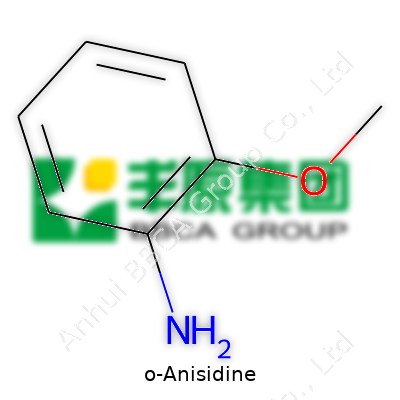
Inside our plant, chemicals rarely present themselves as mere textbook entries—they show up as barrels, drum loads, liquid batches, process controls, and the ever-present challenge of keeping safety tight. One question crosses nearly every chemist’s path at some point: what exactly is o-anisidine, and what does its formula look like in the real world? The answer often needs to go deeper than just quoting “C7H9NO.”
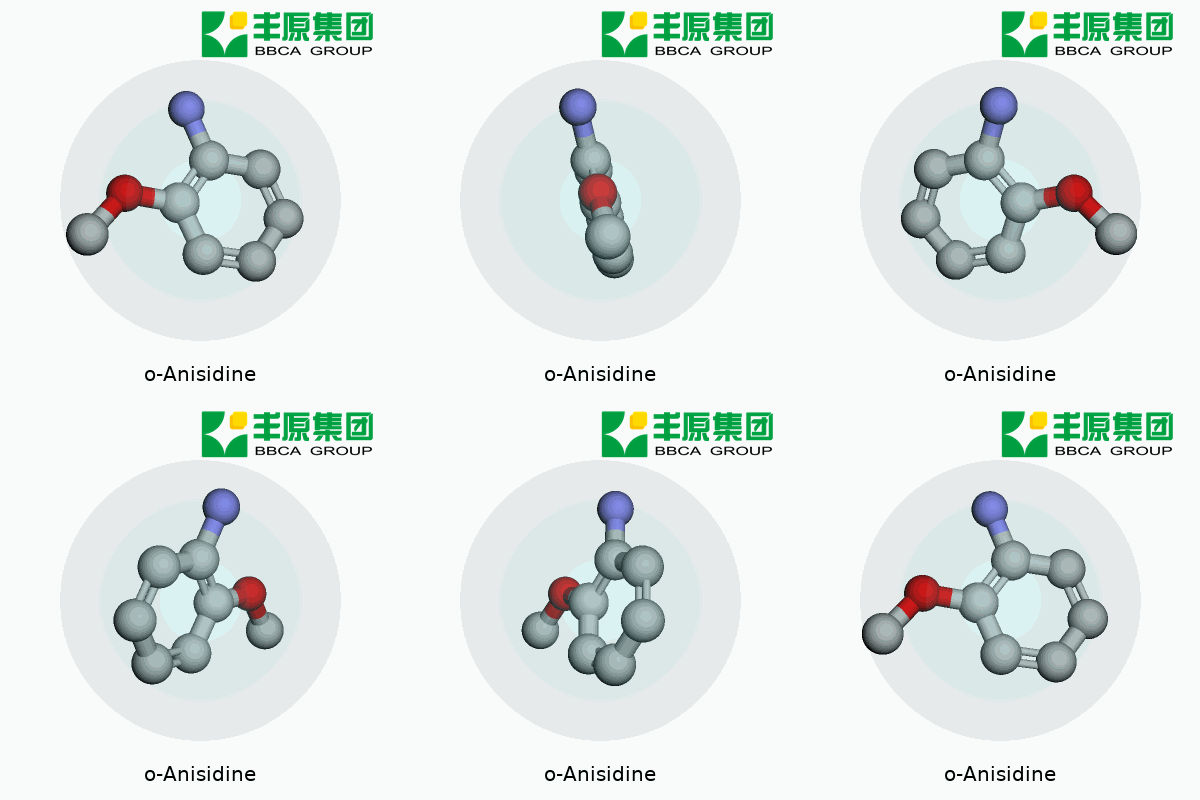
Every batch we synthesize starts with an understanding of those seven carbons, nine hydrogens, and one nitrogen and oxygen. To anyone invested in organic chemistry, it’s a familiar layout. The molecule belongs to the aromatic amines and carries a methoxy group at the ortho position relative to the amine. This matters. Slight shifts in placement affect everything, from reactivity to safety precautions. As producers, even the way we store and transfer o-anisidine reflects its structure: it’s solid at room temperature, but has a low enough melting point that an unseasonably warm warehouse or a poorly insulated drum can complicate handling.
O-anisidine’s chemical attributes make it useful—especially in dye manufacturing and pigment synthesis. The same traits add layers of hazard. Staff on the floor respect o-anisidine’s toxicity. Its formula holds clues: aromatic amines can interact with biological systems in problematic ways, and over years I have watched regulations ramp up. Proper personal protective equipment isn’t optional—anyone who has watched a small dusting of o-anisidine powder disperse in sunlight learns quickly that engineering controls go hand in hand with lab protocols. European authorities have been especially strict about occupational exposure, frequently reviewing limits for aromatic amines. This makes it all the more important to get each shipment, each label, and each downstream use documented with clinical precision.
People sometimes wonder why formula accuracy matters so much—aren’t we sometimes overdoing it? Not in this business. The formula C7H9NO guides every HPLC calibration curve, every spectrometer setting, every batch record validation. Cutting corners or skipping steps may satisfy a short-term budget line but rarely escapes the notice of a regulator, auditor, or safety inspector. As a producer, transparency and traceability trump convenience every time. Analytical chemists on our payroll remind everyone that even a tiny impurity can show up as a major headache, for regulators or for the teams using o-anisidine in later syntheses.
Solid benches and process engineers have their say, too. Experience on site shows o-anisidine demands respect in storage—double-sealed containers, climate controls, and specific record-keeping routines. Mislabeling or mishandling is never minor: not just because of internal hazard analysis, but because our responsibility does not end at the warehouse door. Downstream partners rely on our formula being precise, product being exactly what the label says. Fail at this, and the whole supply chain suffers, from pigment makers to textile processors.
On paper, o-anisidine’s chemical formula, C7H9NO, seems simple. To us in chemical manufacturing, that formula means a network of safety protocols, regulatory hoops, and scientific teamwork. It stands as the backbone for careful sourcing, strict handling standards, and clear documentation. Every day we see how the right approach to even the smallest batch of o-anisidine keeps workers safe, customers productive, and the industry moving forward.
In the chemical world, we don’t always get the chance to talk plainly about our intermediates. O-Anisidine has been a core ingredient at our plant for decades. We see requests from a wide range of sectors, but dye and pigment makers tend to drive the largest share of volume. This compound’s amine group and methoxy ring give it a reliable edge as a coupling component in the creation of azobased products. Without O-Anisidine, the vivid colors you see in certain textiles and printing inks simply wouldn’t last the same way.
Direct dyes and acid dyes rely on O-Anisidine as a key ingredient. In our processing halls, batches of this compound feed continuous lines that generate coloring agents for wool, leather, paper, and sometimes even specialized plastics. Many downstream users trust O-Anisidine-based dyes to give red, brown, and orange shades more depth and fastness, qualities that help products stay visually sharp through repeated washing or outdoor exposure. Reactive dye producers also depend on the stability and richness that O-Anisidine brings to the final result.
Requests for O-Anisidine don’t stop with the color sector. It’s a sought-after intermediate in the synthesis of certain pharmaceuticals, agrochemicals, and polymers. In many of these applications, its structure allows for easy modification—think acetylation or sulfonation—which gives pharmaceutical chemists or crop protection formulators a flexible backbone for developing new molecules. In our plant, we know which batches will be used for pigment and which are headed for pharma, based on purity requirements and residual solvent tolerances. Our team’s consistency here helps downstream products pass regulatory checks globally.
O-Anisidine has stubborn hazards. Skin contact, breathing dust, and long-term handling all demand engineering controls and regular monitoring on our shop floor. Our health and safety teams update protocols the minute new toxicology data or regulatory advisories come from safety agencies. Europe and North America set strict handling and transportation rules, especially for larger drum shipments. This impacts how we design production lines, packaging, and even effluent systems. Through regular auditing, we keep up with stricter occupational exposure limits, ensuring both the workforce and environment stay protected.
We receive questions from dye plants and pharma labs about trace metals, residual solvents, and batch reproducibility. Analytical labs run extensive checks before any shipment leaves our site, with a focus on minimizing impurities like nitro compounds. End users have zero tolerance for variability—one out-of-spec shipment can clog filters or ruin a batch of high-value pigment. Feedback flows both ways; our partners tell us what worked, and we adjust synthesis protocols to hit tighter specs. Long-term, investing in better reactors and waste management lets us keep O-Anisidine in play for new and emerging uses, without risking our commitments to safety or environmental regulations.
In the chemical manufacturing world, handling aromatic amines carries real-world risks and O-Anisidine stands out for its toxicity profile. Our teams manage O-Anisidine daily, using tight controls knowing that any slip doesn’t just affect batch quality—it jeopardizes worker safety and presents significant regulatory and environmental concerns.
O-Anisidine enters workplaces mainly as a raw material for azo dyes, pigments, and some pharmaceutical intermediates. Results from animal studies and industrial exposure show the link between this chemical and serious health effects. Once absorbed, O-Anisidine can cause methemoglobinemia, which limits the blood's ability to carry oxygen. Even with modern ventilation and personal protective equipment (PPE), the potential for overexposure exists—usually through inhalation of vapor or accidental skin contact.
Over time, workers with repeated exposure may notice increasingly severe symptoms. Chronic effects reach beyond acute toxicity. Research flags O-Anisidine as a potential carcinogen, with evidence associating prolonged contact with higher rates of bladder cancer. Regulatory bodies, including the International Agency for Research on Cancer (IARC), classify it as possibly carcinogenic to humans. These findings aren’t taken lightly on our production lines. We continuously invest in safety training, clear labeling, and process automation to keep direct handling to the bare minimum.
Spills and improper disposal present environmental challenges. O-Anisidine doesn’t break down easily and contaminates both water and soil if released. Even small leaks require swift action with specialized absorbents and containment procedures. We’ve engineered closed-loop systems in our facilities to trap fugitive emissions before they reach the environment. Monitoring equipment stands ready, not just for the safety of our workers, but as an early warning to avoid regulatory infractions and environmental damage.
Some clients press for alternatives, given O-Anisidine’s reputation and regulatory scrutiny. The chemistry behind many colorant products leaves few straightforward replacements. The industry continues research into less hazardous analogs—some success shows with newer dye intermediates, but market adoption remains uneven. Until alternatives meet both performance and regulatory standards, we approach O-Anisidine use with strict adherence to best practices.
Over the years, our response to O-Anisidine hazards has grown sharper: up-to-date engineering controls, real-time air quality monitoring in work zones, and robust medical surveillance for team members. Every step in the supply chain, from drum delivery to batch discharge, includes checks and balances. This chemical’s hazards don’t allow for shortcuts. Every spill response or alarm triggers a rapid action plan. Operational discipline, informed by years of first-hand experience and compliance reviews, determines success or failure where O-Anisidine is involved.
The lessons learned shape our culture and processes. Attention to detail, factual awareness of health and environmental impacts, and readiness to change when new data emerges—these guide us daily as a manufacturer working with O-Anisidine.
Working with O-Anisidine daily in a manufacturing setting means dealing with a chemical that has both value and risk. Over the years, stricter safety standards and increased awareness about chemical exposure have pushed us to rethink old habits. We’ve seen firsthand how improper handling can cause spills, health complications, lost production hours, and even regulatory fines.
O-Anisidine is a liquid that tends to oxidize in the presence of air and light. If just left exposed in a regular storeroom, it changes color, forming degradation products that complicate downstream processes. Quality suffers, which cascades through production batches, causing inconsistencies in final products. Keeping O-Anisidine in tightly sealed containers, away from light and moisture, preserves its purity. We store it in cool, well-ventilated areas. Our team never leaves opened containers due to the risk of inhalation and unnecessary evaporation.
Many operators trust their instincts, but O-Anisidine’s health risks can be subtle. Overexposure has caused incidents of skin sensitization and, in rare cases among unwary staff, symptoms like dizziness or headaches. Because vapors can become hazardous, our team uses chemical splash goggles, nitrile gloves, and lab coats. Respirators get more use during transfer operations, especially if ventilation falls short.
Transporting O-Anisidine inside factories brings its own challenges. A bump against a pallet or an unsteady drum can spill liquid onto floors, creating both a slip hazard and contamination issue. For this reason, we only authorize trained personnel to move containers. Spill kits line our storage rooms, and everyone on the team knows where to find and use them. Training goes beyond checking boxes: we run live drills to keep reactions fast and efficient.
Regulatory agencies may require basic precautions, but as a manufacturer, we’ve learned from the missteps of others. Inadequate labeling caused a mix-up years ago, contaminating a high-value batch and resulting in costly waste disposal. Since then, every container receives a clear label with visible hazard symbols. Our labeling system helps prevent accidental mix-ups between O-Anisidine and less hazardous chemicals.
Production lines using O-Anisidine cannot afford frequent disruption, so preventive maintenance of storage areas is a must. Leaks around drum seals or loose caps sometimes go unnoticed without regular checks. Temperature control becomes vital during hot summer periods, since elevated heat speeds up unwanted reactions and increases vapor levels in the warehouse.
We introduced periodic internal audits and outside safety consultants to review our processes. These efforts caught ventilation blind spots in older facility wings where organic vapors could linger. By participating in industry safety workshops and learning from other manufacturers’ experiences, we keep pace with new best practices. Any hint of complacency puts both products and workers at risk, so the learning process never stops.
Every decision about storing and using O-Anisidine affects not just production output but the health of those on the shop floor. Many chemical incidents stem from overlooked details—one loose lid, an absent warning label, a blocked emergency exit. Manufacturers must lead by example, adopting strict protocols, promoting clear communication, and valuing safety as the backbone of reliable chemical production.
Those of us manufacturing o-Anisidine feel a real responsibility that extends well beyond the drum or the bag. This organic compound, essential in dye and pigment synthesis, isn’t just another chemical—its risk profile compels genuine respect. Working with it almost every day and seeing what goes into safe production, I’m convinced that the core of chemical safety comes down to three simple truths: honest awareness, reliable equipment, and crew discipline.
O-Anisidine’s toxic nature is no secret. Both the vapor and the liquid can penetrate through skin and reach the bloodstream. Health effects from overexposure include headaches, dizziness, and—over time—damage to the liver and blood-forming system. It’s listed as potentially carcinogenic. Carelessness or ignorance here doesn’t just threaten production; it risks real, irreversible harm. That truth drives much of how we operate.
Splash goggles, nitrile or neoprene gloves, and chemical-resistant suits aren’t options—they’re the minimum. Chemical hoods and respirators with organic vapor cartridges come out whenever a process step raises the chance of release. Every shift, we test our PPE stock for wear or hidden damage. Inexperience breeds confidence, but seeing a glove fail once cures that.
We built local ventilation straight into our charging stations. Fume hoods and scrubbers intercept vapor before it goes anywhere near a worker. Negative pressure storage keeps leaks contained, directing any accidental release away from high-traffic areas. Spillage isn’t a spreadsheet variable; it might mean a race to a safety shower at best, or worse. Tools designed with double seals and redundant cutoffs aren’t there to impress an inspector; they just work when hands start sweating mid-transfer.
No fancy alert system replaces the impact of a trained team watching out for each other. Every operator here knows not to shortcut a checklist—even when the line is behind—or to swap tasks without a clean handoff. Before every batch, we review the task plan, confirm spill protocols, and hold everyone accountable for a final visual check. At the end of the week, we go over any near-misses, asking how the next person might avoid them.
Aside from scheduled inspections and documentation, we work through simulated spill and exposure scenarios looking for holes in the response. That may mean standing in a decontaminated shower in street clothes to count seconds, or popping open a sealed kit and replacing everything as if for a real emergency. We’ve seen how fast an ambush leak can spread. Staging the emergency gear, running lines to showers, and knowing exit routes are part of ‘normal’—not just gloss for a safety audit.
We measure air quality with direct-read instruments, to know immediately if levels nudge out of bounds. Labeling on drums and tanks isn’t only for compliance; it prevents deadly mix-ups during top-ups or changeovers. Outsiders sometimes ask why we build in so many layers. Decades of seeing what happens when one fails have answered that, painfully and clearly.
Making o-Anisidine means accepting the risks and never drifting into complacency. Each person on the team knows that our safety culture works because it’s constantly reinforced with honest stories and real consequences—never just rules on a page.