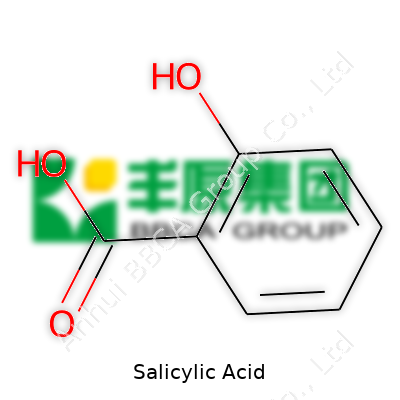
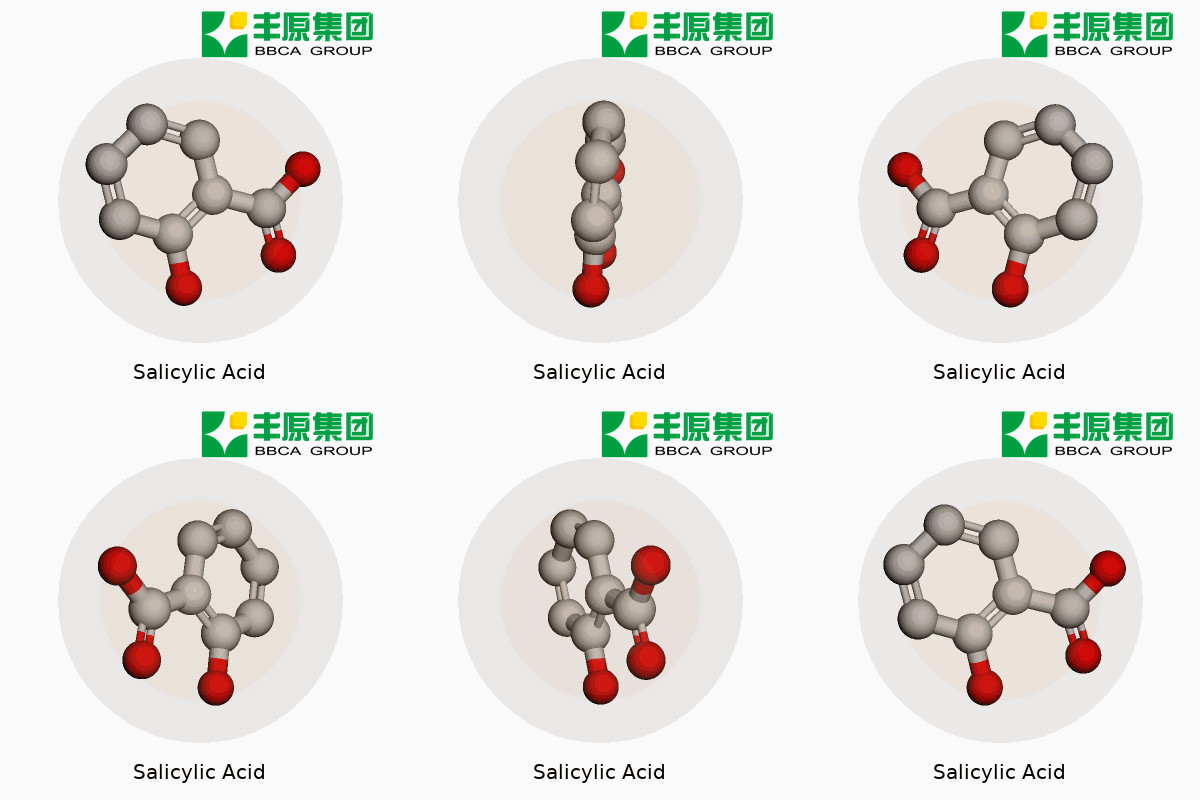
Salicylic acid has roots in centuries-old plant medicine, but the modern chemical story began in the 19th century. Natural extracts from willow bark and meadowsweet gave way to lab science when chemists isolated and later synthesized the compound. Factory production took salicylic acid out of the apothecary and into the hands of formulators worldwide. Our own operations have their foundation in this legacy, carrying forward a tradition that balances consistency, purity, and sustainable process improvements. Such progression has been driven by demand from diverse industries—each requiring stringent control and technical communication.
Salicylic acid now stands as a staple—trusted for its versatility in pharmaceuticals, personal care, food preservation, and industrial applications. Over years of refining our production, we see first-hand how consistent batch quality impacts downstream users. Whether incorporated into topical acne treatments, preservatives, or dye intermediates, reliability remains non-negotiable. Clients expect salicylic acid to meet tight tolerance in purity and particle size, ensuring their products maintain integrity and meet regulatory guidelines. No single product profile meets every need, so we support collaborations and customizations that match real use cases.
Our experts rely on the basic properties of salicylic acid to steer manufacturing, handling, and development. This compound presents as white crystalline powder, melting above 150°C, with moderate solubility in water. The weak acid nature (pKa ~2.97) shapes everything from formulation to downstream synthesis. We often discuss these practical properties with customers, referencing the faint phenolic aroma, stability under dry conditions, and sensitivity to light and moisture. Performance in blends depends heavily on these attributes—getting them right calls for constant evaluation of suppliers, equipment, and batch analytics.
In our facility, batch sheets start and end with exact specifications. Analytical methods such as HPLC and titration underpin SOPs for every vessel. Every kilogram, from bulk bags to bottled lab quantities, bears labeling compliant with local and international statutes: lot code, production date, purity, hazard information, and recommended storage. These seemingly mundane details protect our clients, their end-users, and our own workers. Experience tells us good labeling prevents costly errors and regulatory headaches down the line.
Earlier generations extracted the acid by boiling plant matter, but industrial chemistry advances transformed the landscape. Today, the Kolbe-Schmitt process leads the way, converting sodium phenolate and carbon dioxide under controlled heat and pressure. We constantly optimize reactor load, residence time, and purification to reduce waste and energy needs. This not only brings cost benefits but aligns with regulatory expectations around emissions and waste management. Customers from pharmaceutical and technical sectors value assurances that our outputs track with green chemistry goals and reproducibility standards.
Salicylic acid sets the stage for broad chemical transformations. Our in-house R&D team works daily with reactions such as esterification to yield compounds like methyl salicylate, and acetylation for acetylsalicylic acid (aspirin). Those processes drive a range of applications: flavoring, fragrance, and medicinal products among the standouts. We investigate catalyst choices and solvent systems to limit impurities, accelerate throughput, and uphold regulatory compliance. Such research feeds directly into our ability to supply specialized grades according to evolving customer requirements.
Chemists often encounter salicylic acid under many names—o-hydroxybenzoic acid, 2-hydroxybenzoic acid, and in some industries, just “salicylate.” These synonyms rise from the molecule’s multiple roles in formulation and synthesis. Unifying disparate naming conventions within our internal product database helps prevent mislabeling, supports traceability, and avoids confusion among global clients. This diligence improves clarity across languages, regulatory systems, and supply chains—a lesson earned from years of international business experience.
From the moment raw material enters our gates, safety protocols lead every operation. Salicylic acid brings risks as a powder that can irritate skin and respiratory tracts—a lesson every operator absorbs during onboarding. Local exhaust ventilation, PPE, and regular training round out routine practice. Strict auditing and adoption of GHS-based hazard communication keeps incidents low and instills trust in our partners. Our own incident records drive better work instructions and further investments in automation where appropriate.
Clients harness salicylic acid in medical, cosmetic, and technical fields with widely different needs. Dermatologists recommend it for exfoliation and acne, based on its unique capacity to dissolve keratin plugs and lower skin inflammation. Personal care formulators demand the highest purity and well-dispersed powder. In agriculture, salicylic acid acts as a phytohormone, supporting disease resistance studies. Industrial customers seek it as a chemical intermediate, asking for robust, scale-consistent batches. Each area offers new challenges and feedback cycles, driving our own investments in process improvement and technical support.
Research underpins our product evolution. Collaboration with academic and industrial partners enables us to pursue novel derivatizations, eco-friendlier synthesis routes, and enhanced analysis methods. We test formulations for improved shelf stability or lower skin irritation in cooperation with end users. Recent years saw advances in micronized salicylic acid, improving dispersibility and penetration for cosmetic applications. Every breakthrough follows careful regulatory review and real-world trialing—a pattern we cement into our production culture.
Toxicological evaluation guides decisions from process design to packaging selection. Salicylic acid remains low in acute toxicity when managed according to guidelines, but chronic overexposure can cause skin dryness or, rarely, systemic symptoms. We support ongoing studies to clarify long-term occupational exposure limits, safe use ranges in personal care, and residue thresholds in food and pharma. Transparency in channeling such findings to our clients ensures safe handling and product design.
Potential for salicylic acid continues to grow as regulatory bodies and consumer trends reshape chemical use. Environmental sustainability pushes the industry toward solvent reduction and lower energy syntheses. Green chemistry targets motivate us to research improved carbon capture during the Kolbe-Schmitt process, evaluate biobased phenol alternatives, and minimize process residues. At the same time, biomedical interest in salicylate derivatives rises, from new anti-inflammatory agents to smart delivery systems. Our facility invests accordingly—in equipment, skill development, and external partnerships—believing this compound’s adaptability will remain vital to both mature and emerging industries for years ahead.
Every day, our production team handles salicylic acid by the ton. Most think of this material as something reserved for skin care. That matches part of reality—big brands look to us when they want active ingredients for acne creams, facial cleansers, even shampoos. The science remains straightforward. This acid helps remove dead skin and unclog pores, something many teens and adults benefit from. What tends to surprise people is how much work it takes to keep each batch pure enough for facial use, as impurities can cause irritation or unexpected reactions. We see regular demand growth from cosmetics because consumers read labels more closely, and formulas keep getting more sophisticated.
Beyond skincare routines, salicylic acid makes its way into medical products, especially those treating warts, calluses, and dandruff. We collaborate with pharmaceutical formulators who require strict quality controls. The health sector doesn’t compromise. That means we perform high-frequency testing and document everything, right down to water content and residual solvents. If there's even a slight deviation, the batch doesn’t move forward.
Many overlook how often salicylic acid pops up in everyday industrial processes. Dye makers, for example, rely on our material to produce deeper, more stable colors. Rubber manufacturers use it because it keeps products workable longer during the early mixing stages. Whenever we get a call from a company making adhesives or preservatives, it usually centers on consistency and long-term storage stability—areas where salicylic acid holds up better than other similar substances.
Food-grade salicylic acid commands a different production line. Some food processors trust it as a preservative, though regional regulations often shape where it ends up. We take extra steps for these orders—controlling for things like cross-contamination, even down to the type of containers and equipment. Companies working with processed fruits and vegetables often approach us, hunting for agents that defend against yeast and mold growth.
On the factory floor, producing salicylic acid isn't just chemistry. Safety at scale means exposure risks, and dust containment never becomes a one-time project. Teams go through constant training updates, since salicylic acid, while common, isn't gentle in its raw form. Worker safety and environmental controls drive our decisions on filtration, air handling, and waste treatment. Strict emission regulations around the world push us to adapt and upgrade equipment almost yearly.
Demand for milder, greener chemicals grows with every customer survey we receive. Companies want assurance about traceability as much as purity. We continue to invest in lower-emission technology, cleaning up byproducts, and certifications for environmental management. That’s not about staying ahead of regulations—it’s what our partners expect us to deliver as part of responsible manufacturing.
From acne creams to industrial dyes, salicylic acid’s reach stretches across industries. Each application brings its own requirements for purity, safety, and performance. Handling those at scale keeps our teams focused on both science and safety, every shift, every batch.
From a chemical manufacturer’s point of view, producing salicylic acid demands careful process control. We have full traceability on every batch, so purity and consistency never fall to chance. What really matters to us, though, is what happens after our salicylic acid leaves the reactor and makes its way into skincare products. People trust chemists to understand how this ingredient behaves on the skin. This trust means we must always look beyond technical specs and toward actual user experience.
Decades ago, the industry found salicylic acid useful in acne treatments because it dissolves in oil and clears dead skin from pores. This property leads to clearer skin for many, especially in younger people dealing with clogged pores. Dermatologists and formulators alike know why we select a beta hydroxy acid over alternatives: it deeply exfoliates without requiring abrasive scrubs, which can damage sensitive areas.
Not every skin type appreciates that approach. From our plant’s outgoing shipments to the consumer’s bathroom counter, the journey often encounters sensitive, dry, or compromised skin. In our own labs, we don’t just test for chemical purity—we run compatibility tests on lab-grown skin models. Through those models and real-world feedback, we see a clear pattern: dry or eczema-prone skin often responds poorly to leave-on products containing higher concentrations of salicylic acid. Redness, stinging, and peeling develop, particularly if a formula ignores the need for gentle buffers or moisturizers. These outcomes resulted not from manufacturing shortcuts, but from skin biology itself.
The way salicylic acid is included in a final product can tip the balance between benefit and irritation. Over-the-counter leave-on products usually contain up to 2 percent; higher percentages belong in professional peels under trained supervision. Our obligation as a primary producer never stops at supplying technical grade or pharmaceutical grade acid. We keep up with real cases where even moderate strength salicylic acid formulas trigger adverse reactions for those with rosacea or chronic dryness.
Over the years, we have started inviting downstream brands to tour our labs. We show them all the variables—from particle size to pH range—that control skin response. Some will argue that all skin types can “build tolerance” but ignore the simple fact: repeated irritation causes some people to abandon otherwise useful treatments.
Like many basic ingredients, salicylic acid responds to smart formulation and honest education. Our teams work with global regulators by supplying clear technical data, toxicity studies, and skin compatibility results. It helps product makers develop clear warnings and usage instructions, reducing the risk that uninformed consumers misuse high-strength exfoliants.
We welcome changes from skin care professionals who demand pH-balanced, gentle formulas and ongoing research. Open communication between manufacturers, brands, and clinical experts supports safer outcomes for everyone—from oily teenagers to those with fragile or aging skin. Our work continues at the intersection of chemistry and practical advice, and that’s where salicylic acid achieves its potential without putting vulnerable skin at risk.
Salicylic acid does more than chase away the occasional blemish. We see the real effects because our teams have watched it advance from a niche cosmetic ingredient into an everyday tool for skin health. Many people turn to salicylic acid to manage oily skin, keep pores clear, or deal with breakouts. People ask us how often they should use it, wondering if more frequent application speeds up results or if overuse brings trouble.
Salicylic acid belongs to the group of beta hydroxy acids. Unlike alpha hydroxy acids, it breaks down oil on and inside the pore. That’s why it’s in nearly every acne-focused cleanser, toner, and spot treatment. The right amount can lift debris out of pores, help reduce visible bumps, and leave skin smoother. People feel the results: less shine, fewer clogged pores over time. The wrong amount, applied too often or in too high a concentration, strips away protective oils. That mistake often means redness, flaking, and a long wait for the skin to balance itself again.
Our manufacturing floor sees a range of formulations. Some products carry salicylic acid at half a percent; a few reach two percent or more. Every bit of difference changes how people use them. Individuals with oily or acne-prone skin often see benefits from using a mild salicylic acid cleanser once daily. If someone’s skin feels tighter or more sensitive, skipping days gives the skin time to recover. People with dry or combination skin might start with two or three times a week. Skin adapts over time, but it does not harden against irritation. In our experience, once signs of irritation appear, spacing out use becomes necessary and reduces the risk of ongoing sensitivity.
We work closely with researchers to tweak the delivery of salicylic acid. Suspension, pH, and concentration influence how deep the acid penetrates and how long it remains active. Cleansers touch the skin briefly and may be used a bit more often. Leave-on toners or serums go deeper and linger much longer; most users do well with these every other night, sometimes less. Layering products or pairing them with other acids and retinoids complicates matters, raising the risk for irritation and chemical burns.
Our technical teams field questions about salicylic acid almost daily. People want results, yet salicylic acid works with patience, not force. Studies show that after two to three weeks of regular use, skin often appears clearer and feels less bumpy. Pushing for faster results by using stronger formulations or layering acids leads to dryness, redness, or even peeling. Most of the complaints we hear from end users stem from overenthusiasm rather than poor formulation.
Skin signals when it reaches its limits. Flaking, stinging, or uneven texture point to overuse. People can back off, moisturize, and give it time. Reintroducing salicylic acid at a slower pace almost always restores balance. Quality moisturizers and daily sun protection add a buffer layer.
Our advice, drawn from time spent in both lab and plant, is to start slow. Adjust as the skin responds. Those who listen to what their skin tells them tend to get the best benefits with the least irritation.
Most people looking at a bottle of salicylic acid wonder if it plays well with others in their routine. From the perspective of someone who has stood over the mixing tanks, handled drums, and faced the reality of inter-ingredient chemistry, this question shows up almost every day—both in the lab and out in the world. Salicylic acid finds its way into many of the world’s top skincare formulas for good reason. Its origins as a beta hydroxy acid give it the special ability to work inside pores, flush out debris, and keep skin clear. Yet, its reputation owes just as much to the knowledge and hard work put into combining it with other actives safely and effectively.
Direct chemical interactions never stay on paper; every adjustment to a formula matters. In production, we test how salicylic acid handles neighbors such as retinol, niacinamide, and vitamin C. Salicylic acid itself hovers in the slightly acidic pH neighborhood, which means certain pairings demand extra attention. For example, vitamin C in the form of L-ascorbic acid stays most stable in a lower pH range, not far from where salicylic acid works best. Mixing the two in a single formulation, or layering them too close together on skin, often leads to irritation. Niacinamide works better at a neutral to slightly acidic pH; when paired directly with salicylic acid, the chance of developing niacinamide breakdown products increases if formulas get careless with pH. We keep both skin and ingredient comfort in mind by performing precise pH monitoring, corroborated with stability data, not just guessing or trusting textbook ranges.
Formulators have long understood that some ingredient combinations require buffer zones for skin tolerance. Retinol, for instance, brings its own set of rules. Salicylic acid can help clear pores and smooth the surface so that retinol penetrates better. Too much salicylic acid or too strong a retinol can result in more irritation than smooth skin. We have learned—trial, error, experience—that most users benefit from alternating usage or layering with plenty of hydration. When combining actives, our labs often recommend including soothing ingredients like allantoin, panthenol, or ceramides to blunt any rough edges. These aren’t just fillers—they directly address real-life feedback from end-users who come back with experiences from dry patches to visible redness.
The average consumer cares about results and comfort, two things we chase relentlessly on the production floor. Successful products show the right synergy at both lab and consumer levels. Real-world data reflect that combining low-concentration salicylic acid with compatible hydrators such as hyaluronic acid or glycerin supports skin tolerance even during regular use. Where irritation appears, we dig into both formulation and consumer use patterns; sometimes the culprit is layering too many actives too quickly, not faulty chemistry in the beaker.
Salicylic acid, used wisely, does not limit to solo act status. It thrives surrounded by thoughtfully chosen ingredients and careful handling, both in the plant and in daily skin routines. Creating these combinations relies on hard-earned technical expertise, constant attention to feedback, and respect for the details often missed outside the manufacturing room. Safe, effective skincare doesn’t happen by accident; it comes from understanding both the chemistry and the stories people bring back to us through the products they use every day.
Salicylic acid lifts a lot of weight in the world of personal care and pharmaceuticals. In our manufacturing plant, we see daily how this beta hydroxy acid gets added to acne treatments, dandruff shampoos, and callus removers. Years in production grant a front row view of both the benefits and the risks, especially regarding health and safety along the supply chain. Thanks to its ability to slough off dead skin, unclog pores, and soften tough patches, salicylic acid is a favorite for chemists developing new skin care solutions. Still, real stories from customers and lab technicians remind us why treating this material with respect matters.
Every batch we blend demands careful quality checks to prevent contamination and ensure concentration accuracy. Even straightforward dissolutions for topical gels or face washes can cause trouble if formulas run too strong or get used too often. Redness, dryness, and flaking are the main issues reported when concentration runs high or contact time stretches too long on sensitive skin. Workers in quality assurance sometimes report mild skin irritation after accidental splashes, especially without gloves. These observations feel far from theoretical—they lead to changes on the production floor, like reminders about protective gear and immediate wash stations at mixing vats.
Salicylic acid’s safety margin narrows when used outside recommended amounts. Dropping flakes of dead skin is the goal in acne treatments, but overdoing it can trigger painful skin peeling or swelling. Employees and longtime customers occasionally mention stinging, burning, and hives, especially among users with eczema, allergies, or broken skin. Respiratory discomfort may come up if fine powdered acid escapes during transfer, so dust control and ventilation play a big role in plant safety protocols.
In rare cases, especially in young children or those with large, open wounds or underlying illness, salicylic acid has triggered salicylate toxicity. Someone exposed to too much—often through over-application or defective products—may show ringing in the ears, dizziness, or fast breathing. Such cases come across our regulatory reviews every so often, reminding us to keep close tabs on formulation controls and issue recalls if quality slips. Health authorities publish maximum safe concentrations for a reason, and every batch gets analyzed to keep it compliant.
Customer calls and staff incident reports don’t just get filed away; they reshape our practices. Warning labels grew bolder and instructions clearer after seeing misapplications. Technical staff push for improved packaging seals to limit unintended exposure. Continuous staff education about dermal absorption and eye splash emergencies keeps risk low on the factory line. Open communication with downstream mixers and clients helps catch any emerging safety concerns early, well before a minor rash escalates into anything more serious.
True expertise grows from learning through hands-on mistakes and longtime vigilance. Manufacturing salicylic acid brings a responsibility to anticipate how a product may go wrong in a world bigger than the factory floor. Listening to users and workers, acting quickly on data, and investing in process improvement year after year sharpens our ability to supply a chemical that offers help more often than it ever harms. In the end, being present where the chemistry meets real-world skin has shaped a cautious respect—and a constant drive to deliver only what can be used safely and well.