Sodium gluconate landed in industrial chemistry after fundamental research into gluconic acid’s salt derivatives in the early twentieth century. Our founders recognized its practical value during the post-war construction boom, when new cement admixtures were needed to boost concrete performance in high-rise projects and public works. Decades in the business have taught us that advances in fermentation technology and process control shaped how sodium gluconate evolved into a reliable, high-purity product. The compound’s roots reach back to scientific curiosity, but its production shifted gears as end-use sectors—construction, cleaning, water treatment—set higher standards for purity and consistency. Over the years, our laboratory teams experienced the growing pains of scaling up reactions, minimizing byproducts, and achieving consistent batches under tighter regulatory eyes. Many improvements stemmed from surprise findings or persistent trial-and-error, not from textbooks, proving that continuous refinement in practice matters more than a once-perfect formulation.
Sodium gluconate reflects the convergence of everyday need and scientific know-how. In our factories, what leaves the production line resembles either a white crystalline powder or, for customers requesting it, a concentrated aqueous solution. Each batch proves itself in cleaning applications, construction site admixtures, and industrial processing tanks across industries. Behind all its uses lies a dependable chelating ability—binding metal ions such as calcium, iron, or magnesium—which prevents scale buildup, stabilizes formulations, and supports cleaning in tough conditions like hard water or high alkalinity. In our experience, this chelation power makes or breaks a batch: a small slip in quality control can cascade through downstream applications. Raw material quality, fermentation parameters, reaction monitoring, and drying technique all play crucial roles day and night. Our plant managers have seen first-hand why investments in process analytics and operator training pay off; a single quality deviation rarely goes unnoticed by our strictest customers in pharmaceuticals or water treatment. These realities bring extra responsibility for the chemical manufacturer, setting our daily rhythm not just by process, but by accountability.
The reality of sodium gluconate on the plant floor brings together textbook chemistry and practical handling. In its pure form, sodium gluconate behaves as a stable solid—non-corrosive, non-volatile, odorless, readily soluble in water, and not sensitive to light or ambient humidity within reasonable ranges. A melting point above normal storage conditions and a negligible vapor pressure create operational safety and simplicity. Sodium gluconate’s neutral to slightly alkaline pH (typically 6.5-7.5 in solution) holds up across storage and many application conditions. Its strong affinity for cations underpins most of its technical value, since it chelates even at high pH where many alternative agents break down. From years of handling bulk railcars and high-purity drums, our safety teams appreciate the low toxicity, dust hazard minimality, and material compatibility that sodium gluconate offers. Challenges do arise from the need to keep the material dry during long-term storage and to avoid contamination in pharmaceutical or food uses. In production, we monitor for key physical markers—moisture content, particle size, solubility tests—to catch deviations before shipment.
Labeling and specifications build bridges between our batch records and the end user’s performance criteria. As a manufacturer, we draw our technical parameters more from feedback than from theoretical numbers: purity often runs above 98%, and key impurities—heavy metals, chloride, sulfate, reducing sugars—are strictly regulated. Customers return to us not just for guaranteed numbers, but for the confidence that routine testing and documented traceability offer. Key data like molecular weight (218.14 g/mol), recommended storage conditions, and batch number traceability are provided on every label. Our QC staff frequently adjust analytical protocols to match evolving customer needs—tighter sulfate limits for pharmaceutical users, or stricter particle size controls for concrete formulators looking to improve flow without segregation. Specialty grades sometimes evolve out of technical disputes or collaborative development, showing that flexibility and learning matter in technical documentation. Standardized barcode labeling, clear lot coding, and digital certificates of analysis now reduce errors and aid regulatory audits.
Modern sodium gluconate production relies principally on microbial fermentation, converting glucose—a renewable, plant-derived feedstock—through carefully cultivated strains of microorganisms such as Aspergillus niger or select Bacillus species. Decades spent optimizing this process have revealed that fermentation requires persistent monitoring: the pH must stay controlled, oxygen and nutrient levels need fine-tuning, and temperatures cannot drift, especially across scale. Small process variations—like a batch of lower-grade dextrose or a missed nutrient supplement—can derail yields or degrade quality. Once fermentation completes, the broth undergoes neutralization with sodium hydroxide, then purification through filtration and concentration. Crystallization techniques, drying, and sieving finish the process, with downstream cleaning steps for pharmaceutical or food-grade material. Cost pressures, environmental targets, and energy concerns drive ongoing improvements—the push to lower water consumption and minimize waste finds us experimenting with novel filtration aids or smarter recovery systems. Over many years, these lessons became operational wisdom, not just process flowcharts.
Sodium gluconate functions as a robust chelating agent in dozens of reaction setups. In the facility, its behavior during synthesis or downstream blending stands out for its chemical stability. In alkaline media, sodium gluconate holds up where many competing chelators—like EDTA—lose structure or hydrolyze. Process engineers at our site routinely exploit this for scale inhibition and detergent formulation, combining sodium gluconate to stabilize metal contaminants or to buffer alkaline solutions. Chemical modification—oxidation, esterification, or partial hydrolysis—sometimes creates specialty derivatives. For example, through controlled oxidation, researchers create variants targeting specific niche applications. The bulk of market consumption stays with the unmodified product, though our R&D labs routinely trial minor tweaks, such as changing particle morphology or exploring co-crystallization with other sodium salts to address unusual performance problems raised by end users. Troubleshooting incompatibilities in customer formulations leads to technical collaboration, resulting in operational controls and adjustment guidelines specific to each plant line.
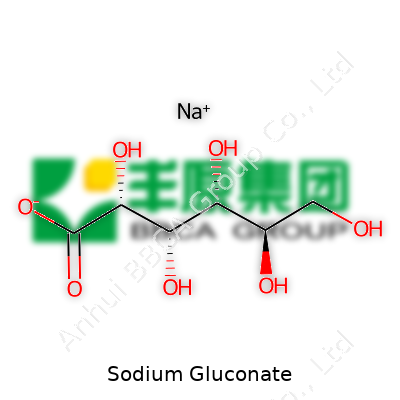
Our technical and export teams grapple with a half-dozen trade synonyms and market labels for sodium gluconate every week. Chemically, it is described as sodium salt of gluconic acid, with alternative spellings or identifiers like gluconic acid sodium salt, E576 (for food use), and in some registries as Natriumgluconat. On shipping declarations and safety documentation, consistency in the use of “sodium gluconate” prevents confusion with similar-sounding gluconates (calcium, potassium, etc.). In many territories, regulatory authorities insist on matching synonyms from established industry lists or pharmacopoeial monographs. Despite branding or local custom, the scientific identity—C6H11NaO7—carries through our internal systems and international contracts.
Safety practices and operational discipline surrounding sodium gluconate reflect both its benign profile and our broader chemical management philosophy. In our production halls and warehouses, standard PPE suffices—chemical-resistant gloves, eye protection, dust control measures—though the risk profile rates low against more hazardous specialties on-site. Years of incident tracking show the main safety issues occur with bulk handling (dust inhalation during unloading, mild irritation if contacting eyes or open wounds) rather than chemical reactivity or acute toxicity. Spilled product cleans up with basic sweeping and water rinse, as it lacks environmental persistence or hazardous decomposition products under normal facility conditions. Official workplace exposure limits rarely apply in practice, yet we maintain strict documentation to satisfy inspectors and assure community stakeholders. The product’s compliance with food, feed, and pharmaceutical regulations demands additional controls on allergen cross-contact, microbial contamination, and heavy metal content, especially for export shipments facing diverse regulatory regimes.
Demand patterns for sodium gluconate mirror the economic landscape. The construction industry alone consumes a substantial portion, driven by the need for effective set retarders in high-performance concrete. Our staff learn to anticipate busy seasons by studying government infrastructure developments, urban expansion, or even shifting weather patterns that slow or accelerate building cycles. In surface cleaning, sodium gluconate anchors many institutional and household detergents where its metal-binding and environmentally benign breakdown tip the balance away from phosphates. Water treatment centers across continents depend on sodium gluconate for preventing metal precipitation in cooling and boiler cycles, especially where climate change drives higher water reuse or tighter effluent standards. Our customers in the textile and paper sectors appreciate its role in limiting scale, stabilizing bleaching baths, or maintaining machinery efficiency. The pharmaceutical sector, though accounting for a smaller volume, requires extra care: sodium gluconate participates as both a chelator and stabilizer in parenteral solutions and oral supplements, where impurity and pathogen controls run more stringent than for industrial use. Feedback from these sectors pushes us to refine not only the end product but our background quality systems and communication.
In our labs, curiosity and feedback from users drive research on sodium gluconate’s applications and process improvement. We routinely study fermentation microbiology to yield higher titers using less feedstock and lower energy inputs, prompted by growing pressure on sustainability and production costs. Our teams monitor the emergence of resistant bacterial strains or altered metabolic pathways that threaten output, adjusting culture conditions and fermentation auxiliaries as a result. Efforts extend to application research—ongoing collaborations with university researchers or industry consortia explore new synergies between sodium gluconate and other chelators, surfactants, or corrosion inhibitors. Work on physical modification—granule engineering, particle coating, solvent-free blending—offers incremental improvements that translate into easier dissolution or less dust in automated batching systems. We monitor pilot projects in concrete technology where sodium gluconate interacts with novel cement chemistries, adjusting formulations to handle tighter climate-driven set control windows. These research programs take years to mature, requiring patience, detailed analytics, and open communication with both upstream suppliers and downstream users.
Extensive toxicity evaluation underscores sodium gluconate’s status as a safe ingredient for industrial, food, and even pharmaceutical settings. Acute oral toxicity studies reveal high LD50 values, suggesting low risk under expected exposures. Chronic studies, referenced across decades of regulatory submission, have not revealed evidence for carcinogenic, mutagenic, or reproductive effects at relevant environmental or dietary intake levels. Our regulatory and safety office maintains detailed files tracking publication updates or emerging concerns, particularly as regulatory bodies strengthen chemical registration and labeling requirements. Operator training at our facilities stresses proper hygiene and cleaning practices, since real-world incidents—while rare—often stem from neglecting basic procedures rather than inherent danger. Customer questions occasionally arise about environmental breakdown or accumulation; we reference studies showing rapid biodegradation under typical sewage or soil conditions, which reassures stakeholders about downstream risk.
A chemical manufacturer’s perspective on sodium gluconate’s future intertwines hope and realism. The move towards greener chemistry will only intensify worldwide, moving sodium gluconate further into the spotlight as phosphate limitations and carbon targets tighten year by year. Our operational data consistently point towards new capacity needs in regions ramping up infrastructure, especially where water conservation and tough concrete performance matter. Building codes are trending towards lower-emissions solutions, which favor concrete admixtures and cleaning aids with minimal environmental burdens. Ongoing R&D shapes new use cases, such as advanced battery manufacturing or specialty food ingredients, provided purity and regulatory hurdles are cleared. Energy efficiency and process intensification will drive manufacturing upgrades; we already commit capital to wastewater minimization, heat recovery, and bioprocess optimization. The global regulatory climate requires cleaner audit trails and transparent sourcing for every drum that leaves our gates. The product’s reputation for safety, effectiveness, and environmental compatibility means sodium gluconate’s story still unfolds—guided every day by the hands-on experience of those in the factory, the lab, and on the road with customers.
Having spent years manufacturing sodium gluconate, I’ve watched its value prove itself across a staggering range of sectors. Many in construction, water treatment, and textile processing reach for sodium gluconate for good reason. The molecule’s chelating and stabilizing powers give it an edge where other chemicals fall short.
Cement admixture crews come back to sodium gluconate because it manages cement hydration like a craftsman. Pour concrete on a humid day: it can set too fast, leading to cracks as water leaves too quickly. Add sodium gluconate, and the workability period stretches out. Workers have time to mix, pour, and finish slabs with less stress. Building a strong foundation demands this kind of flexibility; without it, budgets explode fixing problems that could have been prevented before the concrete even dried.
In municipal and industrial water treatment plants, scaling is more than a nuisance—it fouls machinery and clogs lines, driving up maintenance costs. Sodium gluconate binds calcium, magnesium, and heavy metals floating in hard water. The result is smoother pipe operation, less downtime, and longer equipment life. Old-school chelators often break down under harsh conditions, but sodium gluconate resists high temperatures and stays stable around strong alkalis. That’s why we see plant operators stick with it through thick and thin; fewer headaches, more reliability.
Textile dye-houses face constant headaches from fluctuating pH and temperature. Poor chelation here leads to streaky, uneven color—wasted fabric, wasted money. Sodium gluconate solves this headache by freeing up dyes to stick to fibers without interference, even as vats get hot or caustic. Long before sustainability buzzwords took over, we saw dye processers favor sodium gluconate for reducing rejects and chemical run-off. Over years, better fabric yields and cleaner discharges mean a real impact on the shop floor and downstream in the community.
Food processors often turn to sodium gluconate to keep canned vegetables looking crisp, and prevent off-flavors from creeping in. Think about stored green beans sitting in a retailer’s warehouse through the summer heat. The additive binds trace metals that could give rise to unwanted flavors or color changes. Every batch kept looking fresh means less waste, higher acceptance, and steady supply on grocery shelves. Regulatory green lights for its use in food hinge on decades of study showing its safety—which matches our daily quality control findings. We don’t release a lot unless test data align with strict standards.
With laws tightening around toxic heavy metals and customers insisting on “green” processes, sodium gluconate’s non-toxic, biodegradable profile matters more each year. Wastewater plant managers appreciate how it breaks down cleanly, leaving no persistent chemical trail. For us as manufacturers, maintaining high purity through careful sourcing and batch testing remains essential, since trace contaminants undermine both regulatory approval and real-world performance.
Day in, day out, manufacturing sodium gluconate offers an up-close view of how small choices ripple up to national infrastructure and household quality. Its real power shows in how seamlessly it improves processes while lowering risks—qualities that have not waned, even as technology evolves and standards rise.
Every day on the chemical production line, we see raw materials turn into substances that end up in food, water, and industrial processes around the globe. Sodium gluconate comes out of our reactors as a clean, white crystalline powder. Having run multiple batches for decades, we know this additive inside and out, both from a chemical and a practical standpoint.
Global demand for processed foods puts immense pressure on manufacturers to maintain both safety and quality. Sodium gluconate acts as a sequestrant, stabilizer, and sometimes as a leavening agent in bakery products. We choose fermentation methods using glucose from natural sources. Each stage follows strict quality assurance regimes. Employees conduct daily audits, sample batches, and run tests for impurities. The process requires constant attention to detail.
We see firsthand the importance of working with pure raw materials. Contaminated input leads to failures in later testing. This quality focus means less downstream waste and a safer ingredient reaching the end user.
Safety questions aren’t just asked by journalists and consumers. Food safety authorities in major markets scrutinize production records. Sodium gluconate holds approvals from agencies such as the U.S. Food and Drug Administration and the European Food Safety Authority. Each batch must comply with legal limits set for food additives. Regulators review toxicological data and real-world reports before providing a green light. They limit the maximum amount that can go in food, based on health studies covering metabolism, excretion, and biological impact.
In daily production, we stick to Good Manufacturing Practice standards. Our operators train on contamination prevention, allergen control, and equipment cleanouts. Finished product lots receive sampling for microbial and chemical purity. Failures mean quarantines and investigations. This commitment moves beyond minimum compliance. Our livelihoods rely on customer trust.
Batch records from our facility fill shelves in the QA office. Every process parameter gets logged. If any reading goes outside specification, alarms sound, and staff review sensor logs. We’ve seen how shortcuts in other plants lead to unapproved substances or residues in final product. Reputations built over years can collapse in one high-profile recall. Through experience, we know tight controls mean a safer chemical in the end market.
A few years back, an audit flagged a potential deviation in rinsing protocols. We worked with our technicians to introduce more comprehensive cleaning stages and automated documentation. Since then, microbial counts dropped even further, giving us added confidence in safety margins. This improvement shows that safety is an ever-evolving target, no matter how routine the process may seem.
News cycles highlight stories of tainted food or additives with side-effects. In our view, open access to production data and regular testing creates a transparent supply chain. Consumers can verify traceability and safe origins. Most people working inside chemical plants want to feed their own families with safe food, just like everyone else. We understand that trust can erode fast, and it’s on us to maintain high safety standards without shortcuts.
By focusing on science-based decisions and tight operational controls, we supply an ingredient that meets both safety and functional expectations. Ongoing investment in people and equipment reduces the risk of contamination and error. Customers, regulators, and end consumers deserve nothing less—because what leaves our gates is more than just another ingredient. It affects actual lives.
Mixing up batches of cleaning ingredients on the factory floor gives a clear perspective on what actually gets the job done. Sodium gluconate earns its place in cleaning products because it doesn’t just sit in the background. It plays a critical role in making sure every active ingredient in a formula works at full strength. On daily production runs, the difference shows up right in the tanks: with sodium gluconate, we see far less scale or residue gumming up the lines. Down the line, that matters for the people using our products—nobody wants a cleaner that leaves behind film or spots.
Hard water has always been rough on cleaning efficiency. Calcium and magnesium ions in tap water quickly sabotage even the most powerful detergents. Sodium gluconate comes in as a chelating agent, grabbing hold of those minerals and keeping them from interfering with cleaning agents. From direct observation, heavy-duty surface cleaners mixed with sodium gluconate consistently cut through minerals and soils, especially in places where hard water runs through every pipe. Without it, limescale ends up on equipment, tiled walls, and sinks, forcing extra rinsing or scrubbing.
Among factories and janitorial service crews, sodium gluconate gets credit for helping extend machinery life. Metal parts—pipes, pumps, valves—stay cleaner and corrode more slowly. This isn’t just theory. We regularly test the build-up inside our reaction kettles and processing lines. In batches without sodium gluconate, scale forms faster. That translates to more frequent downtime for cleaning and higher maintenance costs across multiple industries that use metal equipment or fixtures.
Running a chemical plant brings strong awareness of environmental pressures. Sodium gluconate ticks a lot of boxes for greener cleaning. Unlike some older chelating agents, it breaks down easily in wastewater treatment systems. Our staff performs regular monitoring on effluent and we see degradation proceed effectively, avoiding accumulation in the environment. Cleaners with sodium gluconate bring value to facilities under strict discharge rules—we see consistently high demand from these markets because regulatory audits focus on both performance and ecological impact.
Workers on the line handle raw powders and liquid blends all day. Safety data on sodium gluconate shows low toxicity and excellent skin compatibility. Cleaning products spiked with alternatives do not always deliver this level of comfort for staff or for consumers. Even after years of use, complaints or reactions remain rare, and insurance claims linked to irritation are almost nonexistent in our records. Companies with large cleaning crews opt for this ingredient because it lowers likelihood of occupational health headaches.
Economics drives a lot of decisions in chemical manufacturing. The production process for sodium gluconate relies on fermentation of glucose and a downstream purification that’s both reliable and cost-controlled. Over several years, this method has produced the same consistent compound with minimal batch rejection. As costs for some raw chemicals fluctuate, sodium gluconate delivers stable pricing, making it easier for downstream customers to manage their budgets and build dependable formulations.
Every day on the plant floor, we ship thousands of tons of sodium gluconate to construction clients. In concrete, sodium gluconate acts as a water reducer and set retarder. Contractors want stronger concrete that flows with less water. Cement companies trust sodium gluconate to handle hot weather pours, giving valuable working time without compromising early strength. Keeping mixtures pumpable and avoiding cracks saves repair costs and labor. Unlike older chemicals, sodium gluconate never prompts aggressive corrosion, making it safer for steel reinforcement over decades.
Textile customers rely on consistent dye results. Here, sodium gluconate maintains the right balance during dye baths, capturing excess metal ions that otherwise stain or fade finished fabric. We have seen textile processors avoid expensive rework by adjusting their mix with our product. It makes processes more reliable, especially with hard water or recycled water, letting color fix deeper and stay brighter.
Sodium gluconate serves another purpose for water treatment plants. Few chemicals hold and trap calcium and iron ions as reliably. System engineers count on our product to prevent scaling and fouling in recirculating cooling systems, boilers, and RO membranes. That way, plant equipment runs longer between shutdowns and cleaning cycles, which lowers operating costs. Plant operators often ask us for technical support on dosages and balance, and we share decades of field insight to keep operations smooth.
Food manufacturers look for safe, clean label additives that do more than just fill space. Many add sodium gluconate for buffering and acidity control during soup, sauce, and dairy production. Our food-grade batches pass tight purity standards. Sodium gluconate outperforms older acidulants in holding pH stable without metallic aftertaste. It also chelates trace metals, extending shelf life for canned or processed foods. Our relationships with food processors focus on repeatable quality; these companies deserve consistency with zero compromise.
Formulators in pharmaceuticals and personal care often select sodium gluconate for its gentleness and safety profile. Hospital suppliers blend it in injectables and oral medications to stabilize sensitive active ingredients. Our USP-grade lines face strict lab scrutiny, so we invest in equipment updates and close lot tracking. In skin care, sodium gluconate binds mineral ions in water-based creams, ensuring a smooth texture and extended product stability on store shelves.
Cleaning product makers want builders and chelators that remove limescale and mineral stains. Sodium gluconate stays active in both acidic and alkaline detergents, helping laundry and dishwashing brands deal with hard water. Industrial customers demand reliable cleaning for pipes, tanks, and heat exchangers. We often field technical calls for trouble-shooting—direct application advice and batch testing win us lasting business in this space.
Over time, demand for sodium gluconate has grown across so many sectors because of its versatility, safety, and environmental profile. Instances of supply pressure can occur with global raw material fluctuations. From our side as producers, maintaining strict quality across technical, food, and pharma grades requires ongoing investment in process control and analytical testing. Each batch must meet the end users’ demanding specs, whether destined for a giant cement mixer or a medical IV bag.
Our factory turns out thousands of metric tons of sodium gluconate every year. Visitors often ask about its impact once it leaves our site. People have good reasons to care—discharge regulations keep tightening. Customers expect proof that raw materials don’t cause downstream pollution headaches. Our team tracks each batch through the process, so we pay close attention to both chemistry and practical results.
Most folks want to know if sodium gluconate breaks down fully and does so quickly. We run wastewater treatment at the plant, so we notice how different chemicals behave. Sodium gluconate does not linger. In aerobic systems, it degrades fast under standard operating temperatures. Microbes in biological reactors convert it into carbon dioxide and water—direct observation, not theory. The rate of breakdown in lab tests and in day-to-day plant operation matches what is reported in published biodegradation studies.
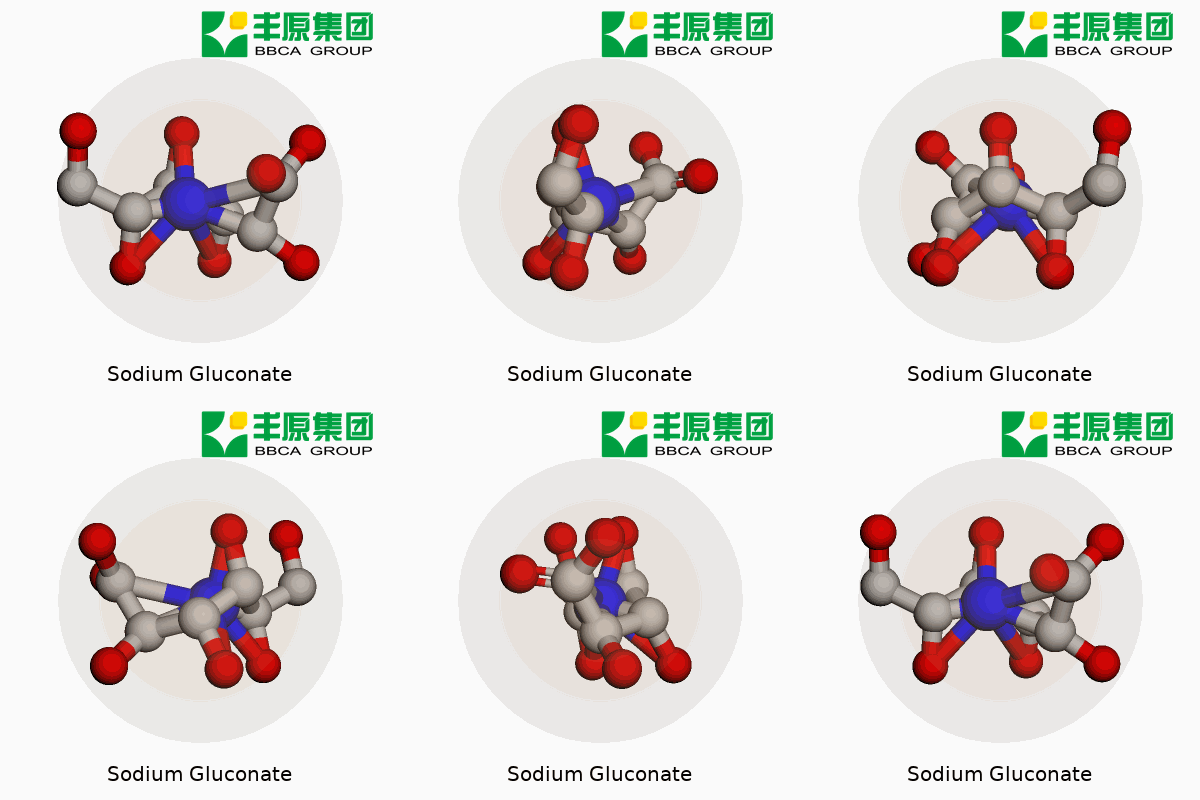
Chemical structure tells the story: sodium gluconate lacks groups that cause persistence or slow breakdown. No halogens, no aromatic structures. That absence matters more than marketing buzzwords. Our environmental monitoring records bear this out. Effluent tests after treatment register little trace, and our compliance reports stand up to surprise audits. The breakdown products do not raise toxicity concerns—not only for aquatic life, but also for secondary users further downstream.
We do not just focus on final discharge. Looking upstream, the raw material comes from renewable carbohydrates. The fermentation step creates gluconic acid, then the neutralization forms sodium gluconate. No exotic metals or persistent additives go in. As manufacturers, we see sourcing and process waste impacts, not just what appears on Life Cycle Analysis charts. The production residues send no surprises to solid waste or water.
Looking downstream, sodium gluconate shows up in everything from concrete admixtures to cleaning products. It keeps builders and industrial users happy because it doesn’t form scale and cuts risk of stains. But end-users ask about disposal. Some industrial cleaners can cause headaches at wastewater plants if they rely on stubborn chelators. Sodium gluconate runs in the opposite direction. It does its job, then breaks down, which keeps the user free from costly surcharges or blocked permits.
No chemical comes without oversight. Overdosing or careless discharge dumps any organic load into the treatment plant and risks sludge bulking. We remind customers: treat sodium gluconate with the same respect as any biodegradable feed. Proper metering, keeping the chemical inside recommended process limits, and regular monitoring prevent trouble. We’ve advised on upgrades that actually allowed higher throughput since sodium gluconate did not stall the system, unlike some competing agents.
As producers, we hold the responsibility to lean on evidence, not sales claims. We run our own treatment facilities and work with partners who measure impacts long after the product leaves our loading dock. Feedback from clients, local authorities, and nearby water facilities guides the way we run quality checks and adjust batch purity. We share practical tips with users—whether for concrete, cleaning, or water treatment—so sodium gluconate plays a positive part in sustainable operations.
Every chemical company faces the same pressure: show that products do what they promise without harm. We find sodium gluconate delivers on biodegradability because we witness it breaking down in settings that regulators and users care about most. No magic, just tested chemistry and frequent audits. The work doesn’t stop. We invest in upstream resource efficiency and keep finding ways to confirm environmental performance in the field. If any issue pops up, it shows fast—and gets addressed openly.