News

Latest news and updates from our company

Anhui BBCA & Galactic Lactic Acid Co., Ltd.
2026-03-27

Anhui BBCA & Galactic Lactic Acid Co., Ltd.

 As someone on the manufacturing floor, you notice shifts in the lactic acid industry long before the headlines. Watching Anhui BBCA & Galactic Lactic Acid Co., Ltd. evolve over recent years brings a clear reminder of what industrial-scale ambition looks like in practice. BBCA’s expansion into bio-based materials signals much more than a regional power move—it puts real pressure on supply chains and R&D across the globe. The combined strengths of BBCA, as a leader in bio-fermentation, and Galactic’s long-standing European expertise in lactic acid production, set a strong precedent. Historically, most lactic acid production concentrated either in the Americas or Europe, driven by health, food, and packaging sectors. BBCA & Galactic’s large-scale joint ventures have reshaped this dynamic. It’s not a minor adjustment—this has forced established manufacturers to revisit process integration, from glucose input to end-product tailoring. BBCA’s scale, including vertically integrated access to raw feedstocks, has led to downward price pressure and greater capacity. As a manufacturer, this means sharing the stage with a partner who controls upstream crops through to high-purity acids, with enough in-house technology to carve out unique formulations for both food additives and polymers like polylactic acid (PLA).   Teams directly involved in fermentation processes often point to BBCA & Galactic’s investment in strain development and sustainability. Their fermentation optimization shows what high-throughput, cost-efficient production looks like when you throw large resources at both pilot and full-scale lines. Corn-based fermentation remains their backbone, but steady movement towards cellulosic and waste biomass inputs is not out of reach for factories equipped for flexibility. From a technical eyeshot, consistency in lactic acid quality and yield often comes down to subtle handling—agitation speeds, pH control, carbon source preprocessing—that only experienced operators can truly fine-tune. BBCA & Galactic’s process engineers have pushed these parameters hard and repeatably, setting new expectations for batch throughput and waste handling.  Industry standards continue to evolve in response to their benchmarks. When companies of this scale start producing food-grade and industrial-grade acids side by side, the pressure to meet both ISO and food safety requirements climbs. It has forced many manufacturers to re-evaluate traceability, from fermenter inputs all the way to packaging. Hot topic within trade bodies remains the non-GMO sourcing, especially in high-purity extracts for healthcare and cosmetic sectors. Emerging regulations in Europe and North America point to cradle-to-gate transparency; BBCA & Galactic’s integrated supply chain structure means they can respond directly and rapidly to compliance audits, something still painful for less vertically organized groups.  With BBCA & Galactic’s expanded capacity, oversupply in Asian and global markets has real consequences for pricing. By managing costs at a macro scale, this joint venture has reset the bar for competitive pricing, making it harder for regional players lacking that in-house fermentation muscle to compete on volume or cost. Price compression, especially for industrial raw lactic acid, forces a sharp look at cost breakdowns—from energy to labor to effluent treatment. Even larger incumbents feel the squeeze; stories circulate of cutbacks, re-investment in process efficiency, or pivoting to specialty, high-margin lactic derivatives just to dodge head-to-head price wars. Population growth and changing diets in India and Southeast Asia have increased demand for both raw and value-added lactic derivatives. Manufacturers with eyes on these regions now run into BBCA & Galactic more often; not just as suppliers, but as shapers of local pricing and logistics. For those of us running mid-size fermentation plants, it becomes essential to move up the value chain, targeting applications where close process control or boutique ingredients give some advantage against pure scale. There’s a growing push to pivot capacity toward higher-end pharmaceutical grades, optical purity versions for bioplastics, and customized blends for specific food preservation uses.   One challenge sits in the increased scrutiny around emissions and side-stream valorization. Large plants like BBCA & Galactic’s are under microscopes to not only handle scale, but to account for every byproduct stream. As land and water use become more closely watched, even small incidents ripple through the supply chain. Many factories are still learning the ropes on nutrient recovery, biogas integration, and leveraging spent microbial biomass as feed or fertilizer. People on the ground hear the push from management—tighten up fluxes, learn to valorize waste—since regulatory eyes and customer audits ask for it with more urgency every year. There’s opportunity in specialization that responds unflinchingly to the new normal. Research teams are spinning more time into enantiomerically pure (L) and (D) lactic acid for high-strength PLA and targeted medical polymers. Some outfits have started deploying continuous fermentation just to stay in the running on energy consumption and footprint. Open dialogue with customers—especially global brand owners—shows a clear demand for bioplastics with lower carbon intensity and cradle-to-gate life cycle clarity. Only those with real-time data, investment in process control, and ambition to close the loop on byproducts continue to survive the price competition set by the likes of BBCA & Galactic.  For those who have spent time over process tanks or in QA labs, the signals from BBCA & Galactic’s growth force a continuous upgrade of both tools and attitudes. Strict routines for sterility and traceability, once reserved for specialty lines, are now table stakes across the board. Plant staff keep refining their game, driving deep into predictive maintenance, digital twins, and process intensification to cut costs without cutting corners. Investors demand it, and customers expect it.  Relationships between raw material farmers, biotech process engineers, and logistics planners keep tightening. Partnerships once based on price sheets are now built on shared traceability data, linked greenhouse gas ledgers, and joint innovation labs looking for the next jump in both cost and performance. As BBCA & Galactic rewire expectations, a working manufacturer has little choice but to keep pace or risk irrelevance. Knowledge moves fast in this industrial world; being late to adapt simply isn’t something the plant can afford—not with customers and regulators pushing hard for clean, scalable, and repeatable bio-chemistry at the heart of tomorrow’s industrial economy. CONTACT INFORMATIONWebsite:https://www.anhui-bbca.com/Phone:+8615365186327Email:sales3@ascent-chem.com

Read More
Anhui BBCA Citric Acid
2026-03-27

Anhui BBCA Citric Acid

At our production plant, the journey from crop to citric acid stands as a daily challenge—not only technical, but also shaped by changing markets and supply chain shakes. Factories like ours track crop yields in provinces such as Anhui just as closely as energy consumption curves. Unlike traders who only see a price on a spreadsheet, we smell the sugars used for fermentation, study the color of mash, and hear every pump carrying feedstock into the fermenters. For the past few years, Anhui BBCA has led global headlines by scaling citric acid supply and often setting the tone for export pricing in China. Their operational scale didn’t appear overnight. Setting up large fermenters, balancing yeast health, keeping bacterial contamination away—all lessons reshaped by batches lost or saved in the fermentation room. If news hits about a BBCA plant maintenance shutdown in Anhui, the entire sector feels the aftershock. This affects not just exporting, but also dominoes out to food, beverage, and pharma buyers. Our orders spike, or drop, as buyers hedge against uncertain output from one of the world’s largest production hubs.People outside the factory gates might see citric acid as a simple commodity, but on the plant floor each decision piles up. Consider the case last year when transport disruption squeezed the movement of feed corn into Anhui. Overnight, yield forecasts changed not because fermentation technology failed, but because the cost of bringing in clean glucose shot up. Factory managers recalibrate hourly, watching warehouses dwindle and calling for expedited shipments that further erode margins. BBCA’s vast plants can buffer the storm better than smaller outfits, simply by running inventory deeper, but weak crops still squeeze everybody. When the news highlights BBCA, the real story includes those constant adjustments: more intensive lab checks, longer shifts, and negotiation with logistics teams for every ton of finished acid leaving the gates. Over years, this hardens a plant team’s instinct for efficiency, safety, and quality. Any slip—be it a failed filtration batch or non-conforming pH report—turns into a substantial hit, not just for one buyer, but for every customer down an international pipeline. Manufacturers like us never rely on slogans or gold-embossed mission statements hanging in hallways. Instead, quality assurance takes over every corner of the floor. Real audits don’t happen only at the invitation of overseas buyers; sometimes an inspector walks in after reading about BBCA bagging another export volume record. They dig into our documentation, scrutinizing not only batch records but also raw water reports, waste water discharge, temperature logs, and fungus strain lineage charts. In an industry where BBCA sets a benchmark, manufacturers adopt a permanent posture of readiness for any pop audit. This can mean sudden equipment upgrades, operator retraining mid-campaign, or changing 15-year-old protocols after a rival’s recall story blows up overseas. Facts matter here—if just one analysis slips under acidity or exceeds heavy metal limits, the entire shipment holds back. Food and pharma buyers count on unwavering reliability. Regulatory agencies in Europe and North America expect us to explain each deviation with full traceability, not just a phone call. Real commitment shows in how a company responds to these invisible pressures long after the headlines lose their shine.Large-scale citric acid production has forced Anhui and BBCA to rethink process waste, water draw, and emissions. Our team faces these stakes every month during emissions testing and water treatment monitoring. Some critics argue high-volume chemical plants sidestep responsibility, but the pace of environmental upgrades at BBCA suggests the opposite. It isn’t just about earning a green mark for a slide deck, either. Raw statistics haunt every environmental engineer; for example, a spike in COD levels means re-working effluent streams and overhauling biotreatment, sometimes overnight. Smaller plants look at BBCA’s investments—methane recovery, closed-loop cooling systems, feedstock utilization rates—and find both caution and motivation. Regulation bites hardest at companies who ignore these changes. That means, for us, environmental controls carve out large parts of the annual spending plan. Water recirculation, solvent traps, and zero-discharge planning make or break a company’s reputation and license to operate. The pressure to match BBCA’s environmental reporting pushes all manufacturers to higher transparency: every monitoring record, each complaint log, ends up reviewed and inspected. This feedback cycle forces momentum not just to keep up, but to lead if possible. A global player like BBCA doesn’t shape only domestic pricing but drives R&D forward. For years, as citric acid prices swung up and down, hundreds of manufacturers tried to undercut leaders on price, sometimes at the cost of product purity or stability. True manufacturers dig deeper for an edge; trading margins never replace process reliability or yield improvements. To stay competitive, we invest in cleaner fermentation strains, improved aeration systems, and better downstream separation. Pressure from BBCA’s scale and cost control means continuous search for value, not only in yield but also waste minimization and product consistency—factors that matter a lot more to buyers than a few dollars shaved off per ton. The push for real innovation also means closer partnerships with reagent suppliers, analytics firms, and even universities, to turn out breakthroughs like higher-purity monohydrate or functional citrates tailored by application. While competitors eye only today's price, manufacturers fixate on tomorrow’s breakthrough—one that could shift the terms of trade for years.Any news about Anhui BBCA ripples across the whole industry with an effect that outlasts the press cycle. Citric acid doesn’t just flavor sodas or stabilize pills; for thousands of factory workers, supervisors, scientists, and farmers, it supports daily life. Every hiccup or leap at BBCA influences plant operation rates everywhere else. If they shut a line or open a new facility, the phone lines light up at our procurement office. The supply chain stretches from corn harvesters to dockside stevedores, and news from Anhui can trigger late-night calls across three time zones as buyers look to secure stock. For those of us committed not just to output but to the long-term health of the whole value chain, the real opportunity comes in building more robust, transparent, and resilient systems from soil to finished goods. Manufacturing is never static, and neither is the story of BBCA in Anhui. Keeping focus on continuous improvement, real-world quality, and credible environmental responsibility builds trust that outlasts the news of the day.

Read More
Anhui BBCA Duamin Infusion
2026-03-27

Anhui BBCA Duamin Infusion

Our days often start amid the hum of rotary filters and the steady rhythm of control panels. In chemical manufacturing, people like to talk about equipment and technology as if they are the full story, but real trust in products like BBCA Duamin Infusion grows from layers of careful decisions that begin well before the raw goods even arrive. In a facility like ours, each drum and tank holds more than liquid; they carry the responsibility of supporting lives, especially in hospitals counting on safe infusions. It’s not uncommon to hear outsiders talk about Duamin solutions as if any batch would do. Real production shows us the difference: one impurity hiding in a line, a slip in routine filter tests, or the wrong temperature during mixing can change the story. Operators spend as much time double-checking documentation as they do working levers because consistency depends on more than just machines; it requires trained hands who know what a “good day” should look like, and who catch small mistakes before they grow.There’s no autopilot in an active infusion line. The market often expects zero-defect products, and for a manufacturer, that outlook shapes every decision. Chemicals used in intravenous drips never get a grace period. Each batch undergoes a sequence of in-line checks, particulate monitoring, and top-to-bottom sample pulls. The team recognizes that contamination threats come from everywhere: minor fluctuations in warehouse humidity, unnoticed oxide on a pump fitting, or the slow accumulation of glove powder during filling shifts. Everyone on staff knows stories of how an off-spec drum led to costly recalls or even a single rejection from a hospital client. The learning curve forces us to adopt new habits—routine retraining, advanced sterile zone access, and tighter capped lines for all bulk storage. The urge to cut a corner for speed never really goes away unless management and floor staff work hand-in-hand, making it clear that maintaining the chain of control is a shared investment in the plant’s future.Much of the public doesn’t see the layers behind an infusion-grade product, yet these details separate trustworthy suppliers from everyone else. Incoming raw materials trigger a stream of third-party and in-house analyses. Our own experience with supplier inconsistencies forced us to tighten scrutiny—driving surprise audits, lot-by-lot verification, and occasional batch rejections despite high costs. Release samples are stored for long-term stability checks, and we backtrack the entire production chain if any deviation surfaces in the laboratory months later. This is not paperwork for paperwork’s sake; it is a real safeguard that protects patients downstream. Many years ago, we had a near-miss with a delivery delayed due to transport temperature drift. That event reinforced that trust means stepping beyond routine. It means developing backup plans, like dual-site storage and real-time tracking. Our sense of safety is built from scars as much as from routine success.Regulations change quickly in the chemical sector, and infusion solutions face some of the world’s toughest safety frameworks. Each time an agency revises its rules, the shift trickles through the factory, often sparking difficult decisions about process investment and documentation. Every new requirement raises costs and complicates workflows, but as actual manufacturers, we feel the direct operational weight. In the last national inspection cycle, our staff worked night and day to finish validation rewrites, update batch records, and requalify old storage tanks. The cost ran into millions, but none of us doubted the value. Watching the global market, we see less committed players trying to skirt these upgrades, cutting out quality checks or skipping redundancies. Over time, those shortcuts catch up. Trusted hospitals and major wholesalers only grow more selective, preferring documented long-term performers. As competition heats up, only facilities embedding quality into routine work survive the cyclical swings and price wars.No automated system fully replaces lived knowledge from years on the production floor. In our operation, veteran operators regularly spot anomalies in solution color, subtle shifts in viscosity, or odd smells that get missed by instruments. Some international standards ask for clear lab data but overlook the countless “unwritten rules” that keep batches safe. Our longest-serving employees mentor every new hire, teaching them to trust both their training and their instincts. As markets demand larger quantities and more rapid turnaround, there’s always pressure to automate and rely on data analytics. We embrace technology, yet our best days come from merging automation with human vigilance—down to opening a valve at just the right time or recognizing a faulty sterilizer gasket before a real problem arises. These habits separate consistent output from labs that only aim for compliance.Buyers and end-users grow savvier each year. Detailed traceability has shifted from a rare ask to a basic expectation for any reputable infusion chemical. Our own experience shows that clear supply chain transparency reassures long-term partners, especially during recalls elsewhere in the market. Questions about feedstock origin, production waste handling, and carbon emissions now shape purchasing choices, not just price or supply volume. Responding to these concerns led us to invest in more energy-efficient reactors and lower-emission sterilization protocols, reducing our own environmental footprint. These adjustments didn’t come overnight—years of trial, failure, and process tweaking inform everything we do. Even as supply lines tighten and input costs rise, staying ahead means tracking not just regulatory shifts but changing public expectations as well. Every ton we ship connects us not just to delivery contracts, but to the real people depending on safe, reliable Duamin infusion products in clinics and hospitals.

Read More
Anhui BBCA Group Co., Ltd.
2026-03-27

Anhui BBCA Group Co., Ltd.

Standing at the edge of a bagging line, it’s clear the conversation about Anhui BBCA Group goes deeper than export figures. Over decades, BBCA has turned fermented corn into bottles, packaging, sweeteners, and more, threading innovation through grain and chemistry. We don’t read headlines about BBCA’s volume stats; what matters here is how their push affects the broader landscape. As a peer in chemical manufacturing, we watch their steady bet on biochemicals. Lactic acid and its derivatives aren’t new to us, but scaling them to compete with fossil-based versions reshapes the picture for the entire industry. What’s striking: BBCA’s investment in automated fermentation, quality controls, and downstream processing underlines how pushing biomass upstream gives producers more negotiating power at the global table.Any operator who has traced a minor impurity through a batch of citric acid understands supply chain headaches. We spend hours tracing corn back to fields and certifying the entire process to meet regulatory scrutiny in North America and Europe. BBCA’s expansion into pharmaceutical grade sugars and biodegradable plastics isn’t hype—it means fighting through documentation, audits, unexpected downtime, and power grid hiccups. In practice, running a fermentation tank at full steam not only pushes yields, it exposes even the smallest weaknesses in raw material quality. When one batch goes off-spec, downtime costs climb, and the utility bills keep coming. BBCA, with its scale, has shown that rigorous investment in feedstock logistics and automation—down to the agricultural co-op level—cuts down disruptions and tightens traceability, setting a new bar across Asia’s chemicals sector. This, for smaller competitors, isn’t just impressive; it’s a challenge to adapt or get left behind. Colleagues talk about circularity, but waste management takes real grit on the factory floor. For every ton of bio-based acid, there’s effluent and biomass to process. BBCA’s footprint in green tech pushes many in the industry, including us, to look past simple cost comparisons. Installing anaerobic digesters or moving toward zero liquid discharge costs millions, yet audits and customer demands leave little choice. Even with a robust on-site system, one poor week of rain can overwhelm water treatment, driving up the risk of permit violations and lost contracts. BBCA’s size allows them to run integrated solutions, mixing waste valorization into the product stream, lowering long-term risk. Firms still relying on landfill disposal or selling by-product streams to unregulated buyers fall further behind as regulatory targets sharpen and consumer brands double down on green credentials.Years ago, smaller manufacturers could serve local customers and stay insulated from global trends. Now, any change in major Chinese producers’ policies shows up in freight rates, raw material negotiations, and even hiring. BBCA’s ability to ramp up lactic acid and polyols at a cost few can match means price movement in China rapidly echoes worldwide. Factories outside China that lag in energy efficiency or labor productivity feel the squeeze first. BBCA’s push for integrated industrial parks shifts the goalpost; they pull in everything from grain drying to packaging film lines, making sure every step flows back to the same ledger. The broader local impact can’t be ignored. Farmers who once relied on low-margin crop sales now find contracts tied to BBCA’s standards, which raises both the stakes and the cash in counties across Anhui. In the lab, process engineers watch each new development from top players like BBCA with a mix of interest and anxiety. Process tweaks in fermentation or refining can make the difference between profitability and layoffs. When BBCA’s scientists publish new process yields or pilot biodegradable polymer runs, it speeds up the timeline for everyone. The competition to file new patents or roll out more robust enzymes gets more intense. We rely not just on buying equipment from the best suppliers, but on fostering teams that can keep pace with new ideas. Researchers now pull detailed analytics and, on some nights, lose sleep wondering how to scale similar concepts with the constraints or power limits at smaller plants. BBCA’s partnerships with universities and technology institutes feed a homegrown edge, one hard to match from a distance.Looking at emissions targets and the trail left by plastic pollution, the stakes have never felt higher. Competing with a company willing to back technological leaps at high risk sharpens everyone’s focus. Many long nights have been spent updating energy recovery systems, scouting clean steam options, or pushing local regulators to clarify microbial release guidelines. BBCA’s commitment to long-term R&D, combined with heavy investment in logistical networks and customer relationships, drives our own strategies to avoid complacency. Before, selling a mid-range acid or glycerol product to a regional packer might suffice; now, customers demand lifecycle data and push for closed-loop supply chains. Manufacturing chemicals isn’t about resting on one’s current methods. We keep ears open for news from companies like Anhui BBCA Group, because their actions ripple through commodity prices, sustainability targets, and even the way hiring managers pitch to new chemists. The next chapter in biochemical manufacturing hinges on smart scale-up, resilient logistics, and unflinching attention to quality from the dock to the end-user. BBCA’s journey forces even established plants to reassess, invest wisely, and look for the next overlooked margin to push this sector forward.

Read More
Anhui BBCA International Co., Ltd.
2026-03-27

Anhui BBCA International Co., Ltd.

From our production floors in Anhui Province, scale brings weight, but not just financial weight. Years of investment in research, energy efficiency, and process refinement have shaped our plant operations. We have watched the industry chase headlines around “green chemistry” and “sustainability,” but on our end, that means re-tooling fermentation lines, balancing byproduct reuse, and negotiating the growing pains of moving from corn starch inputs to everything from lactic acid to citric acid output. None of this feels abstract when teams see the day-to-day impact of refining yields or driving off-grid electricity generation in the depths of an industrial park. Real changes in process efficiency mean fewer trucks running in and out, lower residue, and cost stability against volatile feedstock markets. Our team confronts the real pressures customers feel: supply security, batch consistency, and product compliance. The fear that goes through procurement teams when global logistics buckle isn’t an abstract talking point. We know what it means to ramp up and maintain stable flows, especially during the years when bottlenecks or shutdowns at port meant contracts got tested, and clients needed confidence their solvent would actually be there next week.In an age where global buyers ask about everything from non-GMO claims to carbon footprints, traceability has moved from buzzword to operational headache. At our facilities, that has meant a major focus on digital tracking, lot coding down to the fermenter, and working with local grain suppliers face-to-face instead of anonymous commodity pools. The challenge is rarely the paperwork, but integrating these records with customers' compliance software and presenting data so clearly a foreign inspector can walk onto the factory floor, point at a product drum, and trace its journey from field to fill line. Mistakes get exposed fast in this system. Our on-site laboratory verifies inputs, which means inbound shipments can get rejected if pesticide residues show a surprise spike or protein content falls short. The pressure to keep everything aboveboard isn’t driven by marketing—it’s rooted in experience from audits, certification demands, and the regulatory terrain that shifts as expectations for food-grade or pharma-grade materials keep rising. For our team, the work of chemical production is only as strong as the chain of trust that supports it, and we see it every time a partner calls with a document request or compliance question at midnight.Feedstock insecurity bites during drought years, and our location in Anhui keeps us close to both grain suppliers and our own energy resources. Sourcing responsibly from local suppliers is not about image management—it’s about locking in steady operations when market shocks hit. Our teams routinely drive to supplier sites, checking fermentation integrity, catching contamination risks early, and supporting smallholders through field-level technical support. The relationship cuts both ways; a supplier’s crop health matters as much as the fermentation tank control panel. In lean periods, we share the risk—advancing payments or providing agronomy advice when uncertainty looms over incoming harvests. Over time, this builds loyalty, and our upstream partners know they’re woven into the economics of our output. This approach delivers more than goodwill. Local hiring, waste water treatment upgrades, and closed-loop steam recycling directly address the pushback that sometimes comes when communities see a factory expand or demand grows for bio-based chemicals. Rather than outsource responsibility, we spend capital on scrubbers, byproduct utilization, and infrastructure, reducing visible emissions and keeping our local network strong. These steps are not simple compliance—they underpin long-term operational reliability and foster genuine local support when expansion plans face scrutiny.Downstream clients often focus on product specs, expecting consistent quality regardless of upstream turbulence. The industry reality is that a drought, a global energy squeeze, or a sudden change in regulatory limits will hit the producer first, not the distributor or reseller. As the manufacturer, we deal with everything from volatile fermentation yields and batch rework to the scramble of recalibrating dosing lines for updated purity requirements. These changes impact every layer of operations—maintenance schedules, overtime for line workers, and coordination with hauliers for shipment windows that can flex on an hour’s notice. Any time the operating window narrows, plant engineers pivot to contingency plans, sometimes manually intervening on process flows. Years of hands-on troubleshooting honed our ability to manage variables: shifting between multiple reactors, double-checking in-process analytics, and tweaking process temperatures when raw starch composition changes. We know the stakes are not just technical; a late grade switch-over can hold up tons of product in a warehouse, tie up trucks, or put a strain on downstream partner inventories.Every day on the shop floor, we deal with direct consequences of change, not just in the market but in regulatory and environmental contexts. When standards shift or we embrace new, greener production approaches, we upgrade lines—not once, but repeatedly—learning the wrinkles in scale-up, training existing crews in new SOPs, and working out kinks in joint ventures or technology partnerships. Our control rooms don’t run on promises; they depend on troubleshooting, skill transfer, and relentless focus on actual, measurable process improvement. Over the last decade, client demands tightened and global quality audits intensified, which challenged us to move past the traditional “good enough” mentality. We invested heavily in analytical instruments, expanded production capacity to prevent shortages, and took the leap into scaling up pilot projects that shave energy use or cut solvent losses. Results show up as fewer rejections at the loading dock, tighter COA specs, and longer-standing relationships with customers. The direct feedback loop from production worker to client gives us early warning of potential problems—and it drives our motivation to keep raising our operational baseline.Being the manufacturer means standing at the intersection where theory meets daily reality. We have absorbed shocks from global commodity crises, navigated the complexities of trade shifts, and maintained regulatory compliance through round after round of safety and quality upgrades. These stresses aren’t abstract—they shape each decision we make and every aspect of our investment strategy. As more buyers—large and small—ask for rigorous documentation, ethical sourcing, and concrete proof of sustainability, we respond not just with paperwork but with visible actions on site. Every load shipped, every production target achieved, and every compliance audit passed reflects a history of hands-on work, institutional learning, and a shared commitment to quality and accountability. Our culture recognizes that credibility is built over years and can be lost in a single careless shortcut. Every shipment that rolls out from Anhui BBCA International carries the story and responsibility not only of a product but of a manufacturer willing to stand behind it, grounded in experience and real, verifiable performance.

Read More
Anhui BBCA International Co., Ltd. China
2026-03-27

Anhui BBCA International Co., Ltd. China

 Every time Anhui BBCA International finds its name in the news, it stirs a wave through the chemical manufacturing circles. Operating an integrated chemical facility in Anhui, the company anchors huge production chains across bio-based chemicals, food ingredients, and materials. There’s no mystery about their dominance: energy resources feed into continuous fermentation, squeezing out vast quantities of industrial acids, alcohols, and downstream derivatives. When you drive past their site, plumes climb from stacks, and road tankers line up around the clock. BBCA pushes output on a scale few in the world can match. This doesn’t just happen. Their reach comes from decisions rooted in direct, hands-on experience with raw feedstocks—mostly corn and other agricultural resources grown regionally, not imported at random or managed with fingers-crossed logistics. Bringing feedstock so close to process ensures cost control and steady workflows, not just for themselves, but for local farmers and support industries. We see this firsthand working alongside facilities like BBCA’s: proximity, consistency, and volume lower volatility and add stability to supply contracts in a way small operators can only envy. For Chinese manufacturing and exports, this pattern gives China enormous negotiation power when global prices swing and supply crunches settle in.  Churning out tons of citric acid, lactic acid, and their downstream esters, BBCA skips the smoke and mirrors in favor of tangible, measured outputs. In our shop, compliance isn’t a tick box—it’s embedded at every step. BBCA runs under a microscope, not just from domestic authorities but from each overseas buyer who cracks open a drum or sticks a probe into a tanker. In China, national standards have closed the gap with—sometimes even exceeded—import market tolerance for residuals and contaminants. BBCA’s labs work round the clock with high-throughput analytics; they don’t have the luxury of trusting legacy processes or leaning on hopeful assumptions. This high bar trickles down the entire chain, forcing even small manufacturers like us to modernize and validate, not just for show but to avoid crippling recalls or cross-border trade blocks. Watching BBCA’s investments in digitalization and traceability, even on the food ingredient side, brings home just how critical unbroken data trails have become across the sector. When a container lands in Europe or the US, customs inspectors no longer just glance at stamps—they expect to see full digital histories and authentic documentation matched at every checkpoint. Any gap turns into a nightmare of phone calls and rushed testing, with product on hold at a port and exposure to demurrage charges.  In conversations about BBCA, critics often point to energy choices and carbon footprints—but few actually step inside the boiler house or follow discharge lines to treatment systems. High-volume fermentation brings effluent risks and waste demands on a scale you don’t solve by adding a few tanks and running the pumps harder. BBCA’s recent investments in biogas recovery and water reuse aren’t gestures to stroke the egos of regulators. They come from relentless audits and the economic reality that dumping or excessive energy consumption translates into fines, bad press, and lost business. The road toward a lower-carbon, more circular model faces bottlenecks not in a boardroom but at the interface of real assets—pipes, turbines, filter beds, and reactor maintenance schedules. Manufacturers like us know the headaches that come from scaling up green projects: digesters that don’t start up on time, membranes that foul, and neighbors scrutinizing every discharge. Watching BBCA bump through the same hurdles reassures us that nobody can wave a magic wand. The only solutions that hold up combine site-wide energy management, on-the-ground operator training, data-driven monitoring, and a willingness to shut down problem units before local authorities arrive with sanctions. These are lessons we absorb by seeing big players like BBCA balance ambition with execution, reminding us that genuine improvement follows years of stubborn, sometimes slow progress rather than any overnight reinvention.  BBCA sits on the frontline of global trade, moving product into multinational supply chains. The demands set by customers outside China look different from those inside, and nobody senses this more keenly than operators dealing with both. Whether supplying acidulants for European food processing or green solvents for US industrials, BBCA doesn’t get to pick and choose which set of rules to follow—they juggle multiple audits, traceability demands, and evolving bans on plant protection residues or genetically modified feedstock origins. From our experience, matching the relevant regulation in each market comes down to building out dual-standard processes: not slowing the main lines for one country, but creating batch-level quarantine, layered analysis, and upgrade protocols. BBCA’s engineers and compliance staff carry these headaches day to day, tackling revalidation after every tweak. There’s little glamour in retooling to satisfy REACH one week and jumping through FDA hoops the next, but that’s what supply chain security requires. We feel this pressure too, just on a smaller scale—each customer expects individualized documentation backed by a chain of proof, not marketing claims. Large manufacturers like BBCA keep pushing for harmonization to avoid duplication, and while progress moves slower than anyone wants, the drift toward global best practice is unstoppable. Every adapted documentation protocol or validated batch shortens the next cycle and lowers risk, setting benchmarks for the rest of us to follow and aiming for fewer customs disputes and shipment returns.  Media coverage likes to focus on patent filings or joint ventures, but the transformation inside BBCA shows up just as much in the small, floor-level projects. Operators learn what works from every failed trial, each new filtration rig, or freshly automated sampling station. While BBCA draws on the scale to try parallel pilots and cover the cost of updating technology, those lessons end up shared across a trickle-down network of partners and peers. We study their tweaks to enzyme activity, their use of agitator speeds or modified pH control, and even their creative tweaks for cleaning-in-place cycles. These small steps multiply over the year, shaving off downtime, catching impurities before batch failures, and bringing yields up slowly and steadily. From our position, chasing incremental improvements rather than blockbuster “innovations” often wins more in the long run. BBCA’s technical bulletins, engineering swaps, and open plant visits give smaller companies like ours clues for squeezing better margin out of old lines. They rarely lead with buzzwords or big data pitches; instead, the focus stays on what can be tweaked, measured, or digitized right now without halting production. People forget real innovation in chemical manufacturing grows out of years of repetition, testing, and learning from messes on the plant floor, not slick presentations or new logos.  Lost in most reports is the ground-level impact BBCA has on the towns and farming communities around them. Hundreds of jobs hinge on steady, year-round manufacturing and site expansion. The knock-on effect shows up at every supplier, from pallet fabricators and maintenance contractors to logistics outfits running 24/7 cycles between factory and railway hub. Families plan university tracks based on BBCA’s internship and trainee programs, not just for technical roles, but for support teams in lab analysis, buyer coordination, and even IT support for those sprawling ERP systems the company rolls out. Working on the ground with similar companies, you see how workforce retention and technical upskilling compete with pressure to cut costs and manage seasonal layoffs—no simple balancing act. BBCA has sunk significant energy into community programs, training partnerships, and, more recently, targeted environmental compliance updates that aim to allay local concerns about emissions or water use. Positive neighbor relations don’t survive out of habit; community meetings, publicized environmental readings, and prompt news responses matter as much as any technical fix, especially where previous generations remember legacy pollution. The ripple runs through the region, feeding local economies in ways spreadsheets never capture.  BBCA International draws a line in the sand for scale, integration, and technical ambition inside China. Their willingness to run large-scale pilot projects, share technical learnings, and convert agricultural surpluses into global trade goods shapes the broader future for any Chinese chemical producer. We look to BBCA’s struggles and advances as signposts for our own path—balancing yield, compliance, waste handling, and customer trust in a market where expectations keep rising and tolerance for downtime or non-compliance keeps dropping. The commitment to build direct links with farmers, reinvest in energy and water treatment, and shepherd new graduates onto professional technical tracks stands out as more than corporate rhetoric. Each step toward higher-quality output, greater transparency, and more robust process control sets a higher bar for those of us right behind them in the Chinese chemical sector. For every challenge BBCA navigates, from squeezed margins to regulatory red tape to global customer audits, thousands of other manufacturers find lessons worth taking home to every shift change and management review. Working directly with the raw materials, running units in real time, and racing against tighter safety and export specs, we recognize the heavy lift behind the headlines—and the quiet progress that comes from factories changing, one modification at a time. CONTACT INFORMATIONWebsite:https://www.anhui-bbca.com/Phone:+8615365186327Email:sales3@ascent-chem.com

Read More
Anhui BBCA International Freight Co., Ltd.
2026-03-27

Anhui BBCA International Freight Co., Ltd.

As a manufacturer, logistics is not just a backdrop to daily operations—it shapes what we deliver and how reliably we serve partners across the globe. Watching the steady rise of Anhui BBCA International Freight Co., Ltd. prompts reflection about the backbone of chemical manufacturing: dependable transportation. Modern logistics companies face pressing questions—how fast can they move cargo, how securely can they protect high-value shipments from regulatory hiccups to weather risks, what steps do they put in place to eliminate wastes and inefficiencies. Our customers care less for logistics headlines and more about whether their raw materials roll up when promised, in full, without mysterious delays along the rail, port, or highway. That’s why the discussion around a company like Anhui BBCA International Freight Co., Ltd. feels so relevant, especially as high-stakes global trade challenges keep rewriting the rules of shipment reliability.Factories buzz with nervous energy whenever trucks or container ships threaten to miss schedule. In chemical manufacturing, timing sits on the same shelf as product quality—an unexpected holdup ricochets through production lines, interrupts mixing, and locks up storage. Over the past few years, conversations with freight teams have pointed to gaps more than breakthroughs, whether at the port in Ningbo or during customs inspections in Shanghai. The advantage of a partner like Anhui BBCA International Freight Co., Ltd. is hands-on readiness. They work close to the fabric of daily business—less interested in short-lived cost cutting, and more focused on building protocols that keep legal documentation watertight, workers upskilled, and response teams ready for the next blockade on a major artery. Freight companies that care about the details—precise communication, risk-mapping, and straightforward reporting—make or break supply chain confidence. No one remembers a transport partner for the press releases but for sweating the hard, boring parts of on-time delivery. Modern logistics must dodge more than late-night traffic jams or peak season surcharges. Regulators revise documentation requirements, and customs clearances can freeze bulk shipments for hours or days. Chemical imports and exports draw strict scrutiny—hazard labels, safety certifications, container tracking need to be exact. Anhui BBCA International Freight Co., Ltd. brings depth to these areas because the teams know manufacturers need clean, transparent paper trails and timely updates to keep risk managers off their backs. Cost, too, never leaves the table: every uptick in freight charges echoes in contract negotiations and margin calculations. Freight partners who hold contracts with carriers, secure vessel space early, and diversify their logistics channels help insulate us from surprise rate spikes. With energy costs shifting, fuel surcharges can gut quarterly budgets unless a freight partner has negotiated fuel hedging and lane diversification. No one feels the pinch of inconsistent rates as keenly as a chemical manufacturer whose product is half freight cost by the time it reaches a client in Mexico or South Asia. Anhui BBCA International Freight Co., Ltd., by cultivating a wide roster of shipping routes, shields customers from the whiplash of single-lane dependence and carrier congestion.Manufacturers steward resources and reputations—balancing production targets against environmental impact, and ensuring product reaches clients without safety incidents. Working with freight companies who invest in sustainable fleets, efficient routing, low-emission technologies, and continual worker training reflects a growing responsibility. Anhui BBCA International Freight Co., Ltd. appears to prioritize these investments. Getting hazardous chemicals safely from plant to port to end-users takes more than regulatory compliance; it demands a culture of anticipation, root-cause investigation, and continuous reviews of transport risk. Experience shows that partners who run regular safety drills, advocate for double-sealed containment, and keep staff on updated compliance schedules, reduce incidents that disrupt supply and erode trust. In chemical manufacturing, one spill undoes years of careful planning. Shipping companies that match our urgency for safety make every difference. Transparent data reporting forms a major deciding factor for manufacturers weighing logistics partnerships. Real-time tracking, accurate ETAs, shipping event notifications—these are not luxuries but requirements to align procurement with downstream processing. Many chemical businesses lose opportunity and cash flow when a shipment gets stuck in transit, its status guessing game. Anhui BBCA International Freight Co., Ltd. delivers regular shipment visibility, integrating with customer information systems and facilitating more agile, informed scheduling on our side. Direct lines to personnel on the ground—people who can answer questions about loading or clarify when disruptions arise—outweigh generic dashboards. Experience tells us that good relationships with logistics isn’t about monthly meetings but having operators who pick up the phone at inconvenient hours, explain a customs holdup, and help chart the next viable route. Over the years, manufacturers navigate everything from pandemic shocks to port lockdowns and labor shortages. The most resilient operations do not go it alone—they work with freight companies invested in rapid pivoting, scenario planning, and close feedback loops. During an export crunch, companies like Anhui BBCA International Freight Co., Ltd. provide early warnings about upcoming capacity constraints, advise on alternate hubs, and pool data from multiple ports to spot critical issues before they escalate. Factories that chase only the lowest-cost transportation end up paying more in lost orders and damaged product. Experience supports the value of steady, informed partnership over reactive, transactional service models. As a manufacturer constantly responding to changing global conditions—from raw material shortages to unpredictable regulatory climates—the health of partnerships with companies like Anhui BBCA International Freight Co., Ltd. forms the real insurance policy for growth. Freight teams not only move boxes; they keep the pulse of the market, anticipate disruptions, and collaborate toward shared solutions. Investing in these partnerships and pushing toward tighter, technology-driven integration gives our operations staying power. By prioritizing real-world problem-solving, clear communication, and relentless improvement, a manufacturer stands a chance in the most volatile supply environments. Looking at a company with a proven track record of adaptability and attention to detail in international freight, it becomes obvious why logistics never stays in the background—every day, it defines how a chemical manufacturer survives and thrives.

Read More
Anhui BBCA L-Lysine HCl
2026-03-27

Anhui BBCA L-Lysine HCl

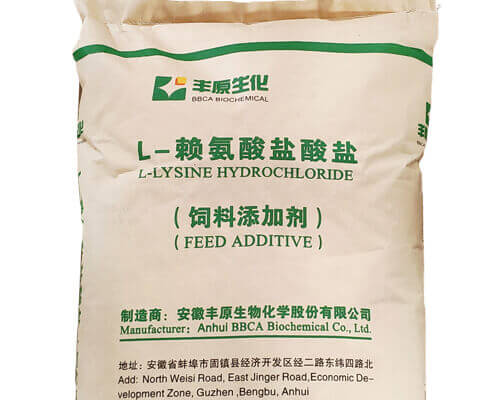
Manufacturing L-Lysine HCl offers a day-in, day-out reminder that protein-rich diets around the world depend on solid, reliable output from chemical producers. Meat and feed producers want something they can trust—an amino acid that delivers consistent nutritional value, tested batch after batch, so that poultry, swine, and aquaculture operations run smoothly. At Anhui BBCA, years of fermentation experience have taught us that no shortcut or trick can substitute for careful oversight. Unlike finished products that get a shiny label and sit on a supermarket shelf, L-Lysine HCl starts as a technical challenge in every single tank: every sugar molecule, every yeast cell, every cleaning process matters. Producers know that when an order ships, growers expect it to work just as well in a summer heatwave as in the grain-short winter. Our production lines have seen droughts, price spikes in corn, energy cost fluctuation, and shifting government oversight. The real work happens long before any bags go out the factory door.One hard lesson over the past decade has been the unpredictable market for raw materials. Price instability hits hardest among lysine producers competing with food and sweetener industries for corn, sugar, or glucose syrup. When commodity prices double, it’s not a spreadsheet exercise—our technicians meet every day, looking for ways to ration inputs, switch suppliers, or ramp up recovered byproducts. Our in-house R&D team has worked around-the-clock during supply disruptions to adjust the fermentation medium. Continuous staff training focuses on troubleshooting, so that any drift in fermentation yield gets spotted early. We bring in field engineers and operators with decades under their belt—workers who remember lean years and boom times—to mentor new hands pulling night shifts. With these overlapping teams, nobody has to reinvent the wheel each time the corn market jumps two percent overnight.Producers face a unique tension between quantity and purity. Customers, whether local co-ops or international feed integrators, expect purity that stays well within industry standards. At the same time, the world’s demand for protein growth has no patience for sluggish output. Since fermentation conditions can shift rapidly depending on temperature or microbe balance, we keep automated control systems running but always pair that with hands-on monitoring. Lab techs check each batch for amino content, moisture, and microbiological safety. Over the years, we’ve learned that no fancy instrument replaces practical knowledge. Feedback from collaborators in feed mills and premix plants goes right into the plant’s review log. If we hear that a batch dissolved slower or added unplanned dust into a mixing system, it signals time for adjustment, even if the initial numbers look fine. This loop keeps complaints rare and relationships strong.As local regulations tighten around water, energy, and chemical use, factories need to go beyond basic compliance. We’ve faced real costs and headaches meeting new effluent standards, but the only real solution has come from upgrading equipment and building in waste recovery. It takes money and patience to teach staff new protocols, to run breakdown drills, and to inspect waste streams weekly. This isn’t glamorous work, but neither is endless paperwork or fines. Sourcing green electricity, tapping into biogas reclaim from fermentation residues, and experimenting with treated wastewater for cooling have become necessities, not marketing gambits. Senior staff still walk through the plant at odd hours, eyes peeled for stray leaks or odd smells. Experienced hands know that neighbor complaints matter almost as much as a visit by inspectors. The global push for lower environmental footprints isn’t a slogan for factories; it’s a daily checklist, reminding us that tomorrow’s production depends on today’s stewardship.Each year brings new price pressures as international suppliers fight for contracts in global feed and food markets. Years ago, many of us relied too heavily on a handful of proven buyers, only to see them switch sources over a fraction of a penny per kilo. With years of experience, our team now spends as much time listening to customer feedback as fine-tuning reactors. We’ve committed resources to direct technical support for clients—collaborating on troubleshooting, offering advice on mix compatibility, helping optimize feed rations using independent lab analysis. Loyalty takes more than competitive pricing; it takes proving, shipment after shipment, that a manufacturer still listens once an order leaves the plant. Many customers return not just for consistent product, but because they remember who picked up the phone when they faced overdosing, underdosing, or ingredient interaction concerns. Relationships built on honest discussion about price volatility and real production costs help both sides ride out the rough patches.Chemical manufacturing has no room for complacency. Each month brings a new request for documentation—traceability back to raw materials, batch-by-batch quality charts, food safety audits, or new resonance from sustainability advocates. Teams now run mock recalls so that if supply chain issues do arise, both management and shift workers know their roles. While some skip over continuous improvement meetings, veterans recognize the value in openly sharing what actually went wrong—mechanical breakdowns, raw material shipment delays, or operator oversight. We set mechanisms to close the gap between plant floor experience and managerial decisions. Lessons written in training handbooks almost never cover everything a seasoned team can deliver by example. The trust that comes from honesty—acknowledging mistakes and fixing them quickly—outlasts any certificate on the wall.Transforming basic sugars and minerals into high-purity L-Lysine HCl is less a science of precision than a discipline of adaptation. Years of direct experience show the value of investing in workforce stability—keeping senior hands on-site, passing down tips and troubleshooting methods specific to equipment quirks found nowhere else. The feedback loop between production floor and the QC lab is alive—one hand knows what the other is doing. Storage, shipment, and blending never exist in a vacuum; the context from feed mill operators, technical sales partners, and animal nutrition consultants shapes every tweak and turn in the finished output. It is this real-world context—rooted in experience and measured by ongoing results—that forms the backbone of L-Lysine HCl manufacturing, far removed from the sterile confines of standard product descriptions.

Read More